How to Deliver Wedding Photos to Clients
Wedding photo delivery is the final step in your client experience, and it matters more than most photographers realize. This guide covers the best methods for sharing several hundred edited images, ensuring large galleries load instantly, and presenting your work professionally.

How to implement wedding photo delivery reliably
Wedding photo delivery is the process of sharing edited wedding images with clients through galleries, downloads, or physical media. It's more than just a file transfer; it's the final impression you leave with your couple. Wedding photographers typically deliver several hundred edited photos per event. High-megapixel cameras produce large galleries. Most couples expect digital delivery within several weeks, making speed and accessibility critical.
A standard professional workflow includes:
Culling: Selecting the best images from the thousands shot. 2.
Editing: Color correction and retouching (often batched). 3.
Exporting: Generating full-resolution JPEGs (and web-sized copies). 4.
Uploading: Transferring files to a delivery platform. 5.
Curating: Organizing into collections (Ceremony, Reception, Portraits). 6.
Delivering: Sending a branded, password-protected link. 7.
Archiving: Backing up the RAWs and edits for long-term storage. While the shooting happens in a day, the delivery defines the weeks that follow. An organized workflow ensures you meet deadlines and exceed expectations.
What to check before scaling wedding photo delivery
How you deliver photos depends on your business model and client expectations. Here are the three main approaches:
1. Online Photo Galleries (The Standard)
Dedicated gallery platforms like Pixieset, Pic-Time, or CloudSpot are the industry standard. They allow clients to view images in a grid, share favorites, and order prints.
- Pros: Beautiful presentation, built-in print stores, mobile-friendly.
- Cons: monthly fees, storage limits, per-brand costs.
- Best for: Photographers who rely on print sales for revenue.
2. Direct File Transfer & Portals (The Efficient Choice)
For photographers who deliver full-resolution files without pushing print sales, secure file transfer platforms offer a streamlined experience. Tools like Fast.io provide branded portals where clients can download the entire gallery at maximum speed.
- Pros: fast downloads for clients, handles massive files (video/RAW), no per-seat fees for teams, often usage-based pricing.
- Cons: No built-in print lab integration.
- Best for: High-volume studios, destination photographers, and those delivering video alongside photos.
3. Physical Media (USB/Hard Drive)
Once the gold standard, USB drives are fading. Many modern laptops don't even have USB-A ports. However, some luxury packages still include a custom crystal or wood drive as a keepsake.
- Pros: Tangible product, works offline.
- Cons: Drives fail, easy to lose, shipping costs, clients may lack ports.
- Best for: Luxury add-ons or delivering massive RAW archives.
Recommendation: Use an online method (Gallery or Portal) as your primary delivery to ensure immediate access and backup. Offer physical media only as a premium keepsake.
Creating a Premium Client Experience
Your delivery method reflects your brand. A generic file transfer link that expires tells a different story than a custom branded portal.
Branded Presentation
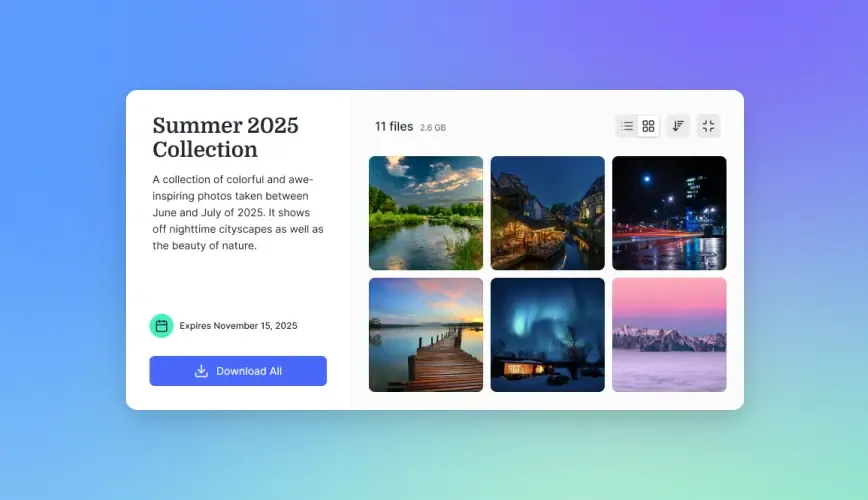
Clients pay thousands for your vision. Don't break the spell at the finish line with a generic "File Download" page. Use a client portal that features:
- Your Logo & Colors: Matches your website and contract.
- Custom Domain:
gallery.yourname.combuilds trust overtransfer.site/x7z9. - Visual Previews: Clients should see the photos, not just filenames.
Speed and Reliability
Nothing frustrates a couple more than a download that fails near the end. Wedding galleries are huge. Ensure your platform supports:
- Resumable Uploads: If the client's WiFi drops, the download picks up where it left off.
- No Zipping Required: Allow clients to view and download individual files or the whole set.
- Universal Media Engine: If you include video clips, they should stream instantly (like Netflix) rather than requiring a download first.
Accessible Archives
Couples will lose their files. It happens. An expired link later leads to panic.
The Fix: Use storage that doesn't auto-expire files. Fast.io's workspaces keep project files active as long as you need, so you can resend a link anytime if a client loses their copy.


Share Files Without Limits on Fast.io
Fast.io provides branded client portals, fast uploads for large galleries, and secure long-term archiving without per-seat fees.
Technical Best Practices for Delivery
Get the technical details right to avoid "I can't open this" emails.
File Formats and Resolution
Deliver two sets of images if possible, or a high-res set that handles both needs:
- Print-Ready: Full resolution JPEGs (print resolution, sRGB). Don't limit the file size; let the quality shine.
- Web-Size: 2048px on the long edge. Perfect for Instagram and Facebook without compression artifacts. Note: Always convert to sRGB. AdobeRGB looks dull on most web browsers and phones.
Organization Structure
Don't dump all files into one folder. Structure the delivery so it tells the story:
- Highlights (The best shots for quick sharing)
- Getting Ready
- Ceremony
- Family Formals
- Wedding Party
- Reception
Access Control
Protect your clients' privacy. Wedding photos are personal data.
- Password Protection: Essential. Only the couple (and those they share with) should access the full gallery.
- Download Permissions: You might allow the couple full download access, but restrict guests to "View Only" or "Web Size Download" to prevent unauthorized printing.
After Delivery: Backup and Archiving
Delivery isn't the end of your responsibility. Hard drives fail, and houses flood. You need a 3-2-1 backup strategy.
The 3-2-1 Rule for Wedding Photographers
- 3 Copies of Data: Original RAWs, Edited JPEGs, and Catalog files.
- 2 Different Media Types: e.g., SSD for working, HDD for archive.
- 1 Offsite Copy: Cloud storage is the most reliable offsite solution.
Cloud Archiving
Consumer clouds (Google Drive, iCloud) often compress images or fill up quickly. For a growing wedding archive, you need cloud storage for photographers that can keep up. Team-focused storage like Fast.io lets you create an archive workspace where files are safe, organized, and retrievable without cluttering your active delivery dashboard. Since pricing is usage-based (not per-seat), it works well for long-term retention.
Frequently Asked Questions
How many photos should a wedding photographer deliver?
Most wedding photographers deliver dozens of photos per hour of shooting. For a full wedding day, this typically results in several hundred final edited images. Quality is more important than quantity; clients prefer a curated story over thousands of duplicates or test shots.
What is the best way to send wedding photos to clients?
The best method is a dedicated online gallery or branded client portal. These platforms allow clients to view, share, and download high-resolution images easily on any device. Unlike USB drives, they provide immediate access and backup. Unlike basic file transfer services, they offer a professional, branded presentation.
How long should wedding photo delivery take?
Standard industry delivery time is several weeks, though many photographers aim to deliver faster. Always deliver a sneak peek of highlight images shortly after the wedding. This satisfies the couple's immediate excitement and social media needs while they wait for the full gallery.
Should I give clients RAW files?
Generally, no. RAW files are unfinished data, not the final product. They require specialized software to view and edit. Your clients hired you for your editing style and vision, which you apply during post-processing. Stick to high-resolution JPEGs unless specifically negotiated for a commercial client.
Related Resources

Share Files Without Limits on Fast.io
Fast.io provides branded client portals, fast uploads for large galleries, and secure long-term archiving without per-seat fees.