Top 5 Tools Every LangGraph Developer Needs
LangGraph lets you build stateful, cyclic AI agents, but the framework alone isn't enough. You need tools for visualizing graph topologies, tracing execution, persisting state, searching the web, and deploying to production. This guide breaks down the five tools that most LangGraph developers rely on and when to reach for each one.

How We Evaluated These Tools
LangGraph hit v1.0 in October 2025, and the ecosystem around it has matured fast. We looked at dozens of tools and narrowed the list based on three criteria:
- Integration depth with LangGraph's graph model, state checkpoints, and streaming API
- Developer experience during local development and debugging
- Production readiness for teams shipping agents to real users
The five tools below cover the full development lifecycle: build, debug, search, persist, and deploy. Most LangGraph teams use at least three of them together.
Here's a quick comparison before we dig into each one.
What to check before scaling top 5 tools for langgraph
LangGraph Studio is the official IDE for LangGraph agents. It renders your graph topology visually, showing how nodes connect, where conditional edges branch, and which path the agent actually took during execution.
The standout feature is time-travel debugging. Because LangGraph persists state checkpoints at every node, Studio lets you rewind to any previous step, edit the state, and fork a new execution path. If your agent hallucinated a tool argument at step 4, you can fix the state and re-run from that point instead of starting over.
Studio also supports hot-reloading. Change a prompt or tool signature in your code, and Studio reflects the update immediately. You can re-run conversation threads from any step to test changes without rebuilding context from scratch.
Key strengths:
- Visual rendering of cyclic graphs, conditional edges, and node dependencies
- Time-travel debugging with state editing at any checkpoint
- Hot-reload for fast prompt iteration
- Works with both local graphs and LangSmith-deployed agents
Limitations:
- The desktop app currently runs on macOS only (web version available for cloud deployments)
- No built-in support for multi-agent orchestration views across separate graph instances
Best for: Local development and visual debugging of complex agent logic.
Pricing: Free for local use. Cloud features require a LangSmith account.

2. LangSmith
Where Studio shows you the structure, LangSmith shows you the execution. It captures detailed traces for every LLM call, tool invocation, and state transition in your graph.
When an agent fails or produces unexpected output, LangSmith lets you inspect the exact prompt sent to the model, the raw response, token counts, and latency for each step. For multi-step graphs, this visibility is critical. A slow tool call in one node can cascade into timeouts across the entire graph, and without trace-level data you're guessing at the cause.
LangSmith also includes an evaluation framework. You can build datasets of expected input-output pairs and run your agent against them automatically. This catches regressions before they reach production, which matters more for agents than for simple chains because the state space is larger.
Key strengths:
- Full execution traces with prompt, response, and latency data for each node
- Dataset-driven evaluation for regression testing
- Production monitoring with alerting
- Playground integration with LangGraph Studio for interactive debugging
Limitations:
- Tracing generates significant log volume on high-throughput agents, so configure sampling carefully
- The evaluation framework has a learning curve if you're new to LLM testing
Best for: Debugging production issues and building automated evaluation pipelines.
Pricing: Free tier includes 5,000 traces per month. Paid plans start with the Plus tier for teams that need higher volume and collaboration features.


Give Your LangGraph Agents Persistent Storage
Fast.io's free agent plan includes 50 GB storage, built-in RAG, and MCP access. No credit card, no expiration. Built for tools langgraph workflows.
3. Tavily
Most LangGraph agents need web access at some point, whether for research, fact-checking, or retrieving real-time data. Tavily is a search API built specifically for this use case. Instead of returning HTML pages and snippets like Google, Tavily returns clean, parsed text that LLMs can process directly.
In a typical LangGraph workflow, Tavily powers the "research" node. The agent decides it needs information, calls Tavily, and gets back structured content it can reason over without a separate HTML scraper or parser. You can filter results by domain, set depth parameters, and choose between basic and advanced search modes depending on how much context you need.
Tavily also offers an extract endpoint for pulling structured content from specific URLs, which is useful when your agent already knows where to look but needs the page content in a clean format.
Key strengths:
- Returns LLM-ready text instead of raw HTML
- Domain filtering and depth controls for targeted searches
- First-class LangChain/LangGraph integration via the
@langchain/tavilypackage - Extract endpoint for targeted URL content retrieval
Limitations:
- Free tier credits don't roll over month to month
- Advanced search costs 2 credits per request, which adds up in research-heavy agents
Best for: Giving agents reliable, real-time web search without building a scraping pipeline.
Pricing: 1,000 free API credits per month (no credit card required). Pay-as-you-go at $0.008 per credit beyond that.
4. Fast.io Storage
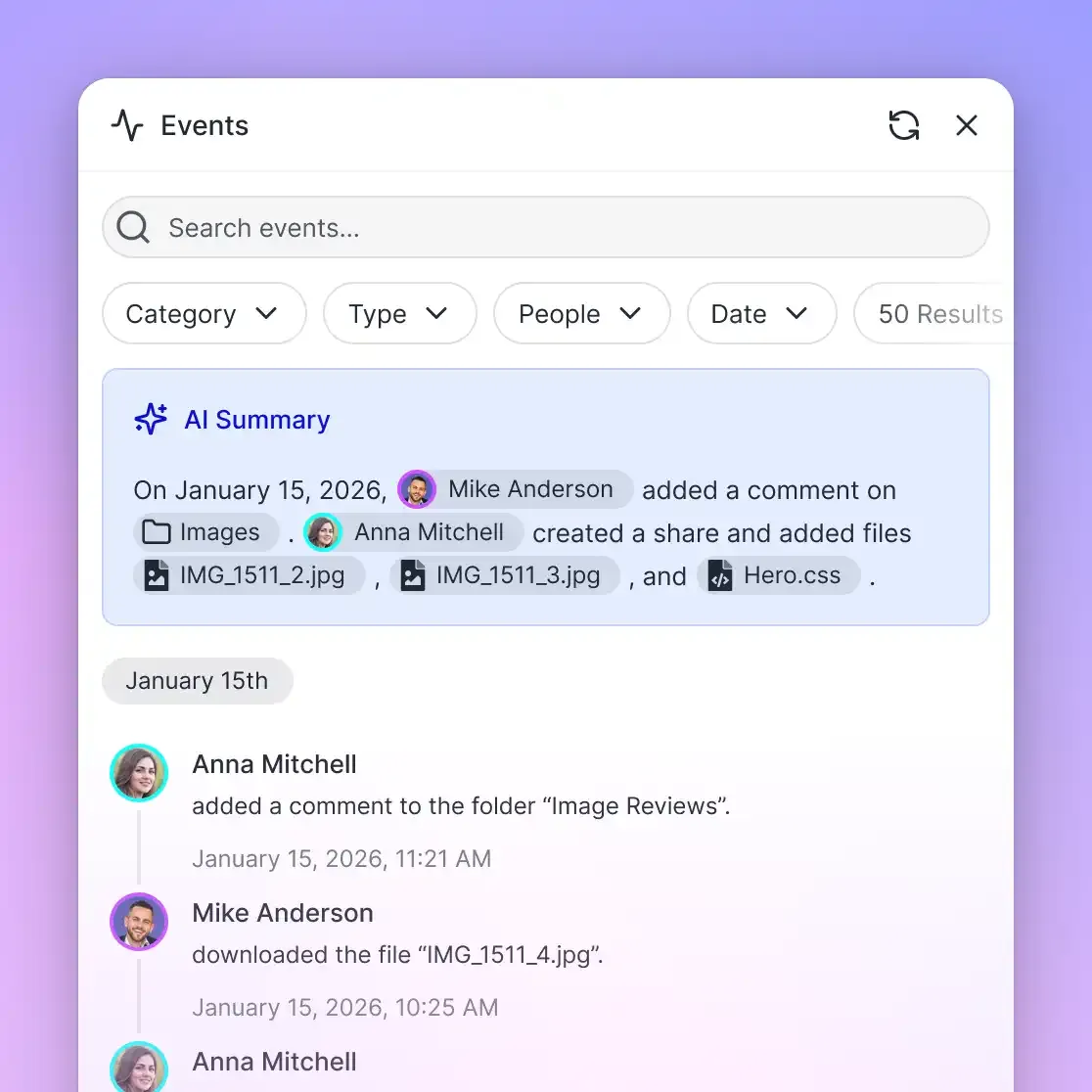
LangGraph agents are stateful by design, but that state needs to persist somewhere beyond the graph's in-memory checkpoints. When agents generate reports, analyze documents, or maintain context across sessions, they need a storage layer that other team members (and other agents) can also access.
Fast.io provides persistent workspaces where agents and humans collaborate on the same files. Agents connect through the Fast.io MCP server, which exposes a comprehensive set of tools for storage, workspace management, AI operations, and workflow coordination. The MCP server supports both Streamable HTTP at /mcp and legacy SSE at /sse, so it works with any LangGraph agent that can call external tools.
What sets Fast.io apart from raw S3 or local disk is the built-in intelligence layer. Enable Intelligence Mode on a workspace, and uploaded files are automatically indexed for semantic search and RAG. Your LangGraph agent can upload a batch of PDFs, then query them by meaning without setting up a separate vector database or ingestion pipeline.
The ownership transfer pattern is also worth noting. An agent can create a workspace, populate it with generated content, and then transfer ownership to a human client. The agent retains admin access for ongoing updates while the client gets full control of their files.
Key strengths:
- MCP-native access for agent tool calling (workspace, storage, AI, workflow tools)
- Built-in RAG with auto-indexing, so no separate vector database needed
- Ownership transfer from agent to human for client delivery workflows
- File versioning, granular permissions, and audit trails
Limitations:
- Best suited for file-centric agent workflows rather than pure key-value state storage
- Intelligence Mode indexing uses credits, so budget accordingly for large document sets
Best for: Agents that generate, organize, or analyze files and need persistent, searchable storage.
Pricing: Free agent plan includes 50 GB storage, 5,000 credits/month, 5 workspaces, and 50 shares. No credit card, no trial expiration. See pricing for paid tiers.
5. LangServe
Once your graph works locally, you need to serve it over HTTP. LangServe wraps your LangGraph agent in a FastAPI server with a few lines of code. It generates endpoints for invoking the agent, streaming output token by token, and retrieving execution metadata.
LangServe also includes a built-in playground UI where other developers can test your agent's API, experiment with different inputs, and verify output schemas before integrating it into a frontend or backend service. This saves time compared to building custom test uses.
One important caveat: for production deployments at scale, LangChain now recommends LangSmith Deployment (formerly LangGraph Platform) over standalone LangServe. LangSmith Deployment adds managed infrastructure, one-click deploys with GitHub integration, and built-in persistence. The Developer plan is free for up to 100,000 node executions per month with self-hosted deployment.
LangServe remains a solid choice for smaller deployments, prototyping, or teams that want full control over their infrastructure.
Key strengths:
- Turns any LangGraph agent into a REST API with minimal boilerplate
- Built-in streaming support for real-time output
- Interactive playground for API testing
- Open source (MIT license)
Limitations:
- For high-scale production, LangSmith Deployment offers better infrastructure management
- No built-in persistence or state management beyond what LangGraph provides
Best for: Prototyping and smaller production deployments where you want full infrastructure control.
Pricing: Free and open source. LangSmith Deployment's Developer plan is also free for up to 100,000 nodes/month.
Putting the Stack Together
These five tools cover different parts of the LangGraph development lifecycle, and most teams combine three or four of them. Here's a practical starting sequence:
During development: Start with LangGraph Studio for visual debugging. The graph view catches structural problems, like missing edges or unintended loops, faster than reading logs.
For search-enabled agents: Add Tavily as your research node. The LangChain integration is straightforward, and the free tier covers early development.
For file-heavy workflows: Connect Fast.io via MCP to give your agent persistent storage with built-in search. This is especially useful for agents that generate documents, process uploads, or need to maintain context across sessions.
Before production: Integrate LangSmith tracing so you can diagnose issues from real user sessions. Set up evaluation datasets early, since they're much harder to backfill after launch.
For deployment: Use LangServe for quick prototypes or self-hosted deployments. Consider LangSmith Deployment if you need managed infrastructure and scaling.
The LangGraph ecosystem is still evolving, but these five tools handle the most common pain points developers hit when building stateful agents. Start with what solves your immediate problem and add the rest as your agent grows more complex.
Frequently Asked Questions
What is LangGraph Studio?
LangGraph Studio is a specialized IDE built by the LangChain team for visualizing and debugging LangGraph agents. It renders your graph topology visually, supports time-travel debugging through state checkpoints, and includes hot-reloading for rapid iteration. It's free for local development.
How do you visualize LangGraph agents?
LangGraph Studio is the primary visualization tool. It renders the graph's nodes, edges, and conditional branches in a visual interface. You can also use LangSmith's trace view to visualize the execution path an agent took through the graph, including timing and state data at each step.
Can LangGraph agents access files and persistent storage?
Yes. LangGraph agents can connect to external storage through tool integrations. Fast.io's MCP server gives agents access to persistent workspaces with file operations, semantic search, and RAG capabilities. The agent connects via Streamable HTTP or SSE and can read, write, search, and organize files.
Is LangSmith required to use LangGraph?
No. LangGraph is an open-source framework that works independently. LangSmith adds observability, tracing, and evaluation on top. You can build and run LangGraph agents without LangSmith, but most production teams adopt it for debugging and monitoring.
How much does it cost to get started with LangGraph tooling?
You can start for free. LangGraph itself is open source (MIT license). LangGraph Studio is free for local use. LangSmith offers 5,000 free traces per month. Tavily provides 1,000 free API credits monthly. Fast.io's agent plan includes 50 GB free storage with no credit card required.
Related Resources

Give Your LangGraph Agents Persistent Storage
Fast.io's free agent plan includes 50 GB storage, built-in RAG, and MCP access. No credit card, no expiration. Built for tools langgraph workflows.