How to Share Files Securely
Sending sensitive documents through email or public cloud links exposes your data to interception and unauthorized access. This guide covers five proven methods for secure file sharing, from password-protected links to encrypted cloud storage, with step-by-step instructions for protecting confidential information. This guide covers share files securely with practical examples.
Why Standard File Sharing Falls Short
Email attachments travel through multiple servers before reaching their destination. Each hop represents a potential interception point where bad actors can capture your data. Standard email lacks end-to-end encryption, meaning your confidential contracts, financial records, and client information sit exposed on servers you do not control. The risks extend beyond interception. Once you send an email attachment, you lose all control over that file. Recipients can forward it to anyone, download it to unsecured devices, or leave it accessible in their inbox indefinitely. You have no visibility into who accessed your document, when they opened it, or whether they shared it further. Public cloud links present similar problems. A shared Google Drive or Dropbox link can be forwarded, posted publicly, or accessed by anyone who stumbles upon the URL. Most free sharing services retain your uploaded files on their servers, potentially mining them for advertising data or exposing them through security breaches. For businesses handling client information, financial data, or intellectual property, these risks translate to real consequences: regulatory fines, competitive exposure, damaged client relationships, and legal liability. The average data breach costs organizations $4.45 million according to IBM's 2023 Cost of a Data Breach Report, with exposed file sharing often serving as the initial attack vector.
Helpful references: Fast.io Workspaces, Fast.io Collaboration, and Fast.io AI.
What Makes File Sharing Secure
Secure file sharing combines multiple protective layers that work together to shield your data. Understanding these components helps you evaluate whether a sharing method meets your security requirements.
Encryption forms the foundation. Look for two types: encryption in transit (TLS/SSL) protects data while it moves across networks, and strong encryption at rest protects stored files, making it the industry standard for sensitive data protection.
Access controls determine who can reach your files. Password-protected links add a knowledge barrier, requiring recipients to enter a credential you share through a separate channel. Domain restrictions limit access to email addresses from specific organizations, preventing forwarded links from working for unauthorized parties. View-only permissions prevent downloads entirely, keeping files within your controlled environment.
Expiration dates limit the window of exposure. A link that expires quickly cannot be exploited months later when security context has changed. This automatic revocation eliminates the need to manually track and disable old sharing links.
Audit trails provide visibility into file access. Comprehensive logs show who accessed your file, when they opened it, their geographic location, and what actions they took. This accountability deters misuse and provides evidence for compliance requirements or security investigations.
Revocation capability gives you an emergency stop button. If you learn that a link was compromised or shared inappropriately, instant revocation prevents further access regardless of how many people have the link.
Proven Methods to Share Files Securely
Different situations call for different security approaches. Here are five methods ranked by the balance of security and usability they provide.
1. Secure Cloud Storage with Link Controls
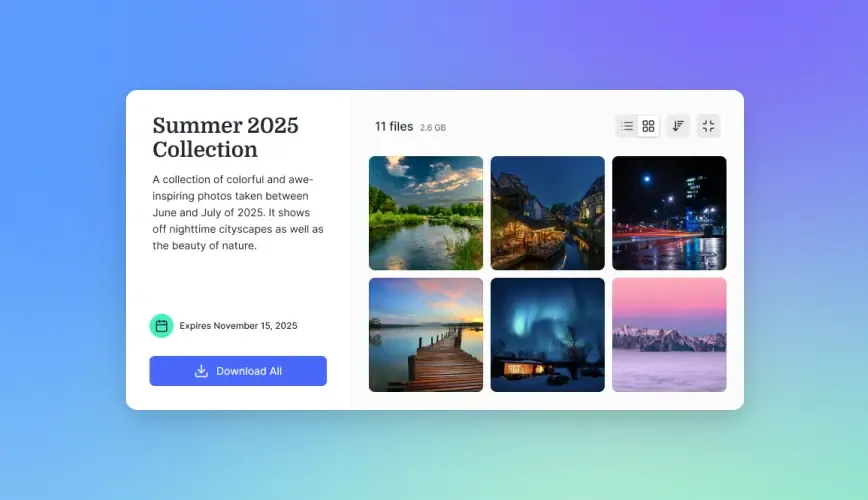
Modern cloud platforms designed for business use offer the best combination of security and convenience. You upload files once, then generate controlled sharing links with password protection, expiration dates, and view-only restrictions. Recipients access files through their browser without creating accounts or installing software. This approach works well for client deliverables, contract sharing, and ongoing project collaboration. Files remain in one location with complete audit trails, and you can revoke access instantly if circumstances change. The convenience factor means recipients actually use the secure method instead of asking you to "just email it."
2. Encrypted Email Services
Services like ProtonMail provide end-to-end encrypted email where both message content and attachments remain encrypted from sender to recipient. The encryption keys stay on the user devices, meaning even the email provider cannot read your content. The limitation: both parties typically need compatible email services for the encryption to work smoothly. Sending encrypted email to a standard Gmail account requires extra steps that recipients may find confusing. This method works best when both parties already use the same encrypted email provider.
3. SFTP (Secure File Transfer Protocol)
SFTP creates an encrypted channel using SSH (Secure Shell) for transferring files between computers. IT teams use SFTP for automated, scheduled transfers of large datasets or regular batch processing. The security is excellent, but the technical setup requirement limits SFTP to organizations with dedicated IT resources. Recipients need SFTP client software and credentials, making this impractical for sharing with external clients or partners who expect consumer-friendly experiences.
4. End-to-End Encrypted Transfer Tools
Specialized tools like Tresorit or SpiderOak provide end-to-end encryption where only you and your recipient hold decryption keys. The service provider cannot access your file contents even if compelled by legal requests. These tools offer strong protection for highly sensitive one-off transfers. However, they typically lack the collaboration features needed for ongoing work, and the recipient experience can feel clunky compared to mainstream cloud services.
5. Physical Media Transfer
For sensitive data, physically handing someone an encrypted USB drive or hard drive eliminates all network-based attack vectors. The file never touches the internet, making remote interception impossible. This "sneakernet" approach remains relevant for classified information or intellectual property worth millions. The obvious downsides: geographic limitations, physical travel requirements, and the risk of losing or having the media stolen in transit.


Start with share files securely on Fast.io
Start protecting your sensitive documents with encryption, access controls, and complete audit visibility.
How to Share Files Securely with Fast.io
Fast.io combines enterprise-grade security with a sharing experience that recipients actually enjoy using. Here is the process for sharing a confidential document.
Step 1: Upload to a Secure Workspace
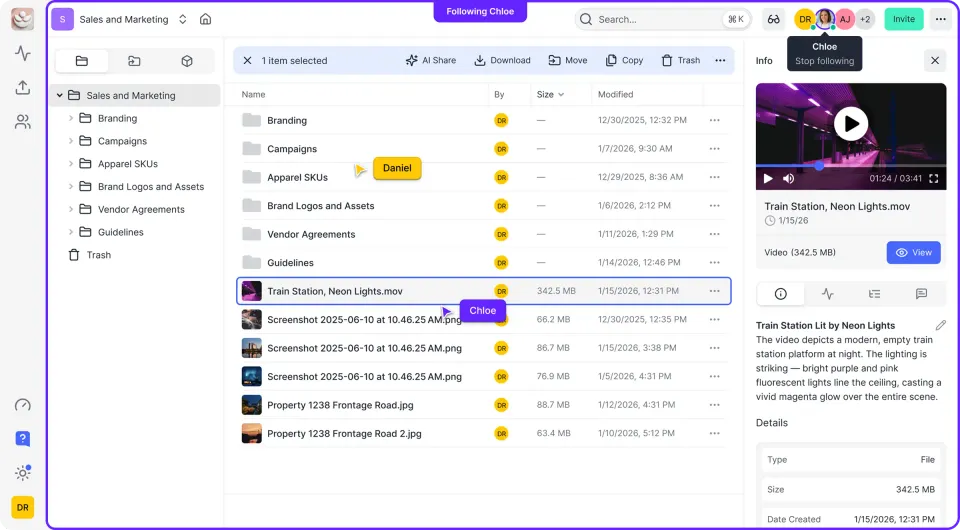
Create a workspace for your project or client. Files uploaded here belong to your organization, not to individual user accounts. This means files stay protected even if an employee leaves, and access permissions flow from a central administration point.
Step 2: Configure Workspace Permissions
Set the workspace to private (invite-only) for sensitive projects, or use granular folder permissions within an organization-wide workspace. You can mix public and private areas, keeping general resources accessible while restricting confidential materials.
Step 3: Generate a Shared Link
Right-click any file and select "Share" to create a link. The sharing dialog lets you configure multiple security controls:
- Password protection: Require a password that you share through a separate channel (text message, phone call, or secure messaging app). This ensures someone who intercepts the link still cannot access the file.
- Expiration date: Set the link to expire in hours, days, or weeks. For time-sensitive materials like proposals or contracts, a few days provides reasonable access while limiting long-term exposure.
- View-only mode: Prevent downloads entirely, keeping the file within Fast.io's controlled environment where you maintain audit visibility.
- Domain restrictions: Limit access to email addresses from specific domains. A link restricted to "@clientcompany.com" will not work for anyone outside that organization.
Step 4: Send the Link
Share the link through your preferred channel. Recipients click the link, enter the password if required, and view or download the file directly in their browser. They do not need a Fast.io account, and there are no seat costs for external access.
Step 5: Monitor Access
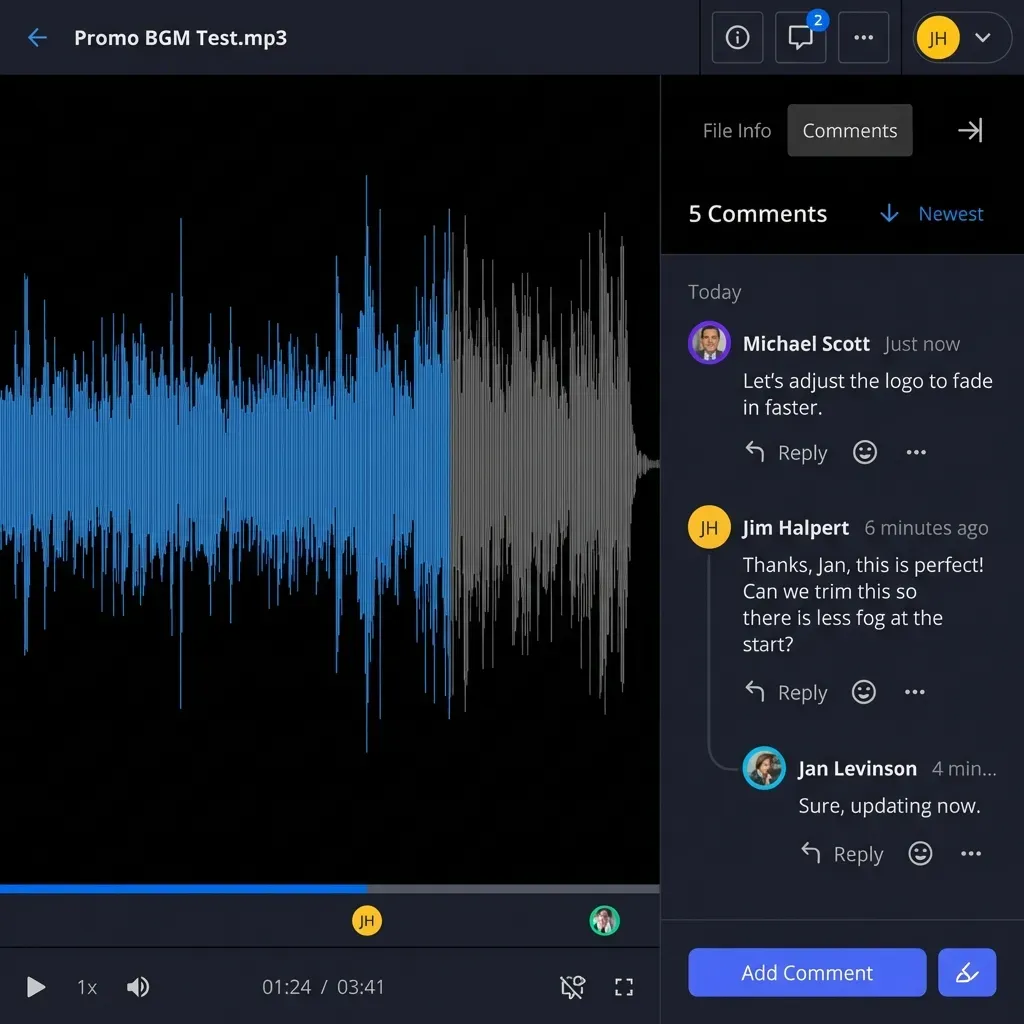
Check the file's activity log to see who accessed it, when they opened it, and whether they downloaded or just viewed. If you see unexpected access patterns, revoke the link immediately with one click.
Best Practices for Sensitive Data
Technology alone does not prevent data breaches. Human error remains the leading cause of security incidents, so combining the right tools with smart habits provides the strongest protection.
Never send passwords through the same channel as the link. If you email a password-protected link, send the password via text message, phone call, or a secure messaging app. This two-channel approach means an attacker who compromises your email still cannot access the file.
Verify recipient identity before sharing. Double-check email addresses character by character before sending sensitive links. A common social engineering attack involves registering lookalike domains (clientcompamy.com vs clientcompany.com) to intercept misdirected files.
Use the minimum necessary access level. If someone only needs to view a document, do not give them download access. If they only need one file, do not share the entire folder. Limiting permissions reduces the blast radius if credentials are compromised.
Set aggressive expiration dates. Most files do not need permanent access links. A short-term expiration for contract review or one week for project deliverables handles normal use cases while limiting long-term exposure. Recipients can always request a fresh link if they need more time.
Review audit logs regularly. Check access patterns for shared files, especially for ongoing projects. Unexpected access times, unusual geographic locations, or access from unfamiliar devices may indicate credential compromise.
Revoke access proactively. When a project ends, a client relationship terminates, or an employee leaves, revoke their access immediately. Do not wait for a security incident to prompt the cleanup.
Educate your team. Security tools work only if people use them. Train team members on secure sharing practices, explain the risks of email attachments, and make the secure method the easiest method so compliance becomes the default behavior.
Choosing the Right Security Level
Not every file needs maximum security. Over-securing routine documents creates friction that pushes people toward insecure workarounds, while under-securing sensitive data creates unacceptable risk. Match your security controls to the actual sensitivity of the content.
High security (password + expiration + domain restriction + view-only): Use for contracts, financial records, M&A documents, intellectual property, and anything with regulatory implications. The extra friction is justified by the potential consequences of exposure.
Medium security (password + expiration): Appropriate for client deliverables, internal reports, project files, and business-sensitive but not regulated content. The password prevents casual forwarding while expiration limits long-term exposure.
Standard security (expiration only): Suitable for marketing materials, public-facing documents, and files you would share broadly anyway. The expiration date provides basic hygiene without impeding normal workflow. Consider your threat model when choosing controls. Who might want access to this file? What would they do with it? What would the consequences be? A pharmaceutical company protecting drug trial data faces different threats than a marketing agency sharing campaign proofs. Also consider your recipient's experience. External clients often have less patience for security friction than internal teams. Finding the balance between protection and usability determines whether your secure sharing method gets adopted or bypassed.
Frequently Asked Questions
What is the safest way to share files online?
The safest approach for online file sharing combines multiple protections: strong end-to-end or at-rest encryption, password-protected links shared through a separate communication channel, automatic link expiration, domain restrictions limiting access to specific organizations, and comprehensive audit logs tracking all access. Platforms designed for business file sharing, like Fast.io, integrate these controls into a single workflow.
Is it safe to send confidential files through email?
Standard email is not safe for confidential files. Email attachments pass through multiple servers without end-to-end encryption, creating interception opportunities. Once sent, you cannot revoke access, track who downloaded the file, or prevent forwarding. Instead, email a secure link to the file hosted on an encrypted platform with access controls, keeping the actual document in a protected environment.
How do I password protect a shared file link?
In Fast.io, right-click any file, select Share, and enable password protection in the sharing dialog. Enter a strong password, then share the link through one channel (email) and the password through a different channel (text or phone call). Recipients must enter the password to access the file, even if they have the link.
What happens when a shared link expires?
When a link reaches its expiration date, anyone clicking it sees an error message indicating the link is no longer active. The file remains safe in your workspace, and you can generate a new link with a fresh expiration if the recipient needs continued access. Expired links cannot be reactivated.
Can I see who accessed my shared files?
Yes, Fast.io maintains detailed audit logs for all shared files. You can see who accessed the file, when they opened it, their IP address and approximate location, whether they viewed or downloaded the file, and how long they spent viewing it. These logs help you monitor for unauthorized access and demonstrate compliance with data handling requirements.
Related Resources

Start with share files securely on Fast.io
Start protecting your sensitive documents with encryption, access controls, and complete audit visibility.