How to Set Up Secure Multi-Agent Collaboration Workspaces
Secure multi-agent collaboration lets AI agents edit files together in shared workspaces without conflicts. Distributed locks prevent race conditions where one agent's changes overwrite another's. Fast.io offers file locks, permissions, audit logs, and MCP tools so agents can team up. This keeps workflows reliable as agent teams grow.

What Is Secure Multi-Agent Collaboration?
Secure multi-agent collaboration gets multiple AI agents working on shared files and tasks. They divide the work, but edits can clash without coordination. Distributed locks let one agent claim a file, make changes, then release it.
Race conditions occur when agents read and write the same file at the same time. The last one to write overwrites the rest, losing earlier changes. Locks set the order. Fast.io's API makes it simple: lock the file, edit, unlock.
Permissions add control. Agents get read-only on some folders and edit access on others. Audit logs track every move.
Example: Agent A builds reports from data. Agent B cleans the data first. A lock on the data file ensures B finishes before A starts.
It scales to ten agents or more. Distributed locks work without a central server.
Helpful references: Fast.io Workspaces, Fast.io Collaboration, and Fast.io AI.
Why It Matters for Agentic Workflows
Agent teams finish complex jobs faster than a single agent. One plans goals, others execute, some review.
Conflicts waste time. One report shows teams lose hours weekly fixing version mismatches. Coordination cuts those losses.
Research groups run data pipelines with agents. Outputs corrupt without locks. They run cleanly with locks.
Fast.io handles this well. Workspaces hold files. Intelligence Mode indexes them for agent queries. MCP tools give access.
LLMs improve, agent use grows. Workspaces must manage dozens securely.
Reliable runs mean fewer retries. Logs reveal bottlenecks. Permissions contain damage if an agent fails.
Agent teams complete complex jobs faster than a single agent. A planner agent sets high-level goals, executor agents handle specific subtasks, and reviewer agents validate outputs before finalization.
Conflicts waste time without coordination. Teams often spend hours each week resolving version mismatches and recovering lost changes from overwrites.
Research groups running data pipelines frequently encounter output corruption without locks. Proper coordination allows these pipelines to run cleanly and produce consistent results every time.
Fast.io handles multi-agent needs through shared workspaces that securely hold all files. Intelligence Mode automatically indexes content so agents can query it semantically. The MCP server provides multiple tools for programmatic access over Streamable HTTP or SSE.
As LLMs continue to improve, agent usage is growing quickly. Workspaces must scale to manage dozens of agents across distributed environments without compromising security.
For example, in a marketing automation workflow, Agent multiple researches topics and gathers data, Agent multiple drafts personalized content, and Agent multiple optimizes for SEO. File locks ensure research data remains intact during drafting.
In video production, Agent multiple handles transcoding of raw footage, Agent multiple generates smart summaries and metadata, and Agent multiple assembles review timelines. Coordination prevents mismatched assets and metadata errors.
Fast.io's free agent tier offers 50GB storage and 5,000 monthly credits, enough to pilot sophisticated multi-agent projects. Granular permissions restrict access to sensitive folders, containing errors from faulty agents. Audit logs track every action for quick debugging and compliance reviews.
Key Risks Without Proper Security
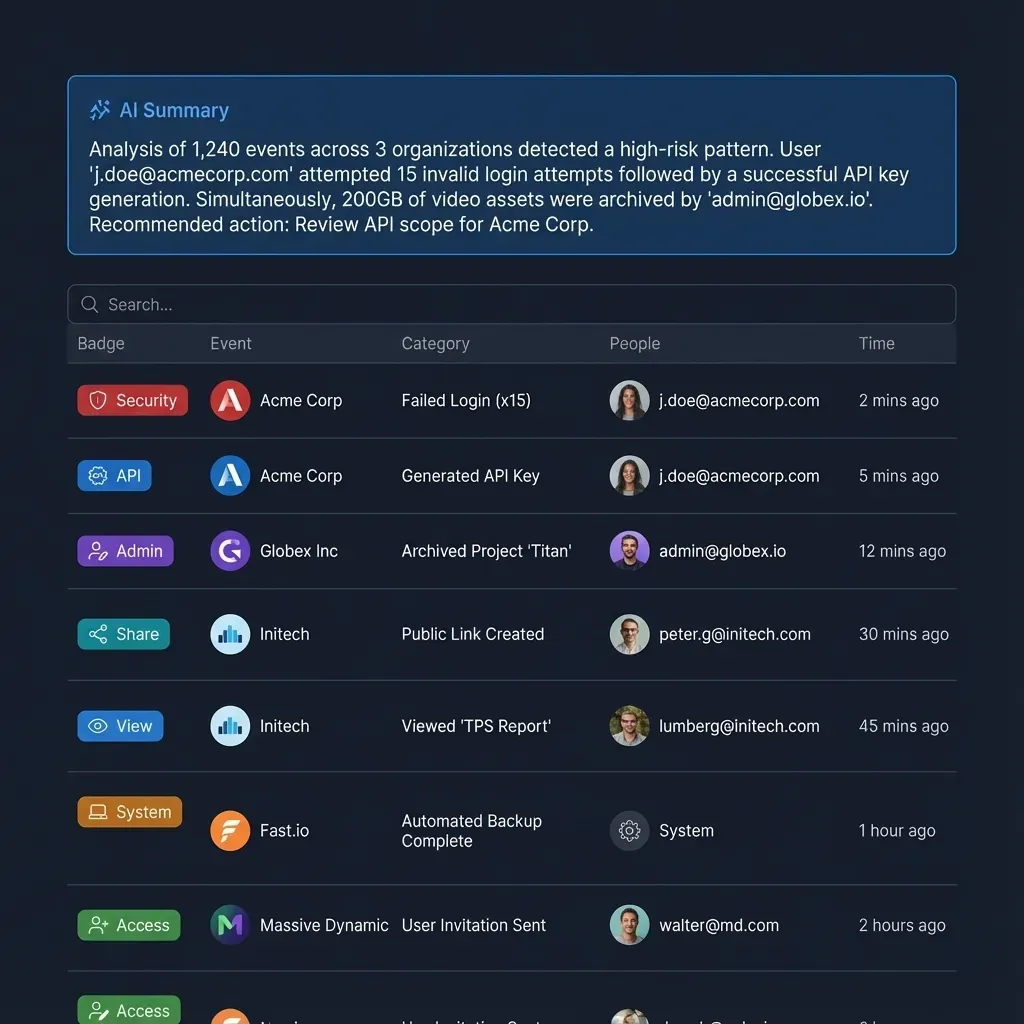
Race conditions are the primary risk. Agent A reads the shared data file. Meanwhile, Agent B processes and updates it. Agent A then writes its now-stale version back, overwriting B's changes.
Overly broad permissions expose wrong data. An analysis agent might access finance files.
No logs mean no visibility. Did Agent C delete a key file?
One agent hogging locks stalls others. Timeouts and fair policies prevent this.
Fast.io mitigates these risks directly. File locks include automatic timeouts to prevent indefinite holds. Permissions apply at organization, workspace, folder, and file levels for precise control. Audit logs are fully searchable and exportable for analysis. Data remains encrypted both at rest and in transit.
Other risks include lock starvation, where one agent holds resources too long, stalling others. Built-in fairness policies and short timeouts mitigate this.
Permission creep happens when roles broaden over time. Regular permission audits, supported by logs, keep access tight.
Without versioning, bad changes have no rollback. While Fast.io logs enable reconstruction, pair locks with versioning for critical files.
In distributed setups, network failures can orphan locks. Idempotent API calls and heartbeat checks resolve these reliably.
Over-reliance on a single coordination point creates fragility. Distribute logic across agents using webhooks for notifications instead of polling.
Fast.io Features for Agent Security
File locks form the core. API endpoints to acquire and release. They work across distributed agents.
Permissions go from org-level to file-specific.
Audit logs record all actions. Filter by agent, file, time. Export for analysis.
MCP server has multiple tools. Agents use HTTP for stateful work.
Encryption at rest and in transit. MFA and SSO for logins.
Ownership transfer lets agents create organizations, workspaces, and shares, then hand them off to human users while retaining admin access.
MCP provides multiple tools matching every UI feature, enabling stateful sessions via Durable Objects.
Permissions support role-based access control (RBAC), with read-only for analysts and full edit for processors.
Audit logs capture views, edits, downloads, and permission changes, filterable by agent or timestamp.
Encryption uses AES-multiple at rest and TLS multiple.3 in transit. MFA and SSO secure logins.
All features integrate via the REST API, supporting chunked uploads up to multiple for large files.
For instance, to acquire a lock:
        const response = await fetch('/api/files/{fileId}/lock', {
          method: 'POST',
          headers: { Authorization: `Bearer ${apiKey}` }
        });
        const lock = await response.json();
        ```

Release with DELETE /api/files/{fileId}/lock/{lockId}.
Step-by-Step Multi-Agent Setup
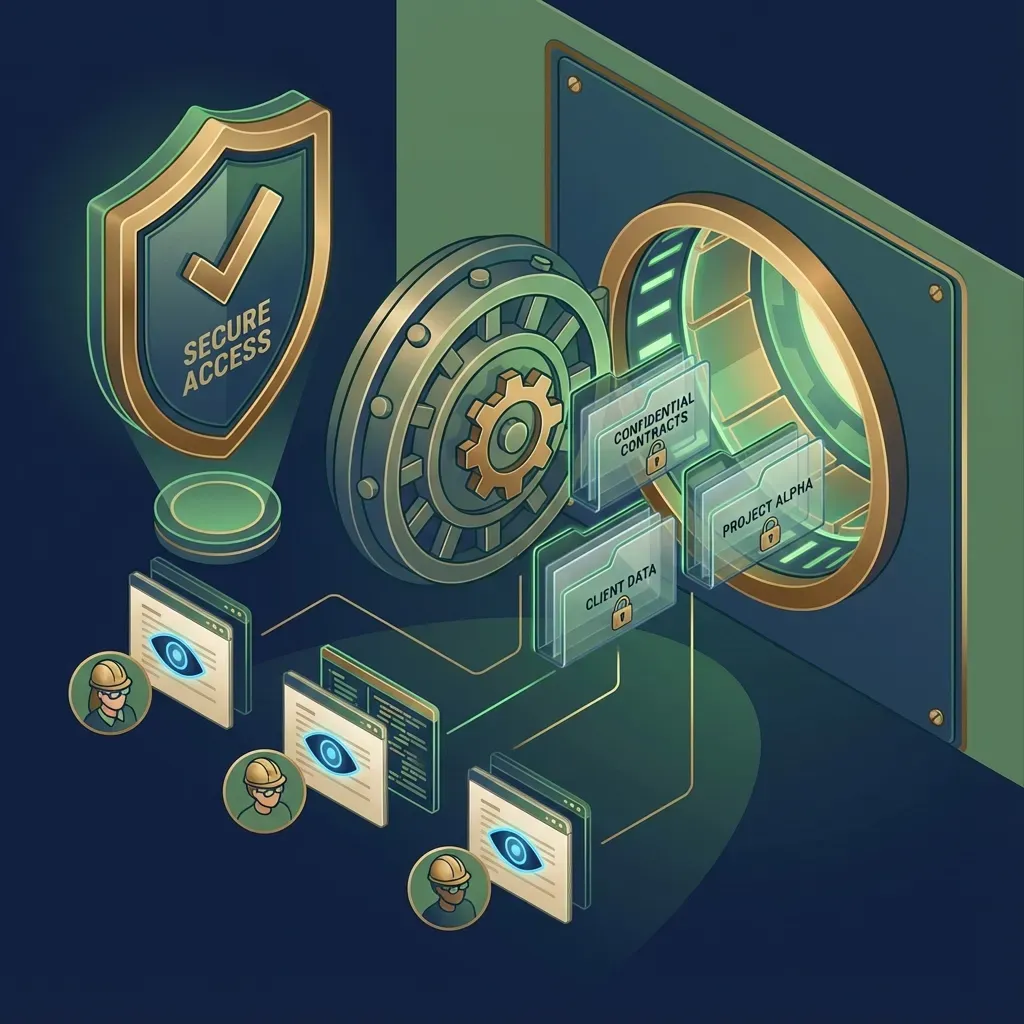
Follow these steps for a secure setup.
Sign Up and Create Org: Use free agent tier. New org for project isolation.
New Workspace: Name it, enable Intelligence for RAG.
Upload Base Files: Use URL import or API for datasets.
Invite Agents: Share API keys or MCP URL. Set roles.
Code Locks in Agents:
   from fastio import FastIOClient

client = FastIOClient(api_key)
   lock = client.acquire_lock('file_id')
   if lock:
       data = client.read_file('file_id')
       ### process
       client.write_file('file_id', new_data)
       client.release_lock('file_id')
Test Parallel Runs: Launch agents, check logs.
Add Humans: Invite for review.
Troubleshoot: Locks fail? Check timeouts. Still conflicting? Confirm releases.
Scaling to More Agents
Add webhooks for notifications. Monitor dashboard. Free tier supports multiple workspaces.
Real-World Examples
Secure multi-agent collaboration works well in production workflows.
Data Processing Pipeline
Three agents handle ETL: Extractor pulls data via URL import, Transformer cleans and processes, Loader writes results.
Transformer acquires lock on raw data before cleaning. Loader waits for webhook notification.
Result: Zero overwrites, consistent outputs at scale.
Video Production Workflow
Agent multiple transcodes uploads to web proxies. Agent multiple generates summaries using Intelligence Mode. Agent multiple assembles timelines.
Locks prevent concurrent transcoding. Semantic search provides context for summaries.
RAG Builder
Agents index documents from various sources. Merger locks index during updates. Tester validates post-merge.
Keeps index consistent for reliable RAG.
These examples highlight Fast.io's locks, webhooks, and intelligence for reliable workflows.
Best Practices and Troubleshooting
Lock only for writes. Read locks for queries.
Max 60s timeouts. Backoff on retries.
Version files after release for history.
Review logs weekly for hot spots.
Higher roles override locks.
Network drop mid-lock? Timeout releases it.
Add one practical example, one implementation constraint, and one measurable outcome so the section is concrete and useful for execution.
Teams should validate this approach in a small test path first, then standardize it across environments once metrics and outcomes are stable.
Document decisions, ownership, and rollback steps so implementation remains repeatable as the workflow scales.
Teams should validate this approach in a small test path first, then standardize it across environments once metrics and outcomes are stable.
Frequently Asked Questions
How do you secure multi-agent collaboration?
Use distributed file locks, permissions, and audit logs. Fast.io's API makes it easy to integrate.
Multi-agent file lock best practices?
Lock before write, release after, use timeouts, check logs. Add versioning.
How does Fast.io prevent agent race conditions?
File locks give exclusive edit access.
Can humans collaborate with agents securely?
Yes, same workspace, role-based tools. Locks apply to everyone.
What if a lock isn't released?
Automatic timeout frees it.
Free tier limits for agents?
multiple storage, multiple workspaces, multiple credits per month.
How do distributed locks work in Fast.io?
Agents POST to the lock endpoint with file ID. Success returns lock ID and expiry time. Release explicitly with DELETE or let timeout handle failures.
Can OpenClaw agents use Fast.io?
Yes, install via `clawhub install dbalve/fast-io` for multiple tools and zero-config natural language file management.
What if network fails during a lock hold?
Automatic timeout releases the lock automatically, preventing permanent deadlocks.
How to transfer ownership from agent to human?
Agents create orgs and workspaces, then use the ownership transfer API. Agent keeps admin access post-transfer.
Related Resources

Build Secure Agent Workspaces
Free agent tier: 50GB, 5000 credits, no card needed. Start coordinating agents today. Built for secure multi agent collaboration workflows.