How to Secure MCP File Access for AI Agents
Secure MCP file access enforces role-based permissions on tool calls and file reads for AI agents. With rising MCP adoption in agent workflows, improper access remains a top breach vector. Fast.io provides detailed controls at organization, workspace, folder, and file levels, scoped API keys, file locks, audit logs, and encryption to keep agent operations safe. This guide covers step-by-step setup, best practices, and troubleshooting for secure agent file management.

What Is Secure MCP File Access?
Secure MCP file access controls AI agent actions on files via the Model Context Protocol server. MCP tools let agents read, write, and manage files in workspaces.
Fast.io's MCP server provides 251 tools matching all UI features. Without limits, agents could access any file or delete data. Permissions restrict them to specific organizations, workspaces, folders, or files.
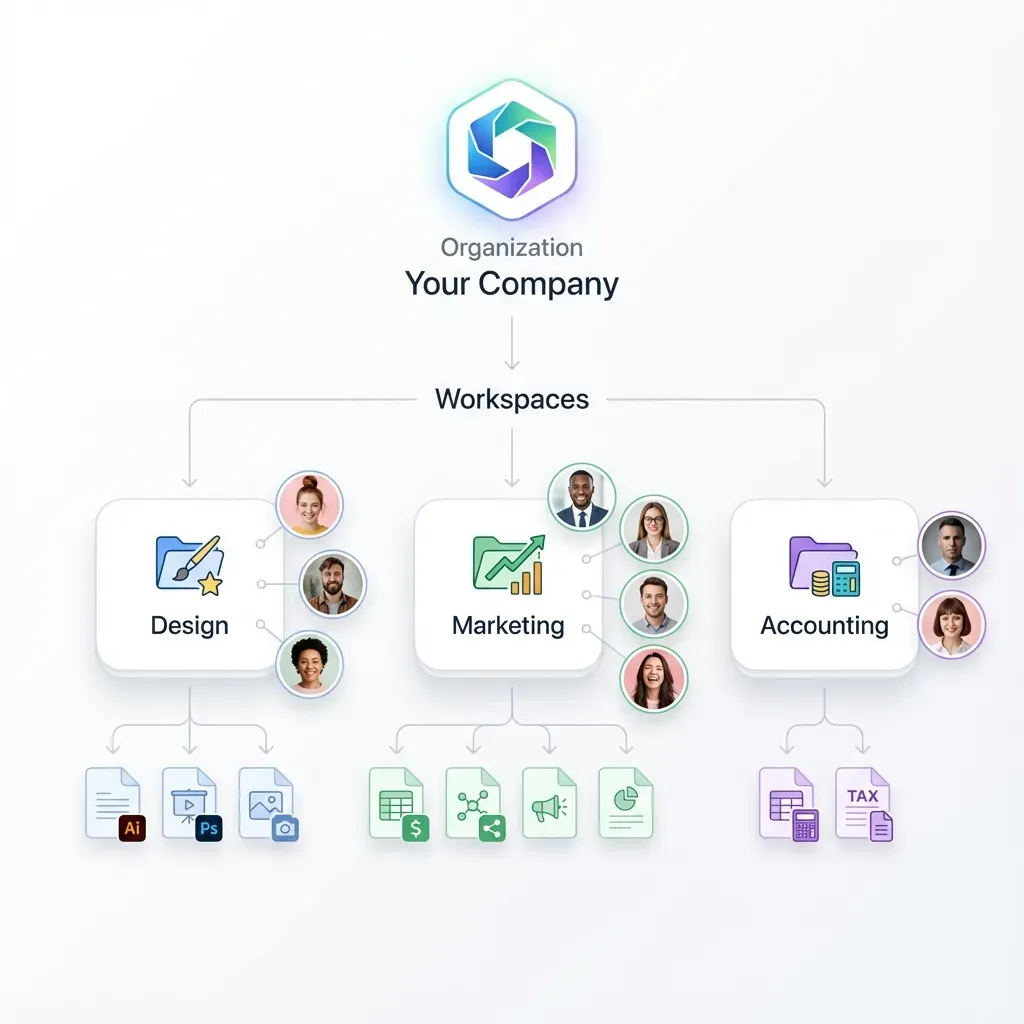
Set role-based access at four levels: organization, workspace, folder, and file. Give agents only what they need. This reduces breach risks.
Helpful references: Fast.io Workspaces, Fast.io Collaboration, and Fast.io AI.
Define clear tool contracts and fallback behavior so agents fail safely when dependencies are unavailable. This improves reliability in production workflows.
Why Secure MCP Access for AI Agents?
AI agents process sensitive data in workflows. Bad permissions lead to leaks or overwrites. According to Verizon's multiple DBIR, multiple% of breaches involved ransomware due to poor access controls.
In agent teams, one wrong setup exposes all files. More agents use MCP to coordinate, but security often falls behind.
Consider a multi-agent workflow: one agent analyzes data, another generates reports, a third shares outputs. Loose permissions risk data leaks or overwrites. According to Verizon's 2025 DBIR, ransomware appears in 75% of system-intrusion breaches, often due to poor access controls.
Real-World Risks:
- Data Exposure: Agent reads unauthorized files during RAG queries.
- Overwrites: Concurrent edits corrupt shared datasets.
- Escalation: Scoped agent gains broader access via misconfiguration.
Benefits of Security:
- Enables safe human-agent collaboration.
- Supports ownership transfer: agent builds, human claims.
- Complies with security best practices without certifications.
Fast.io handles these risks without slowing down your workflows.

Detailed Permissions in Fast.io MCP
Fast.io provides role-based permissions: owner, admin, member, guest, view.
Apply them at organization (all workspaces), workspace (files inside), folder, or file level.
MCP scopes match: org, workspace, all_orgs. Use PKCE login with scope_type: "workspace" to restrict access.
Example PKCE flow:
- Call
authactionpkce-loginwithscope_type: "workspace". - User selects workspace.
- Approve read-write access.
The agent stays tied to that workspace only.
Define clear tool contracts and fallback behavior so agents fail safely when dependencies are unavailable. This improves reliability in production workflows.
Teams should validate this approach in a small test path first, then standardize it across environments once metrics and outcomes are stable.
Permission Levels Table
| Level | Controls | Capabilities |
|---|---|---|
| Org | All workspaces | Manage members, billing, settings |
| Workspace | Files, shares | Invite collaborators, enable intelligence |
| Folder | Subfiles | Organize assets |
| File | Read/write | Versioning, locking, comments |
Role Definitions:
- Owner: Full control, transfer ownership.
- Admin: Manage members, settings (no billing).
- Member: Read/write files, create shares.
- Guest: Limited upload/download.
- View: Read-only previews.
Set via MCP member tool: member add --role member --entity_type workspace --entity_id {id}.
Step-by-Step PKCE Scoped Login:
- Call
auth pkce-login --scope_type workspace --agent_name "DataAgent". - User opens URL, selects workspace, approves read-write.
- Copy code, call
auth pkce-complete --code {code}. - Session scoped to that workspace only.
This prevents agents from accessing other org data accidentally.
Edge Cases:
- Inherited permissions: workspace role applies to child folders/files.
- External orgs: Agents invited to workspace only see that workspace.
Test scopes with auth status to verify scopes_detail.
Scoped API Keys for Agents
API keys work as Bearer tokens with optional scopes.
Create them in Settings > API Keys. Tag with agent_name and add expiration.
Use auth action set-api-key to authenticate.
Scopes like org:multiple, workspace:multiple:* (read/write all files).
Tip: Use one key per agent and rotate monthly.
Code example (pseudocode):
auth(set-api-key, key="sk-abc123", agent_name="FileAgent")
Step-by-Step API Key Setup:
- Human creates key in UI: Settings > API Keys > Create Key.
- Set scope: e.g.,
workspace:multiple:read_write. - Tag
agent_name="AnalyzerAgent", setexpires_in_days=multiple. - Agent calls
auth set-api-key --key {key}.
Scope Syntax:
org:{org_id}:*- full org access.workspace:{ws_id}:read- read-only workspace.folder:{node_id}:write- write to specific folder.- Multiple: comma-separated.
Verify with auth status - check scopes_detail array.
Best Practices:
- One key per agent/task.
- Rotate every multiple days via
auth api-key-rotate. - Use descriptive tags for auditing.
- Revoke immediately if compromised:
auth api-key-delete --key_id {id}.
Troubleshooting:
- "Invalid scope": Check entity exists and user has access.
- Expired: Create new, update agent config.
- Insufficient perms: Error on tool call, review role.
File Locks for Concurrent Access
File locks prevent clashes in multi-agent editing.
Acquire lock before changes via MCP tools. Release after.
Good for shared reports or datasets.
How File Locks Work:
Locks are advisory - acquired via storage lock --context_type workspace --node_id {id} --duration_minutes multiple.
Release with storage unlock --node_id {id}.
If locked, operations fail with multiple Locked.
Example Multi-Agent Flow:
- Agent A:
storage lock --node_id report.csv. - Edit: upload new version.
- Agent A:
storage unlock --node_id report.csv. - Agent B can now lock/edit.
Pseudocode:
lock_response = storage("lock", node_id="f3jm5-...", duration=30)
### Do work...
storage("unlock", node_id="f3jm5-...")
Edge Cases:
- Timeout: Auto-release after duration.
- Nested locks: Not supported, lock file only.
- Folders: Locks apply recursively to contents.
Best Practices:
- Short durations (multiple-multiple min).
- Try-lock with exponential backoff.
- Log lock attempts for monitoring.
In multi-agent systems, locks prevent race conditions on shared files like datasets or configs.
Audit Logs and Monitoring
Audit logs track views, downloads, and changes.
MCP actions appear in workspace activity.
Check via event tools or UI.
Webhooks send real-time alerts for file changes.
Accessing Logs via MCP:
event search --context_type workspace --workspace_id {id} --limit multiple.- Filter by action:
upload,download,lock. - AI summaries:
event summarize --workspace_id {id}.
Setting Up Webhooks:
webhook create --workspace_id {id} --url https://agent.example.com/hook --events file_changed,member_added.- Receive POST payloads with event details.
Example Payload:
{
  "event": "file_uploaded",
  "node_id": "f3jm5-...",
  "user_id": "agent@...",
  "timestamp": "2026-03-09T12:00:00Z"
}
Monitoring Best Practices:
- Poll
event searchfor historical audit. - Webhooks for real-time alerts.
- works alongside SIEM tools.
- Review weekly for anomalies.
With encryption at rest/transit, MFA, and SSO, Fast.io provides strong security for agent file access.
Troubleshooting:
- No logs: Check permissions on workspace.
- Missed events: Use
activity pollfor long-polling. - High volume: Paginate with
offset/limit.
Best Practices for Secure MCP File Access
Follow these practices to minimize risks:
1. Principle of Least Privilege Assign minimal roles: view for readers, member for editors. Avoid owner unless necessary.
2. Scoped Authentication
Prefer PKCE over API keys for interactive agents. Use scope_type: "workspace" to limit exposure.
3. Key Management
- Generate one key per agent.
- Set multiple-day expiration.
- Rotate via automation.
- Tag with agent name for tracking.
4. Lock Discipline Always acquire locks before modifications. Use short durations (multiple-multiple min). Implement retry logic.
5. Continuous Monitoring
- Poll audit logs daily.
- Set webhooks for high-risk events (delete, share).
- Alert on anomalies like bulk downloads.
6. Testing Workflow
- Deploy agent to test workspace.
- Verify
auth statusscopes. - Simulate failures (lock contention, perm deny).
- Review logs post-run.
7. Compliance Alignment Use encryption, MFA, and SSO. Document access patterns for audits.
Regular checks help address new threats.
Troubleshooting Common Issues
Permission Denied (401/403)
- Check
auth statusscopes. - Verify role on entity.
- Re-auth with broader scope if needed.
Lock Contention (423)
- Poll
storage detailsfor holder. - Wait or notify other agent.
- Extend duration if own lock.
No Audit Logs
- Ensure event permissions.
- Use
activity pollfor recent changes.
Scope Too Narrow
- Regenerate PKCE with
all_workspaces. - Human re-invites agent to org.
Expired Key/Token
auth statusshows expiry.- Re-run
set-api-keyor PKCE.
High Error Rates
- Review webhook payloads.
- Aggregate logs for patterns.
Use event search --query "error" to diagnose.
Frequently Asked Questions
How to secure MCP file access?
Set detailed permissions, scoped API keys, and PKCE with limited scopes. Enable MFA and audit logs on Fast.io.
What are MCP permissions best practices?
Least privilege: minimal access only. File locks for shared work, rotate keys, check logs regularly.
Does Fast.io support scoped MCP access?
Yes, via PKCE scopes and API key limits at org/workspace/folder/file levels.
How do file locks work in MCP?
Agents get/release locks with MCP tools to avoid edit conflicts.
Are MCP tools encrypted?
Yes, encryption at rest and in transit, plus permission controls.
How to rotate API keys for MCP agents?
Use `auth api-key-rotate --key_id {id}` or create new and delete old. Automate monthly via cron job for long-running agents.
What if a file lock times out?
Locks auto-release after duration (e.g., 60 min). Retry with exponential backoff, or check `storage details` for lock status.
Can agents monitor their own actions?
Yes, query `event search` with agent user_id filter. Set webhooks for real-time notifications on sensitive events.
Related Resources

Secure Your AI Agent Workflows
Start with 50GB free storage, 5,000 credits/month, no credit card. Get 251 MCP tools for safe file access. Built for secure MCP agent file workflows. Built for secure mcp file access workflows.