How to Share Videos Privately Without Losing Quality
Private video sharing is the secure distribution of video content to specific recipients with access controls like passwords, expiration dates, or viewer tracking. This guide covers seven methods to share videos privately, explains why YouTube unlisted isn't private, and helps you pick the right approach for your needs.
What Is Private Video Sharing?
Private video sharing is the practice of distributing video files to specific people while preventing unauthorized access. Unlike public video hosting where anyone with the link can view content, private sharing uses access controls to limit who can watch. Common access controls include:
- Password protection - Viewers enter a password before watching
- Email-based access - Only people you invite can view
- Expiration dates - Links stop working after a set time
- Domain restrictions - Only viewers from specific companies can access
- View-only mode - Prevents downloading the original file
Public video links get accessed by unintended viewers 23% of the time according to security research. Password protection alone reduces unauthorized access.
Helpful references: Fast.io Workspaces, Fast.io Collaboration, and Fast.io AI.
Unlisted vs Private vs Password-Protected: Key Differences
These three terms get confused constantly. Here's what each actually means:
Unlisted videos don't appear in search results or on your channel, but anyone with the link can watch them. YouTube's unlisted setting falls into this category. If someone shares your link on social media, the video becomes effectively public.
Private videos require authentication. On YouTube, private means only invited Google accounts can view. The problem: you're limited to 50 invites, and every viewer needs a Google account.
Password-protected videos sit in the middle. Anyone with the link AND the password can watch. This works well for client reviews where you don't want to manage individual accounts.
Why YouTube Unlisted Isn't Actually Private
YouTube unlisted is the most misunderstood setting in video sharing. Here's the reality:
When you set a video to unlisted, it won't show up in YouTube search or on your channel page. But the video is still accessible to anyone who has the URL. There's no password, no viewer verification, nothing stopping that link from spreading.
Real scenarios where unlisted fails:
- A client shares your review link with their entire team
- Someone posts your link in a Slack channel that gets archived publicly
- The link gets indexed by web crawlers that scan shared documents
- A forwarded email exposes the link to unintended recipients
YouTube also reserves the right to show unlisted videos in recommendations if they detect engagement signals. So your "private" video could theoretically surface to strangers. For genuinely private sharing, you need either YouTube's private setting (limited to 50 Google accounts) or a dedicated platform with proper access controls.


Share Files Without Limits on Fast.io
Password protection, expiration dates, and viewer tracking. Keep your videos private while making them easy to access.
Methods to Share Videos Privately
Here are the most reliable ways to share videos with controlled access, ranked by security level and ease of use. Video files demand more from your storage platform than documents do. You need adaptive bitrate streaming for smooth playback, frame-accurate commenting for precise feedback, and enough bandwidth to handle large uploads without timeouts. Progressive download is not good enough for professional review workflows. Video files demand more from your storage platform than documents do. You need adaptive bitrate streaming for smooth playback, frame-accurate commenting for precise feedback, and enough bandwidth to handle large uploads without timeouts. Progressive download is not good enough for professional review workflows.
1. Cloud Storage with Link Controls
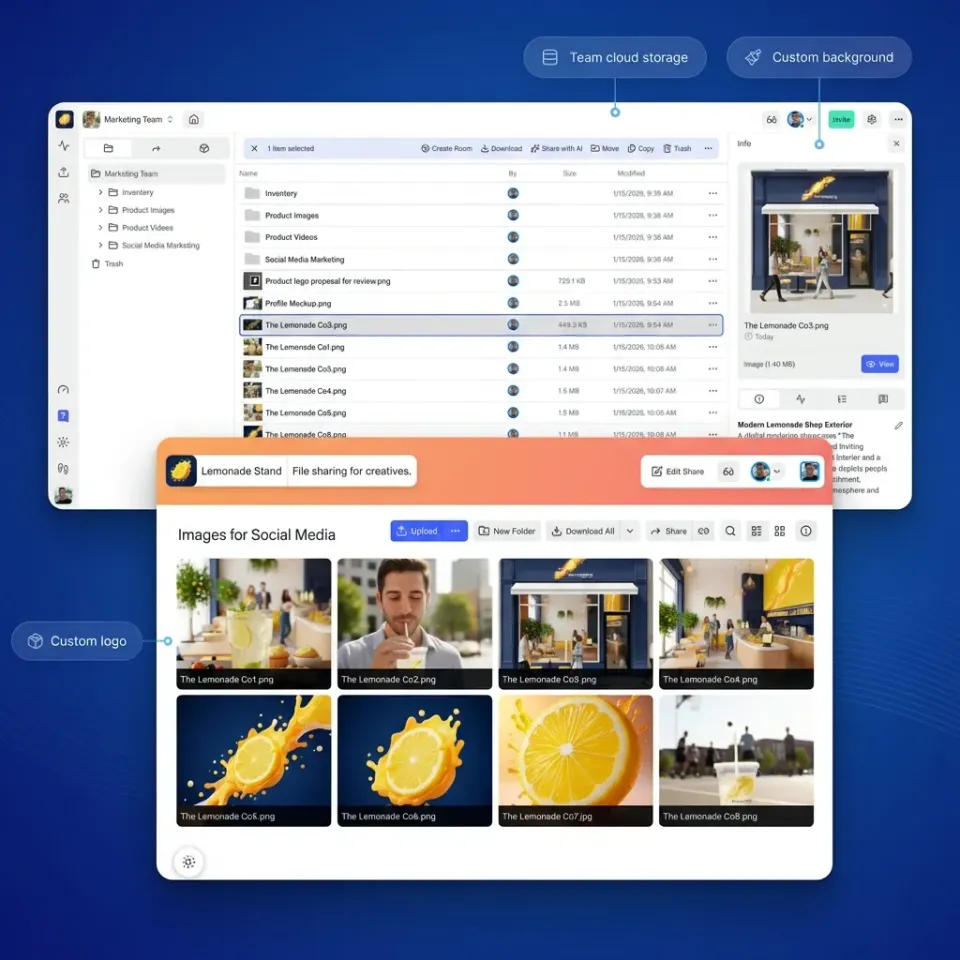
Platforms like Fast.io let you upload videos and generate secure links with specific permissions. You can set passwords, expiration dates, and view-only access without requiring viewers to create accounts.
Best for: Professional workflows, client reviews, team collaboration
Key advantage: Videos stay in one place permanently. No re-uploading for each recipient.
2. Password-Protected Hosting
Services like Vimeo and Jumpshare offer password protection on individual videos. Upload once, share the link and password separately.
Best for: One-off client reviews, sensitive internal content
Consideration: Viewers might share both the link and password, so rotate passwords for sensitive content.
3. YouTube Private (Not Unlisted)
YouTube's true private setting limits access to specific Google accounts you invite. The 50-person limit makes this impractical for larger audiences.
Best for: Small teams already using Google Workspace
Limitation: Every viewer needs a Google account and must be logged in.
4. Data Rooms for Sensitive Deals
Virtual data rooms provide audit trails showing who watched what and for how long. These are standard for M&A, legal discovery, and investor presentations.
Best for: Due diligence, legal proceedings, investor updates
Key feature: Detailed analytics on viewer engagement.
5. Branded Client Portals
White-label portals let you share videos under your own branding with custom domains. Clients access a professional interface rather than a generic file-sharing site.
Best for: Agencies, production companies, professional services
Benefit: Reinforces your brand while maintaining security.
6. Self-Destructing Links
Set links to expire after a certain date or number of views. Useful for time-sensitive content like job interview recordings or pre-release footage.
Best for: Temporary access, preview content, sensitive recordings
Note: Recipients can still screen-record before expiration.
7. Domain-Restricted Access
Limit video access to viewers from specific email domains. If you're sharing with a client at acme.com, only @acme.com email addresses can view.
Best for: Enterprise clients, verified business relationships
Advantage: No individual invites needed for large organizations.
How to Choose the Right Method
The best approach depends on three factors: sensitivity level, audience size, and whether viewers have accounts.
For client reviews: Password-protected links work well. Share the link in your project management tool and the password via text or a separate email. Change the password between project phases.
For internal team videos: Cloud storage with organization-level permissions keeps things simple. Anyone in your company can access, no one outside can.
For sensitive content (legal, financial, medical): Use a data room with full audit trails. You need to prove who accessed what and when.
For creative work in progress: Expiring links prevent old versions from circulating. Set a 7-day expiration and generate fresh links for each revision.
For large external audiences: Domain restrictions scale better than individual invites. Allow entire client organizations rather than managing numerous email addresses.
Security Features That Actually Matter
Not all security features are equally useful. Here's what to prioritize:
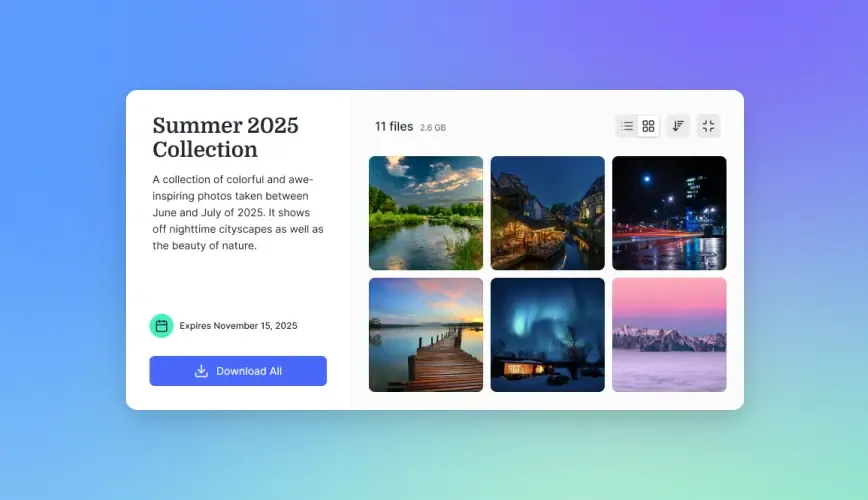
Password protection is table stakes. Any platform without it isn't serious about privacy.
Expiration dates prevent links from becoming liabilities months later. Old links are a major source of unintended access.
View-only mode stops viewers from downloading original files. Useful for review workflows where you want feedback without giving away source material.
Audit logs show exactly who accessed your videos and when. Essential for compliance and for understanding if a leak occurred.
Watermarking embeds viewer information into the video itself. If someone screen-records and leaks content, you can trace it back.
Revocation lets you kill a link immediately. If you realize you shared with the wrong person, you can cut access in seconds rather than hoping they don't watch. Skip features that sound impressive but rarely matter, like blockchain verification or military-grade encryption (all modern platforms encrypt in transit).
Common Mistakes to Avoid
Confusing unlisted with private. This is the most common mistake. Unlisted means hidden from search, not protected from access. Anyone with the link can watch and share.
Sending passwords in the same message as links. If that email gets forwarded, both credentials travel together. Send links and passwords through different channels.
Forgetting to revoke access after projects end. Old links accumulate. Set expiration dates by default, or review shared links quarterly.
Using personal cloud storage for work. Your personal Dropbox or Google Drive lacks enterprise controls. If you leave the company, that content goes with you.
Over-relying on NDA agreements. Legal agreements don't prevent leaks, they just give you recourse after the damage is done. Technical controls prevent the leak in the first place.
Ignoring mobile access. Many viewers watch on phones. Make sure your sharing method works on mobile without requiring app downloads.
Frequently Asked Questions
How do I share a video privately?
Upload your video to a cloud storage platform with link controls, then generate a password-protected or invite-only link. Share the link with your intended recipients and, if using a password, send the password through a separate channel. Avoid YouTube unlisted, which isn't private.
Is YouTube unlisted private?
No. YouTube unlisted videos are hidden from search results but accessible to anyone with the link. The link can be shared freely, meaning your video can spread beyond your intended audience. For true privacy on YouTube, use the Private setting (limited to 50 Google accounts) or use a dedicated private video hosting platform.
What is the best way to share videos securely?
For most professional use cases, cloud storage with password protection, expiration dates, and audit logging offers the best balance of security and convenience. For highly sensitive content, use a virtual data room with viewer tracking and watermarking.
Can I share a private video without the recipient needing an account?
Yes. Password-protected links let viewers watch without creating accounts. They just need the link and the password. This works better than YouTube Private, which requires every viewer to have a Google account.
How do I prevent someone from downloading my private video?
Enable view-only mode when generating your share link. This removes the download button and prevents saving the original file. Note that determined users can still screen-record, so consider watermarking for highly sensitive content.
Related Resources

Share Files Without Limits on Fast.io
Password protection, expiration dates, and viewer tracking. Keep your videos private while making them easy to access.