How to Set Up File Sharing for Post-Production Teams
Guide to post production file sharing: Post-production file sharing refers to specialized workflows and tools for transferring raw footage, project files, and deliverables between editors, colorists, VFX artists, and clients. Post-production houses move hundreds of gigabytes of data daily during active projects.
What Makes Post-Production File Sharing Different: post production file sharing
Post-production file sharing has requirements that general-purpose tools don't address. An editor sending a Premiere Pro project to a colorist isn't like a sales team sharing a PDF. The files are large. A single day of high-resolution shooting generates hundreds of gigabytes to several terabytes of footage depending on codec and camera count. Project files reference media across multiple drives. Renders output in formats (ProRes, DNxHR, EXR sequences) that consumer platforms compress or reject outright. The workflows are complex. A single project might involve handoffs to:
- Assistant editors for organization and syncing
- Lead editors for the creative cut
- Colorists for grading locked picture
- VFX artists for specific shots
- Composers for score and music editing
- Sound mixers for audio post
- Clients for review and approval
Each collaborator needs different files at different stages. The assistant editor needs everything during ingest. The colorist only needs the locked timeline and full-resolution media. The client needs a streaming preview, not a massive download. Generic file sharing treats every file the same. Post-production file sharing understands that a project file is useless without its linked media, that review cuts need instant streaming, and that handoffs happen on tight deadlines where waiting several hours for a download isn't an option.
Helpful references: Fast.io Workspaces, Fast.io Collaboration, and Fast.io AI.
Essential Requirements for Post-Production File Sharing
Based on how post-production actually works, essential requirements separate platforms that work from platforms that create more problems than they solve.
1. Speed That Matches Production Schedules
When picture locks late in the evening and the colorist needs media by morning, upload speeds matter. Consumer platforms top out at limited speeds even on good connections. Professional workflows need accelerated transfers that saturate available bandwidth. The math is simple: large projects take nearly nine hours at typical consumer speeds. At professional speeds, it's under an hour. That's the difference between starting work tomorrow and starting work next week.
2. Security for Unreleased Content
Film and TV projects carry strict confidentiality requirements. Studios issue security guidelines. NDAs cover everyone who touches the footage. Leaks end careers and trigger lawsuits. Security features that matter:
- Encryption at rest and in transit
- Access controls at folder and file level
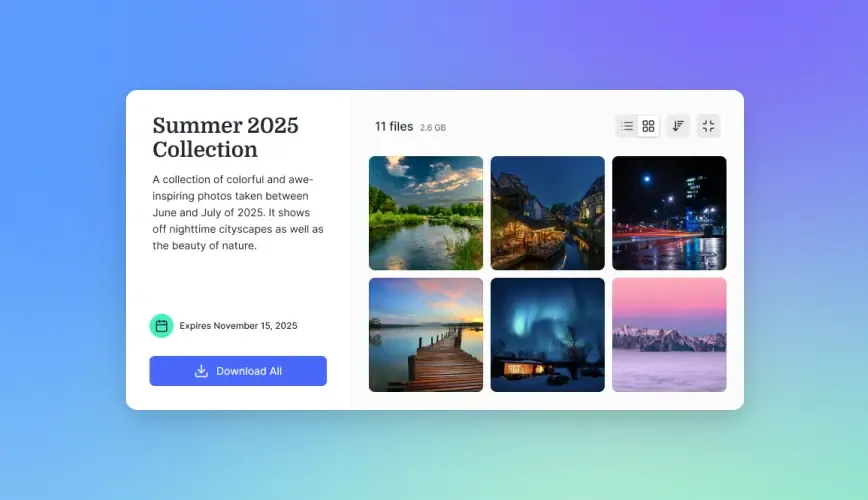
- Link expiration for temporary shares
- Download restrictions for review-only access
- Audit logs showing who accessed what and when
3. Organization That Scales
A feature film generates hundreds of thousands of files across departments. Without structure, finding the right version of the right shot becomes a daily frustration. Effective organization means:
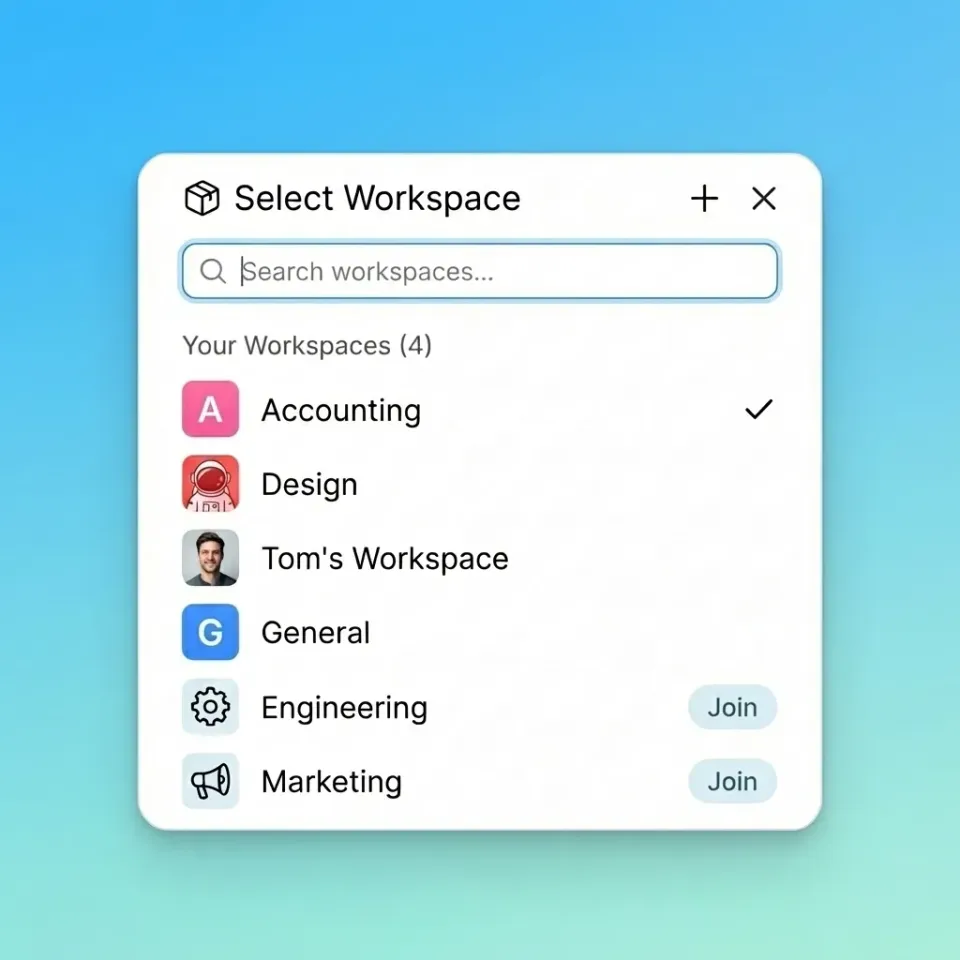
- Workspace separation by project and department
- Consistent folder structures that match post workflows
- Search that finds files by name, metadata, or content
- Version tracking that shows which file is current
4. Review Without Downloads
Directors, producers, and clients need to watch cuts. They don't need to download large files to do it. Streaming playback via HLS lets reviewers watch immediately in their browser. The video starts in seconds, not hours. Quality adapts to their connection. They can scrub the timeline, leave comments, and share feedback without ever downloading.
5. Versioning That Tracks Changes
Post-production is iterative. Every cut has multiple versions. Every VFX shot goes through revisions. Knowing which version is current, which was approved, and what changed between them prevents costly mistakes. Version control should be automatic. Upload a new file with the same name and the system keeps both, marking the new one as current while preserving the previous version for reference.
How Post-Production Teams Share Files Today
Different file types and workflow stages call for different sharing approaches.
Project File Sharing
NLE project files (Premiere Pro, DaVinci Resolve, Final Cut Pro, Avid Media Composer) are small but reference external media. Sharing a project file without its linked footage is useless. Two approaches work:
Collect and package: Export the project with all linked media consolidated into a single folder. This creates a portable package anyone can open. The downside: file sizes balloon because you're duplicating footage.
Shared storage: Keep media on cloud storage that everyone can access. Project files reference the same paths, so handoffs only require sharing the small project file. The upside: no duplication, instant handoffs. The requirement: reliable, fast access to shared storage. Proxy workflows help both approaches. Generate low-resolution versions of source footage, edit with proxies, then relink to full-resolution for finishing. Proxy projects are small enough to share easily while maintaining the link structure for final assembly.
Dailies and Rushes
Production generates footage daily. Editorial needs to start organizing and cutting while shooting continues. Getting footage from set to post quickly keeps editors from falling behind. Camera to cloud workflows upload footage directly from location to cloud storage. Editorial accesses files as they upload, sometimes beginning selects before the day's shoot wraps. For traditional handoffs, shooters ingest camera cards and upload overnight. Editorial downloads or streams the next morning.
Review Cuts
Review cuts go to directors, producers, showrunners, and clients. They need to watch, not download. They need to leave feedback tied to specific moments, not send paragraph descriptions of "that part around the middle."
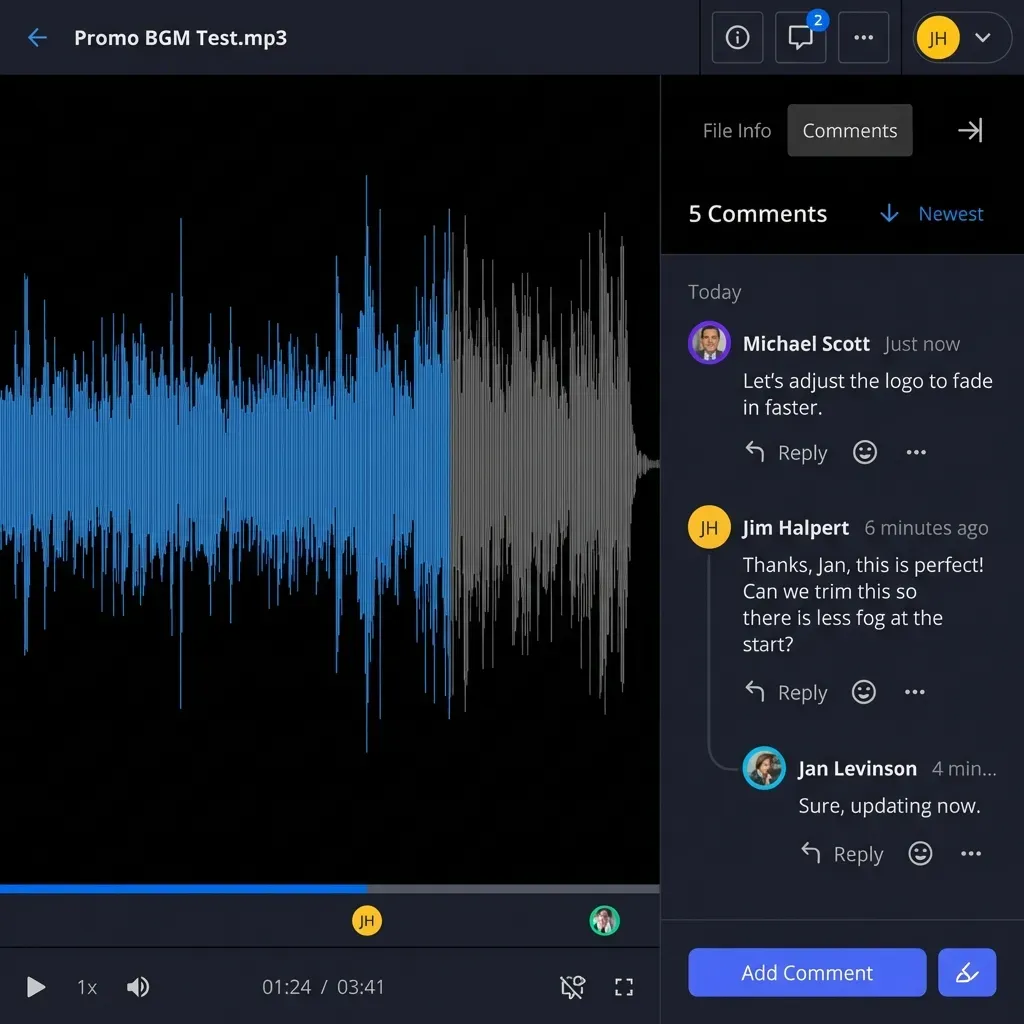
Streaming links with timecoded commenting handle this. The reviewer watches in their browser, clicks a frame, types their note. Everyone sees the same timeline with the same feedback visible.
Final Deliverables
Masters need to arrive at their destination bit-for-bit identical to the source. No compression, no transcoding, no quality loss. Delivery tracking confirms receipt. When a distributor claims they never got the files, logs show exactly when they downloaded and what they accessed.
Proxy Workflows for Remote Post-Production
Remote editing at scale requires proxy workflows. Nobody is going to download terabytes of high-res RAW footage over their home internet connection to start a cut.
How Proxy Workflows Work
- Ingest source footage to central storage
- Generate proxies at editing resolution (typically 1080p ProRes Proxy or H.264)
- Editors work with proxies for responsive playback
- Conform to full-resolution once picture locks
- Finishing specialists use original media for color and VFX
Proxies are typically much smaller than source footage. Terabytes of high-res footage become hundreds of gigabytes at lower resolution, workable over a decent home connection.
Server-Side vs. Local Transcoding
Where you generate proxies matters.
Local transcoding means each editor generates their own proxies. This takes hours, duplicates effort across team members, and requires everyone to have capable hardware.
Server-side transcoding generates proxies once, centrally. Editors access the same proxy set immediately. No waiting, no duplication, no transcoding hardware needed on their end. Cloud-native platforms can generate proxies automatically during upload. By the time the source media finishes uploading, streaming proxies are ready for editorial.
Maintaining Project Portability
Proxy workflows depend on precise naming and frame-rate matching. The proxy must match the source file frame-for-frame so relinking works automatically in your NLE. Good proxy generation:
- Preserves original filename with suffix (SOURCE_NAME_proxy.mov)
- Matches frame rate exactly
- Matches timecode exactly
- Uses consistent codec across all proxies
Security for Film and TV Projects
Studios don't trust their content to platforms without security infrastructure. A leaked trailer, an early script, an unfinished VFX shot posted online can derail marketing campaigns and spoil releases.
What Studios Require
Major studios publish security guidelines covering:
- Encryption standards for data at rest and in transit
- Access control policies (who can see what)
- Watermarking for tracking leak sources
- Geographic restrictions for content that can't leave certain regions
- Audit requirements for tracking all access
Studios sometimes require vendors to complete security assessments before sharing content. Having answers to these questions ready speeds up onboarding.
Practical Security Features
For day-to-day post work, these security features matter most:
Granular permissions: Control access at workspace, folder, and file level. The assistant editor sees everything. The colorist sees only the locked timeline. The client sees only their approved cuts.
Link controls: Set expiration dates, require passwords, restrict to specific email domains. A review link to a director works only for their email address, expires in two days, and doesn't allow downloads.
Watermarking: Burned-in identifiers track who received which copy. If footage leaks, the watermark identifies the source.
Audit logs: Complete history of who viewed, downloaded, or modified each file. When security incidents happen, logs provide the investigation trail.
Working with Clients Under NDA
Client reviews often happen under NDA. The client needs to see the work without being able to download and share it freely. View-only access with disabled downloads handles this. The client watches the streaming version, leaves comments, approves cuts, but never has a downloadable file on their device.
Integrating File Sharing with Review Workflows
File sharing and creative review are connected. Getting files to reviewers is half the problem. Collecting their feedback efficiently is the other half.
The Review Bottleneck
Review cycles average several rounds per project. Each round traditionally goes:
- Editor exports a review cut
- Upload to sharing platform
- Email link to reviewers
- Wait for everyone to watch
- Collect feedback via email, Slack, text, calls
- Compile scattered notes into a change list
- Implement changes, repeat
The creative work of implementing changes might be quick. The logistics in the preceding steps can take days.
Streaming Review Links
When reviewers can watch instantly via streaming link, the timeline compresses. No download wait means feedback can arrive the same day instead of the next day. Link sharing should be simple: generate a URL, set permissions, send. The recipient clicks and watches. No account creation, no app installation, no file downloads.
Frame-Accurate Commenting
Feedback pinned to specific timecodes eliminates ambiguity. "Fix color at a specific timecode" beats "the shot of the car looks too warm."
Good review interfaces let reviewers:
- Click a frame to pin a comment
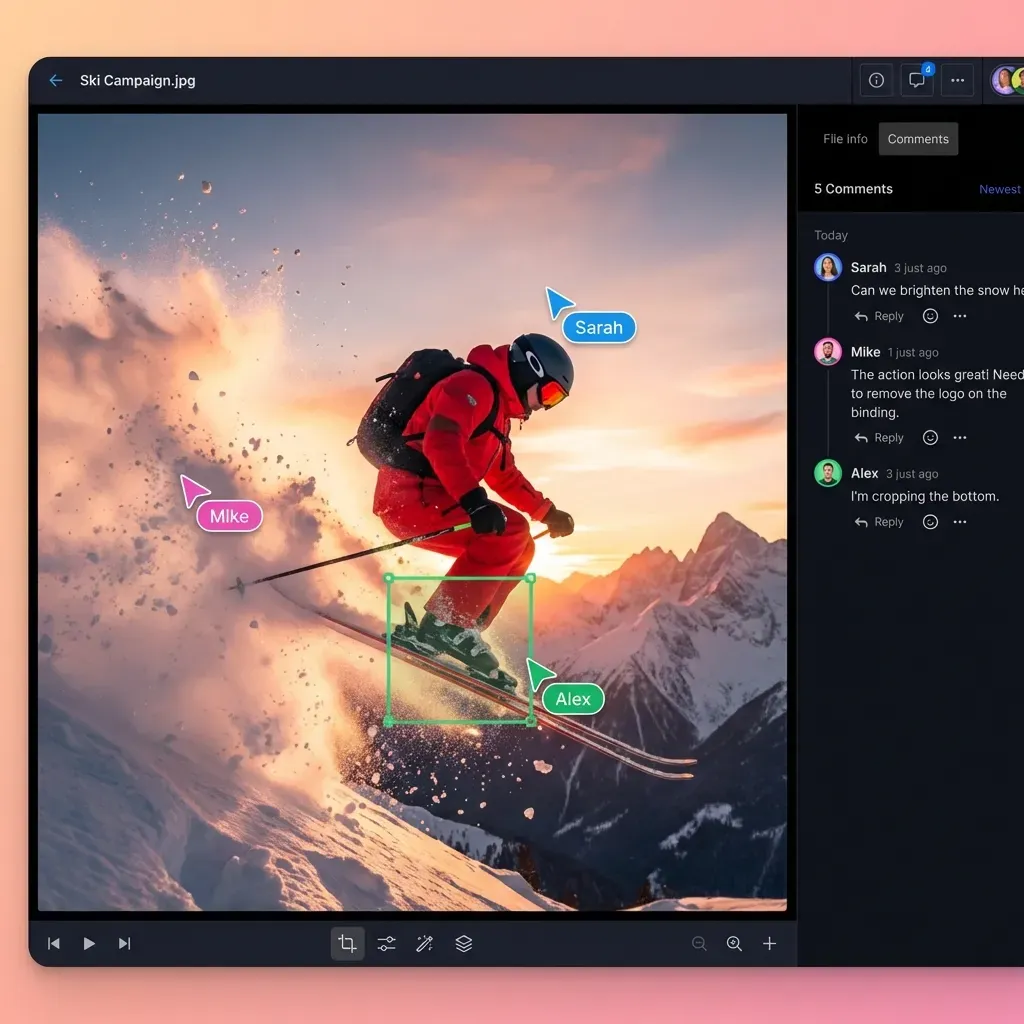
- Draw on the frame to highlight specific areas
- Thread discussions under each note
- Mark comments as addressed or pending
Consolidating Feedback
When feedback arrives from multiple sources (director, producer, client, EP), consolidation becomes its own task. Copy-pasting notes from emails into a change list takes time. Centralized commenting keeps all feedback in one place. Export the complete comment list as a PDF or spreadsheet for the change list. No manual compilation.
Setting Up File Sharing for Your Post House
Implementation depends on your team size, project types, and existing infrastructure.
For Small Teams (2-10 People)
Small teams need simplicity. Complex systems with elaborate permission structures add overhead without benefit when everyone works on everything. Focus on:
- Single workspace per project with straightforward folder structure
- Streaming previews so clients can review without downloading
- Basic version tracking so previous cuts remain accessible
- Simple link sharing for external collaborators
Skip elaborate permission hierarchies. When five people work together daily, they don't need granular access controls.
For Mid-Size Post Houses (10-50 People)
Mid-size teams juggle multiple projects with different crews. Organization and permissions start to matter. Add:
- Workspace separation by project and department
- Permission templates for common roles (editor, colorist, client)
- Project archiving to keep storage manageable
- Usage tracking to understand storage and bandwidth patterns
For Enterprise Facilities (50+ People)
Large facilities need scalability, security compliance, and integration with existing systems. Consider:
- SSO integration with existing identity providers
- API access for workflow automation
- Advanced audit logging for security compliance
- Dedicated support for implementation and issues
- Custom retention policies for different content types
Migration from Existing Systems
Moving from one platform to another requires planning. Account for:
- Data transfer time (terabytes take time to move)
- URL updates (existing links will break)
- Permission mapping (recreating access structures)
- Training period (team adoption takes effort)
Run systems in parallel during transition. Don't cut over completely until you've verified everything works.
Frequently Asked Questions
How do post-production teams share files?
Post-production teams share files through cloud storage platforms that support large file sizes, streaming playback, and professional codecs. For project files, teams either package projects with consolidated media or use shared storage where all editors access the same file paths. Review cuts go out as streaming links with timecoded commenting. Final deliverables transfer via accelerated upload with delivery tracking to confirm receipt.
What is the best way to share video project files?
The best approach depends on your workflow. For one-time handoffs, collect the project with all linked media into a single folder and upload. For ongoing collaboration, use shared cloud storage where the project references media everyone can access. Proxy workflows reduce file sizes dramatically while maintaining full quality for finishing. Most professional teams use a combination: shared storage for active projects, packaged exports for external deliveries.
How do you collaborate on video editing remotely?
Remote video editing collaboration requires three things: shared access to media (via cloud storage with streaming playback), proxy workflows so editors can work without downloading full-resolution footage, and review tools with timecoded commenting. Remote teams upload source footage to central storage, generate proxies automatically, edit with lightweight files, then conform to full-resolution for finishing. Review happens via streaming links where clients and stakeholders watch and comment without downloads.
What file sizes can post-production platforms handle?
Professional post-production platforms handle files from gigabytes to terabytes. A single day of high-resolution shooting generates hundreds of gigabytes to several terabytes depending on codec. Individual deliverable masters for features reach hundreds of gigabytes. Look for platforms with accelerated transfer protocols that can sustain hundreds of Mbps upload speeds and handle files without size limits or chunking errors.
How do you keep unreleased footage secure when sharing?
Secure sharing requires encryption (at rest and in transit), granular access controls (workspace, folder, and file level), link controls (expiration, passwords, domain restrictions), audit logs (tracking all views and downloads), and optional watermarking to identify leak sources. View-only access prevents downloads entirely for review-only scenarios. Most studios require vendors to demonstrate these capabilities before sharing content.
Related Resources

Run Set Up File Sharing For Post Production Teams workflows on Fast.io
See how Fast.io helps post-production teams share large files with streaming previews and frame-accurate review.