How to Build AI Apps with the Fast.io Node.js SDK
The Fast.io Node.js SDK provides a typed TypeScript interface for interacting with workspaces, managing files, and connecting to the Model Context Protocol (MCP). Node.js is the most popular runtime for building and deploying MCP servers and clients, making it a great environment for agentic applications. This tutorial shows developers how to configure authentication, execute tools, and build intelligent workflows.

What is the Fast.io Node.js SDK?
The Fast.io Node.js SDK provides a typed TypeScript interface for interacting with workspaces, managing files, and connecting to the Model Context Protocol (MCP). It connects your custom backend services to Fast.io's persistent storage layers.
Building agentic workflows requires predictable data handling. Manual HTTP requests often cause subtle bugs, broken JSON parsing, or missing authorization headers. The official SDK prevents these issues with autocomplete, strict typing, and built-in error handling. You get immediate access to the free agent tier, giving you multiple of storage, multiple maximum file limits, and multiple monthly credits without needing a credit card.
Developers choose this approach to simplify operations. Instead of writing custom logic for file streams, polling for extraction jobs, or formatting MCP tool calls, you call a single method. The SDK abstracts the underlying streamable HTTP and Server-Sent Events (SSE) connections so you can focus on your application's logic.
Helpful references: Fast.io Workspaces, Fast.io Collaboration, and Fast.io AI.
Why TypeScript is the Standard for Agent Integration
Other tutorials lack TypeScript integration patterns and type-safe tool execution examples. When you build applications that give AI agents read and write access to a file system, type safety is a security requirement, not just a developer convenience.
The Fast.io Node.js SDK is written in TypeScript and exports exact Zod schemas for its inputs and outputs. If an agent tries calling an MCP tool with a missing parameter, the TypeScript compiler catches the error before the code runs. If the input passes compilation but fails at runtime, the SDK throws a specific validation error instead of returning a vague server failure.
This predictability matters when working with large language models. LLMs can hallucinate tool parameters or format JSON incorrectly. A typed SDK guarantees that any interaction with Fast.io's multiple MCP tools stays within strict boundaries. You do not have to guess whether a metadata field is required or optional because your IDE will tell you.


Give Your AI Agents Persistent Storage
Get 50GB of free storage and access to 251 MCP tools. No credit card required. Built for fast node sdk integration tutorial workflows.
Installing and Initializing the TypeScript Client
To get started with the Fast.io Node.js SDK, install the package and initialize the client in your project. Here is the standard initialization process for a TypeScript environment.
First, install the package using your package manager:
npm install @fastio/sdk
Next, initialize the client. Store your API key in an environment variable rather than hardcoding it in your source files.
import { FastIO } from '@fastio/sdk';

// Initialize the client using an environment variable
const client = new FastIO({
  apiKey: process.env.FASTIO_API_KEY
});
This client instance maintains a connection pool and handles request retries automatically. Create one instance and share it across your application instead of creating a new client for every request. To handle multiple tenants or different agent identities, pass specific workspace IDs or session tokens during individual method calls.
Implementing Workspace Automation
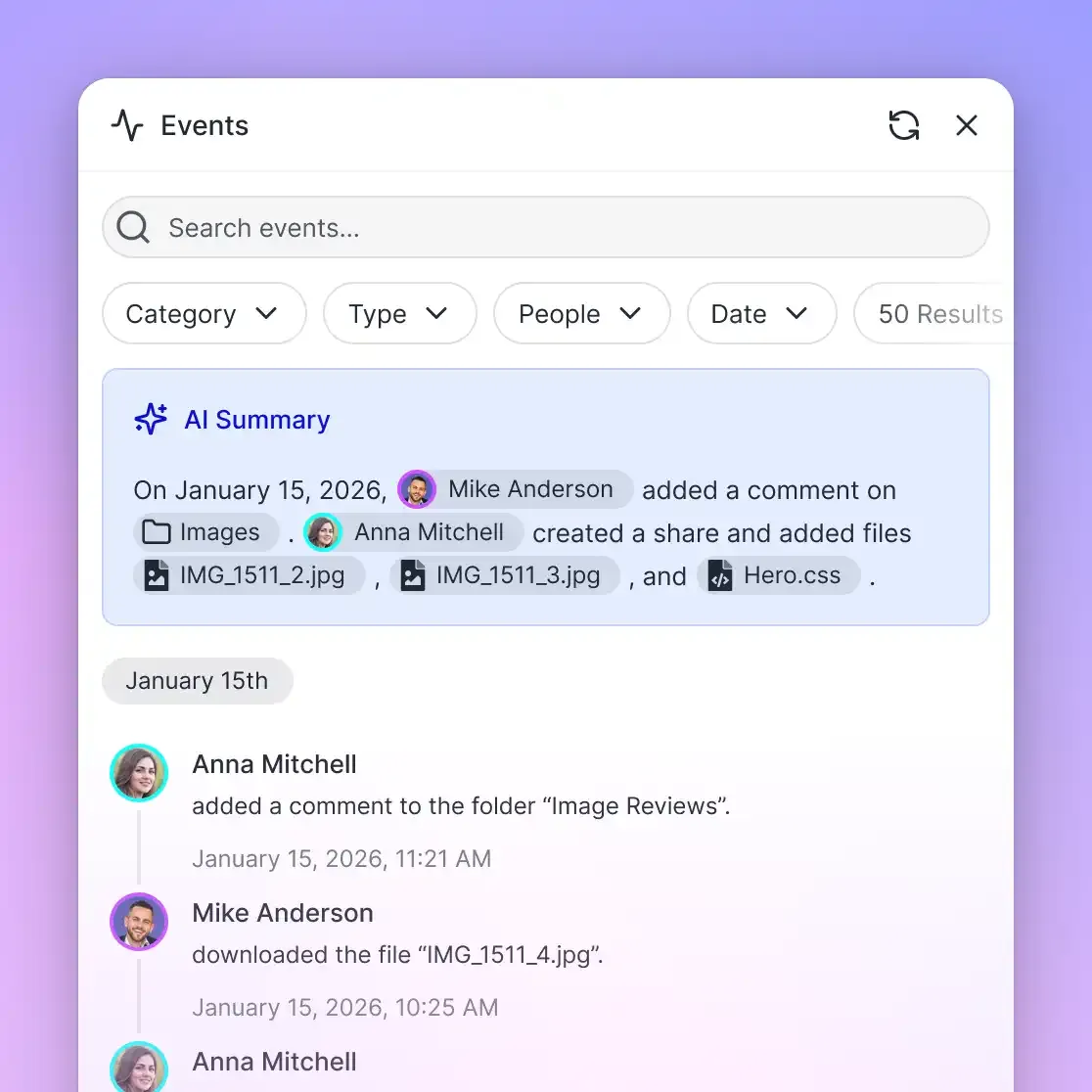
Workspaces act as the base container for files, permissions, and agent interactions. The SDK lets you create and configure these environments programmatically before transferring ownership to a human client or another system.
Creating a new workspace only requires a name, but you can also define access controls and metadata.
async function setupProjectWorkspace() {
  const workspace = await client.workspaces.create({
    name: "Q3 Marketing Campaign",
    description: "Shared folder for campaign assets and agent analysis",
    settings: {
      intelligenceMode: true // Enables automatic RAG indexing
    }
  });

  console.log(`Workspace created with ID: ${workspace.id}`);
  return workspace;
}
Notice the intelligenceMode flag. When you set this to true, Fast.io's built-in vector search automatically indexes any file uploaded to the workspace. You do not need to set up a separate Pinecone or Chroma database. The workspace handles the extraction, chunking, and embedding processes in the background.
Executing Type-Safe MCP Tools
Fast.io exposes multiple specialized MCP tools for managing data. Executing type-safe tools requires passing structured inputs that match the expected definitions. The SDK provides helper methods to make this process simple.
When an LLM decides to take action, it outputs a tool name and a JSON payload. The SDK takes that payload and executes the action safely.
import { toolSchemas } from '@fastio/sdk/mcp';

async function executeAgentAction(toolName: string, args: unknown) {
  // The SDK exports schemas to validate LLM output dynamically
  const schema = toolSchemas[toolName];

  if (!schema) {
    throw new Error(`Unknown tool requested: ${toolName}`);
  }

  // Validate the raw arguments from the LLM
  const validArgs = schema.parse(args);

  // Execute the tool with type-safe parameters
  const result = await client.mcp.execute(toolName, validArgs);

  return result;
}
This pattern prevents malicious or malformed requests from reaching your workspace. If the LLM tries calling a delete_file tool without providing the mandatory fileId, the schema.parse() step throws an error immediately. You can catch this error and feed the message back to the LLM so it can correct its mistake.
File Management and External Imports
Agents often need to gather context from existing platforms. Instead of downloading files locally and uploading them again, you can use the SDK's URL Import feature to save bandwidth and local storage.
The URL Import capability lets your application pull files directly from Google Drive, Box, OneDrive, or Dropbox via OAuth.
async function importClientBrief(workspaceId: string, driveFileUrl: string) {
  const importJob = await client.files.importFromUrl({
    workspaceId: workspaceId,
    url: driveFileUrl,
    provider: "google_drive"
  });

  // The import happens server-to-server with no local I/O
  console.log(`Import started. Job ID: ${importJob.id}`);
}
Because the transfer happens server-to-server, it bypasses your Node.js application's memory limits. This helps when dealing with large datasets or video files that would otherwise crash a standard server process.
Concurrent Access with File Locks
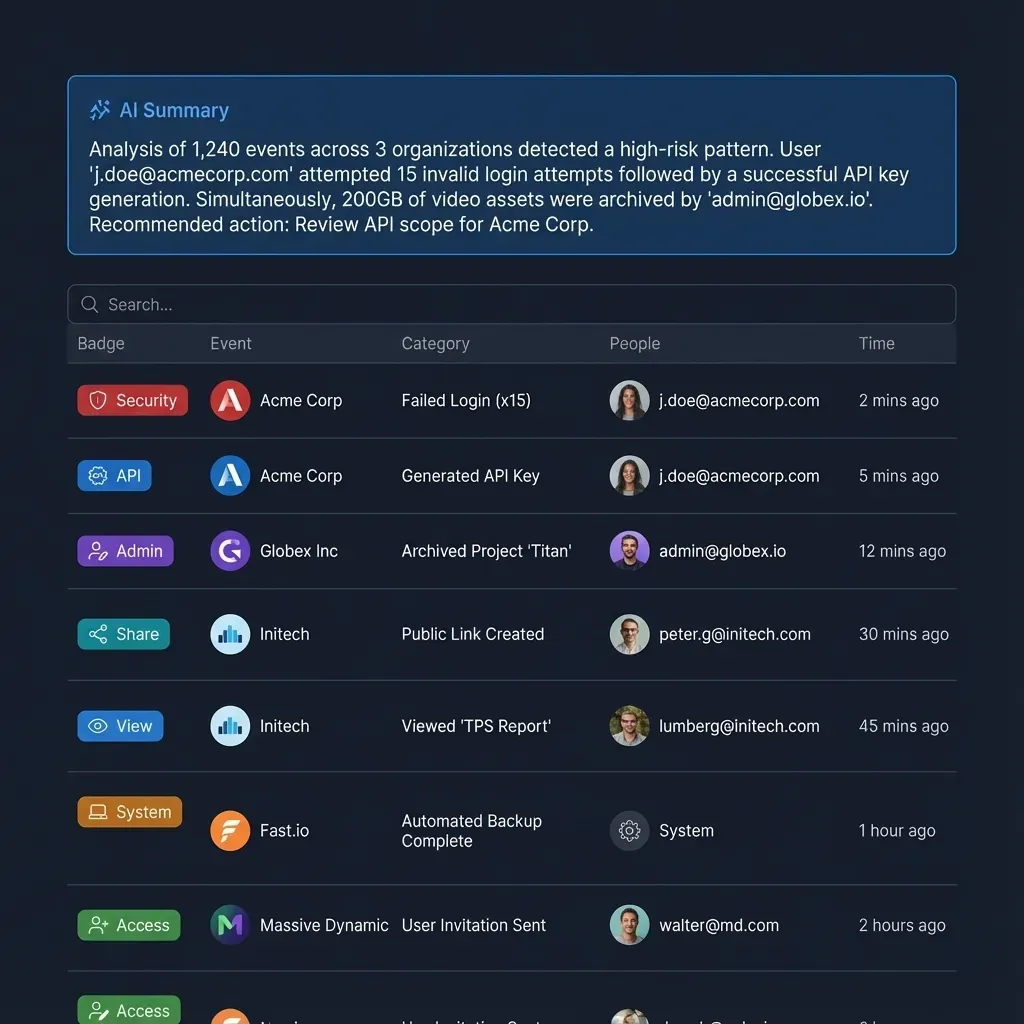
When you deploy multi-agent systems, you frequently encounter race conditions. If Agent A tries updating a strategy document while Agent B summarizes it, the results become unpredictable.
The Fast.io Node.js SDK solves this with explicit file locks. An agent must acquire a lock before it can modify a resource.
async function safeUpdate(fileId: string, newContent: string) {
  // Attempt to acquire an exclusive lock
  const lock = await client.files.acquireLock(fileId, {
    ttlSeconds: 60, // Auto-release after 60 seconds
    reason: "Agent A updating strategy document"
  });

  try {
    await client.files.update(fileId, { content: newContent });
  } finally {
    // Always release the lock, even if the update fails
    await client.files.releaseLock(fileId, lock.token);
  }
}
This approach ensures operations happen sequentially. If another agent tries acquiring a lock on the same file, the SDK returns a specific LockConflictError. This allows your application to pause and retry the operation later.
Handling Webhooks for Reactive Workflows
Modern agentic applications do not poll APIs repeatedly. They react to events instead. The SDK includes middleware for handling webhooks in Node.js frameworks like Express or Fastify.
Fast.io sends an HTTP POST request to your server when a file finishes uploading or an intelligence index completes.
import express from 'express';
import { verifyWebhookSignature } from '@fastio/sdk/webhooks';

const app = express();

app.post('/webhooks/fastio', express.raw({ type: 'application/json' }), (req, res) => {
  const signature = req.headers['x-fastio-signature'] as string;
  const secret = process.env.FASTIO_WEBHOOK_SECRET;

  try {
    // Verify that the payload actually came from Fast.io
    const event = verifyWebhookSignature(req.body, signature, secret);

    if (event.type === 'file.indexed') {
      console.log(`File ${event.data.fileId} is ready for AI queries.`);
      // Trigger the next step in your agent workflow
    }

    res.status(200).send();
  } catch (error) {
    console.error("Invalid webhook signature.");
    res.status(401).send();
  }
});
Validating the signature is an important security step. It guarantees that the event payload has not been tampered with and comes from the verified Fast.io platform.
Evidence and Benchmarks for Node Integrations
Choosing the right runtime for your AI backend determines how well you can scale your operations. The JavaScript and TypeScript ecosystem provides the widest support for tooling, validation, and asynchronous processing.
According to the Stack Overflow multiple Developer Survey, Node.js was used by 40.7% of professional developers. This broad adoption means you can rely on heavily tested, community-supported patterns when building with the Fast.io Node.js SDK. You do not have to invent new ways to handle streams, manage dependencies, or deploy your server. The integration path is standardized, allowing you to focus on the intelligence of your agents rather than the plumbing of your infrastructure.
Frequently Asked Questions
Does Fast.io have a Node.js SDK?
Yes, Fast.io provides an official, typed Node.js SDK built for TypeScript environments. It allows developers to programmatically manage workspaces, execute Model Context Protocol (MCP) tools, and integrate AI agent capabilities directly into backend services.
How to use Fast.io API with TypeScript?
You can use the Fast.io API with TypeScript by installing the `@fastio/sdk` NPM package. Once installed, initialize the client using your API key. This grants access to typed methods for workspace creation, file uploading, and tool execution without writing manual HTTP requests.
Does the SDK include support for the Model Context Protocol?
Yes, the Fast.io Node.js SDK supports MCP integration natively. It provides exact TypeScript type definitions and Zod validation schemas for all multiple Fast.io tools so you can connect language models to your workspace data securely.
Can I use the SDK in a browser environment?
The Fast.io Node.js SDK is designed for server-side execution to protect your API keys and handle direct file system streams safely. For browser-based applications, proxy your requests through a custom Node.js backend that uses the SDK.
What happens if an API call fails in the SDK?
The SDK throws structured, typed error objects when an API call fails. You can catch these errors in a standard try-catch block to inspect the HTTP status code, examine rate limit headers, and read specific validation messages returned by the Fast.io platform.
Related Resources

Give Your AI Agents Persistent Storage
Get 50GB of free storage and access to 251 MCP tools. No credit card required. Built for fast node sdk integration tutorial workflows.