How to Deliver Photos to Clients: A Photographer's Guide
Photo delivery is the final stage of a photography project where edited images are shared with clients through a gallery, download link, or physical media. This guide covers the best methods for delivering photos professionally, from online galleries to branded portals, with practical examples.
What Is Photo Delivery and Why It Matters
Photo delivery is the process of getting your edited images to clients after a shoot. It sounds simple, but the method you choose affects client perception, your workflow efficiency, and whether you get referrals. Most professional photographers now use online galleries for delivery instead of physical media. The shift away from USB drives and DVD handoffs happened years ago, but many photographers still use generic file-sharing links that miss the opportunity to impress clients at the final touchpoint. Clients expect photo delivery within a few weeks for most sessions, with wedding clients typically waiting longer for full galleries. Corporate clients often need same-day or next-day turnaround. Your delivery method needs to match these timelines without creating extra work. A typical session delivers dozens to hundreds of images, and wedding galleries can reach hundreds of photos. That volume rules out email attachments and makes the gallery or download experience critical.
What to check before scaling deliver photos to clients
Here are the main delivery methods, ranked from most professional to most basic:
1. Branded Client Galleries
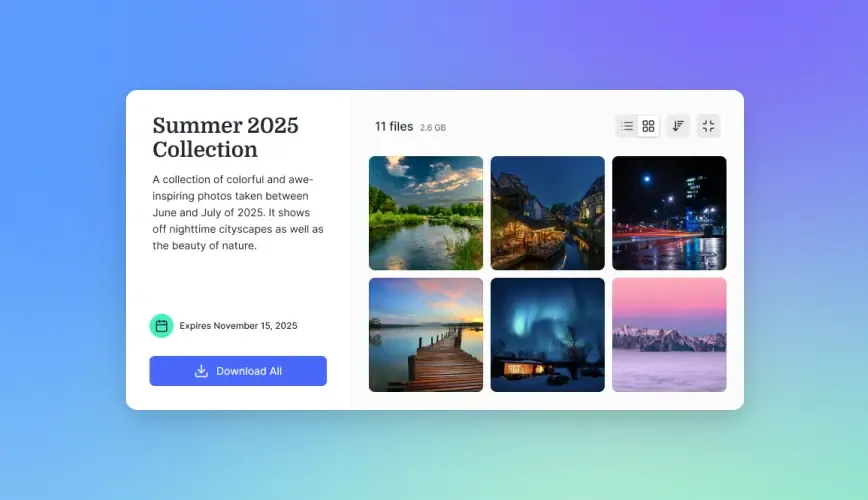
This is the standard for wedding and portrait photographers. Clients receive a link to an online gallery where they can browse, favorite, and download images. The gallery shows your branding, not a generic platform logo.
How it works: Upload edited photos to a gallery platform. Configure password protection and download settings. Send the client a link. They browse, select favorites, and download.
Best for: Wedding, portrait, event, and boudoir photography where presentation matters.
Platforms: Pixieset, Pic-Time, ShootProof, Fast.io (for team studios)
2. Cloud Storage Links
Share a folder through Dropbox, Google Drive, or similar services. Clients get a link to download files directly.
How it works: Upload files to a folder. Generate a share link with optional password. Send to client.
Best for: Commercial clients who just need the files quickly. Repeat clients who know your work.
Limitations: No branding, limited tracking, files look the same as any other folder.
3. File Transfer Services
WeTransfer, MASV, or similar one-time transfer tools. Files upload once, client downloads, link expires.
How it works: Upload files to the service. Enter client email. They receive a download link.
Best for: Large files that need to move fast. One-off deliveries. Corporate clients who request it.
Limitations: No proofing or favorites. Links expire. No ongoing access. ### 4. Email Attachments
Direct attachment for small deliveries, usually web-resolution files.
How it works: Attach JPEGs to an email. Send.
Best for: Small deliveries with just a few final images. Social media crops. Rush proofs.
Limitations: Size limits (usually 25MB max). No organization. Unprofessional for large galleries.
5. Physical Media
USB drives, SD cards, or prints delivered in person or by mail.
How it works: Copy files to media. Package and ship or hand off.
Best for: Clients who specifically request it. Luxury presentation with custom packaging. Areas with poor internet.
Limitations: Slow, expensive, no tracking, physical media can fail.
The Professional Photo Delivery Workflow
Here's a step-by-step workflow that works for most photography businesses:
Step 1: Cull and Edit
Before delivery, reduce your shoot to the keepers. A wedding might start with thousands of captures and deliver a few hundred final images. Spending delivery bandwidth on images clients will never want wastes everyone's time.
Step 2: Export for Delivery
Export settings depend on client needs:
- Print-ready: Full resolution, minimal compression (high quality)
- Social/web: Standard web resolution, sRGB color space, balanced quality
- Album proofing: Lower resolution, watermarked if needed
A recommended export for most client galleries: high resolution on the long edge, sRGB color, and high-quality JPEG settings. This balances file size with print capability.
Step 3: Organize by Deliverable
Create clear folder structure:
/Finals/- Edited images ready for client/Prints/- Print-ready resolution if separate/Social/- Web-optimized versions
Step 4: Upload to Gallery or Cloud
Use your chosen platform. Most gallery software works alongside Lightroom for direct export. Allow enough time for upload depending on your internet speed and file sizes.
Step 5: Configure Access
Before sharing:
- Set password (always for boudoir, usually for weddings, optional for corporate)
- Set expiration if needed (a month or two is common)
- Configure download permissions (full res, web res, or both)
- Add your branding if the platform supports it
Step 6: Notify the Client
Send a personal email with the gallery link. Include:
- Direct link to the gallery
- Password if applicable
- Instructions for downloading
- Expiration date if set
- Your contact info for questions
Step 7: Follow Up
Check whether they accessed the gallery within a week. A quick "Just checking you received everything" email catches technical issues and shows you care about the experience.
Branded Delivery vs. Generic Links
This is the gap most delivery guides miss. The difference between a WeTransfer link and a branded client portal goes beyond aesthetics.
What clients see with a generic link:
- Someone else's logo and colors
- A functional but forgettable interface
- No context about your brand
- The same experience they get from every file sender
What clients see with branded delivery:
- Your logo, your colors, your domain
- A gallery designed to showcase photography
- Professional presentation that matches your session experience
- An impression that extends beyond the shoot itself
Photo delivery is often the last interaction before a client refers you, or doesn't. A WeTransfer link works. A branded gallery impresses. For high-volume commercial work where clients just need files fast, generic links are fine. For wedding, portrait, and premium corporate work, branded delivery justifies higher rates and generates more referrals.
Choosing the Right Gallery Platform
The platform you choose depends on what kind of photography you do.
For Wedding and Portrait Photographers
Pixieset and Pic-Time dominate this market. Both offer beautiful galleries, print sales integration, and client-friendly favorites selection. Pricing varies by plan with generous storage included. Key features to compare:
- Print lab integration (which labs are available?)
- Album proofing tools (for wedding albums)
- Marketing automation (Pic-Time is stronger here)
- Mobile app experience (clients browse on phones)
For Commercial and Corporate Photographers
Wedding-focused platforms have features you'll never use (print sales, album proofing) and may lack what you need (team access, detailed permissions, video support).
Fast.io handles commercial delivery better:
- Branded portals without the print sales features you'll never use
- Team access with usage-based pricing, not per-seat costs
- Video streaming for projects that include both stills and video
- Permissions that match what corporate clients actually need
- Organization-owned files so your archive outlasts staff changes
For High-Volume Studios
Studios with multiple photographers and assistants face per-seat pricing problems. As team size grows, per-seat costs can quickly exceed the value provided. Usage-based platforms scale better. Fast.io includes multiple seats in the Pro plan, with additional seats at published pricing.
For Hybrid Photo/Video
If you deliver both stills and video (common for weddings, events, commercial), you need a platform that handles video well. Most gallery platforms treat video as an afterthought. Fast.io uses HLS streaming, the same tech Netflix uses, for video playback without buffering. Clients can scrub through footage right away instead of waiting for downloads.
File Format and Quality Settings
What you deliver matters as much as how you deliver it.
Never Deliver RAW Files
RAW files require specialized software to view and look flat without processing. Clients can't use them. Worse, delivering RAW implies they can reprocess your work however they want. Exceptions exist for commercial licensing where the client specifically purchases RAW rights, but even then, include processed versions.
Standard Delivery Formats
JPEG is the universal standard for client delivery. Every device can open it, file sizes are reasonable, and quality is excellent for viewing and printing.
TIFF is rarely needed. Only deliver TIFFs when clients specifically request them for print production or archival purposes. TIFF files are larger than JPEG.
Recommended Export Settings
For a general-purpose delivery that works for printing and web:
- Resolution: 300 PPI (for print compatibility)
- Long edge: 4000-5000px (enough for large prints)
- Color space: sRGB (universal compatibility)
- JPEG quality: High (balance of size and quality)
- File naming: Include your studio name and image number
For web-only delivery (social media, websites):
- Long edge: Standard web resolution
- Color space: sRGB
- JPEG quality: High quality
Download Options to Offer
Give clients appropriate choices:
- High-resolution: Full delivery files for printing
- Web-resolution: Smaller files for social sharing
- ZIP download: All files in one package
Some gallery platforms let clients choose resolution when downloading. This reduces your need to export multiple versions.
Setting Client Expectations
Delivery problems often start before the shoot. Clear communication prevents most issues.
Timeline Expectations
State your delivery timeline in your contract and pre-shoot communications:
- Headshots: typically within a week
- Portraits and events: typically within a couple weeks
- Weddings: several weeks for full gallery
- Rush delivery: Available at additional cost
Under-promise and over-deliver. Quote more time than you think you need. Delivering early feels like a bonus.
What They'll Receive
Specify in advance:
- Number of edited images (range is fine, e.g., "a few hundred final images")
- Resolution and format (print-ready JPEGs)
- Digital downloads, prints, or both
- How long they'll have access (if using expiring links)
Access and Sharing
Explain the gallery experience before delivery:
- How to access (link and password)
- How to select favorites (if applicable)
- How to download (individual vs. full gallery)
- Whether they can share the link (couples often share with family)
Wedding clients in particular need clear instructions. Multiple family members will access the gallery, and confusion creates support requests.
Frequently Asked Questions
What is the best way to deliver photos to clients?
Online galleries are the most professional method for most photographers. They let clients browse, select favorites, and download images from a branded interface. For commercial work, cloud storage links or branded portals work well. The best method depends on your photography type and client expectations.
How do photographers send photos to clients?
Most professional photographers use gallery platforms like Pixieset, Pic-Time, or ShootProof to share photos with clients. After editing, photographers upload images to the platform, configure access settings (password, downloads, expiration), and send clients a link. Clients browse the gallery online and download their images.
Should I use Dropbox or Google Drive for client photos?
Dropbox and Google Drive work for basic delivery but lack the professional presentation of dedicated gallery software. They're better suited for commercial clients who need files quickly or for repeat clients who know your work. For wedding, portrait, and premium work, branded gallery platforms create a better impression.
How long should photo delivery take?
Standard timelines vary by photography type: headshots typically within a week, portraits and events within a couple weeks, weddings several weeks for the full gallery. Corporate and commercial clients often expect faster delivery, sometimes same-day or next-day. Set expectations in your contract and communicate your timeline before the shoot.
What file format should I deliver photos in?
JPEG is the standard format for client delivery. Export at 300 PPI with the long edge around 4000-5000 pixels for print-ready files. Use sRGB color space for universal compatibility. High JPEG quality balances file size with visual quality. Never deliver RAW files unless specifically contracted.
How do I protect photos when delivering to clients?
Use password protection for galleries, especially for sensitive content like boudoir or weddings. Set expiration dates on download links to encourage timely access. Watermark preview images if you want to prevent unauthorized use before payment. Consider download limits for additional protection, though this can frustrate clients.
Related Resources

Start with deliver photos to clients on Fast.io
Fast.io provides branded client portals, team access without per-seat pricing, and instant video streaming for hybrid photo/video projects.