How to Set Up Construction Document Management That Actually Works
Construction document management is the organized storage, versioning, and sharing of blueprints, permits, contracts, and project files throughout a construction project. This guide covers the document types you need to track, common problems teams face, and practical solutions for keeping everyone on the same page from new to closeout.
What Construction Document Management Actually Means
Construction document management is the organized storage, versioning, and sharing of blueprints, permits, contracts, and project files throughout a construction project. It covers everything from the initial bid documents to final as-builts. Unlike general file storage, construction document management has specific requirements:
- Version tracking for drawings that change weekly
- Mobile access for field crews without laptops
- Large file handling for CAD files and high-res plans
- External sharing with subcontractors, inspectors, and owners
- Audit trails showing who accessed what and when
US builders lose $31 billion annually on rework caused by bad data and miscommunication according to industry reports. Getting document management right pays off by reducing these costly errors.
Helpful references: Fast.io Workspaces, Fast.io Collaboration, and Fast.io AI.
Document Types Every Construction Project Needs to Track
A typical commercial construction project generates thousands of documents. Here's what you need to organize:
Pre-Construction Documents
- Bid packages and proposals
- Contracts and subcontractor agreements
- Permits and regulatory approvals
- Insurance certificates and bonds
- Site surveys and geotechnical reports
Design Documents
- Architectural drawings (plans, elevations, sections)
- Structural drawings and calculations
- MEP drawings (mechanical, electrical, plumbing)
- Civil and landscape plans
- Specifications and addenda
Construction Documents
- Shop drawings and submittals
- RFIs (Requests for Information)
- Change orders and bulletins
- Daily logs and progress reports
- Inspection reports and punch lists
Closeout Documents
- As-built drawings
- O&M manuals (Operations and Maintenance)
- Warranties and guarantees
- Final lien waivers
- Certificates of occupancy
Each category needs different access controls. Subcontractors might see their scope's drawings but not the full contract. Owners need progress reports but not your internal cost breakdowns.
The Real Problems with Construction Document Control
Most construction teams know they have document problems. Here's what actually causes rework and delays:
Version Confusion
A 2023 FMI report shows US builders lose $31 billion annually on rework caused by bad data and miscommunication. The most common scenario: field crews working from outdated drawings because the latest revision didn't reach them. When drawings exist in email attachments, shared drives, and various apps, nobody knows which version is current. By the time someone realizes they're pouring concrete based on Rev A when Rev C is the approved set, it's too late.
Field Access Gaps
Most document systems were designed for office use. They work fine on fast internet connections with large monitors. They fail when a foreman needs to pull up a detail drawing on a phone, standing in a trench, with spotty cell service. Field crews often end up with printed sets that become outdated immediately, or they skip checking drawings entirely because the system is too slow.
Subcontractor Sharing Chaos
Construction projects involve dozens of outside companies. Each needs access to specific documents without seeing your entire project folder. Setting up that access takes time. Most teams default to email, which creates version problems and loses the audit trail.
Lost Institutional Knowledge
When the project manager who organized everything leaves, the logic behind the folder structure often leaves with them. New team members waste hours hunting for documents in unfamiliar systems.


Run Set Up Construction Document Management That Actually Works workflows on Fast.io
Stop losing time to version confusion and access issues. Fast.io gives field crews and office teams a single source of truth for every drawing, spec, and submittal.
How to Organize Construction Documents for Real Projects
Good organization means anyone on the team can find the documents they need quickly. Here's a structure that works:
Folder Structure by Project Phase
Project Name/
├── 00_Admin/
│   ├── Contracts/
│   ├── Insurance/
│   └── Permits/
├── 01_Design/
│   ├── Architectural/
│   ├── Structural/
│   └── MEP/
├── 02_Submittals/
│   ├── Approved/
│   └── Pending/
├── 03_RFIs/
├── 04_Change_Orders/
├── 05_Field_Reports/
└── 06_Closeout/
The numbered prefixes keep folders in logical order rather than alphabetical. Everyone knows 02_Submittals comes after 01_Design.
File Naming That Works
Bad: plans.pdf, plans_final.pdf, plans_final_FINAL.pdf
Good: 2026-01-15_A201_FloorPlan_L1_RevC.pdf
Include the date (YYYY-MM-DD format sorts correctly), the drawing number, a description, and the revision. When someone sees the filename, they know what they're looking at.
Version Control Basics
Every time a document changes, it needs a new version number or revision letter. The old version shouldn't be deleted. It should be archived where it's accessible but marked as superseded. Drawing revisions typically use letters (Rev A, Rev B, Rev C). Other documents might use version numbers (v1, v2, v3). Pick a system and stick to it across the project.
Choosing a Construction Document Management System
Your system needs to handle construction's specific demands. Here's what to evaluate:
Must-Have Features
- Mobile apps that work offline: Field crews can't wait for downloads on slow connections
- Large file support: CAD files, BIM models, and high-res plans often exceed email limits
- Specific permissions: Give subcontractors access to their scope without exposing everything
- Version history: See every revision and who made changes
- Search that finds content: Searching filenames isn't enough when you have thousands of documents
Nice-to-Have Features
- Drawing comparison (overlay old and new versions)
- Markup and annotation tools
- Integration with your project management software
- Automatic notifications when documents update
What to Avoid
- Systems that require every user to have a paid seat (construction projects involve dozens of external parties)
- Tools designed for general business that don't handle large files well
- Platforms that force sync to local devices (construction files are too large for this)
Fast.io handles the construction-specific requirements: cloud-native storage without sync conflicts, mobile access with offline viewing, and external sharing without per-user costs. Subcontractors and inspectors can access project documents without needing accounts.
How to Share Files with Subcontractors and Inspectors
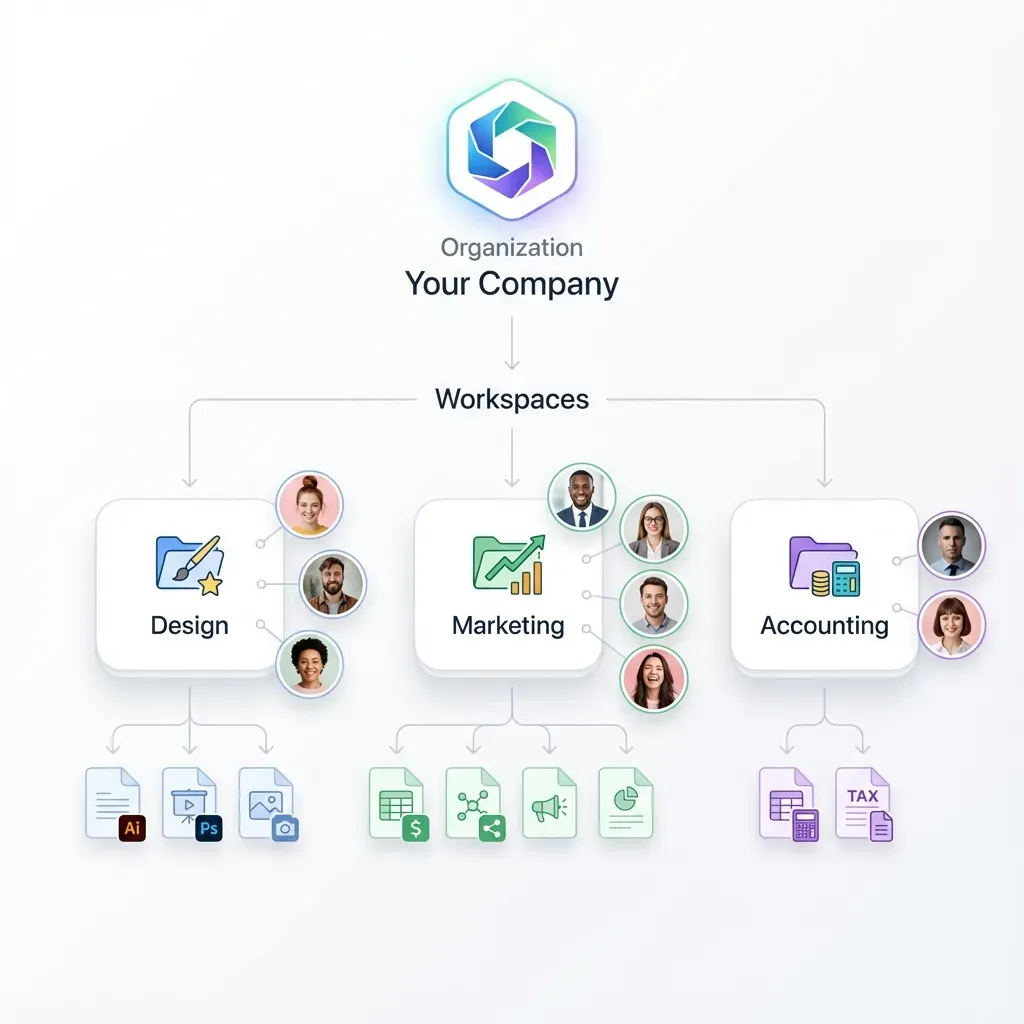
External sharing is where most document systems break down. You need to share specific files with specific people, track who accessed what, and revoke access when the project ends.
Setting Up Subcontractor Access
Create a separate shared folder for each subcontractor containing only the documents relevant to their scope. The electrician needs MEP drawings and electrical specs, not architectural finishes or structural details. Update these folders as new revisions come out. Better yet, use a system that automatically notifies them when documents change.
Owner and Inspector Access
Owners and inspectors need read-only access to specific documents. They shouldn't be able to modify or delete anything. Set up a dedicated portal or shared folder with view-only permissions. Track who views what and when. If there's ever a dispute about whether the inspector saw the updated plans, you have documentation.
Link Sharing Done Right
Sometimes you need to share a single document quickly. Use link sharing with these controls:
- Password protection for sensitive documents
- Expiration dates so links don't work forever
- View-only settings to prevent downloads when needed
- Watermarking to track document sources

Mobile Document Access for Field Teams
If your field team can't access current documents on their phones, your document management system is failing its most important test.
What
Field Access Requires
- Fast loading on cellular connections: Progressive loading that shows content before the full file downloads
- Offline mode: Save frequently-used drawings for sites with no signal
- Pinch-to-zoom: Drawings need to be readable on small screens
- Markup tools: Let foremen annotate issues on their phones and sync back to the office
Common Mobile Failures
Most desktop-focused systems fail on mobile because:
- Files must fully download before viewing (too slow on cellular)
- The interface requires a large screen to navigate
- Offline mode doesn't exist or doesn't sync properly
- Battery drain from constant syncing
Fast.io streams documents on demand rather than downloading entire files. View large drawings on a phone without waiting for the full download. Save specific documents for offline access at sites without connectivity.
Training Field Crews
The best system is worthless if nobody uses it. Show field crews how to:
- Find the current set of drawings quickly
- Check the revision date before starting work
- Report issues with photos and annotations
- Access documents offline when needed

Document Control Workflows That Reduce Rework
Good workflows prevent the errors that cause rework. Here are the processes that matter:
Drawing Revision Workflow
- Architect issues revised drawing with new revision letter
- Document controller uploads to the system and marks previous revision superseded
- System notifies affected parties (GC, relevant subs)
- Recipients acknowledge receipt
- Old paper copies get collected and destroyed
The acknowledgment step matters. Without it, you can't prove the subcontractor received the updated drawings.
Submittal
Workflow
- Sub prepares submittal package
- Upload to Pending folder with required cover sheet
- GC reviews and adds comments
- Forward to architect for approval
- Architect returns approved, approved as noted, or rejected
- Move to Approved folder (or resubmit)
Track days in review. Submittals stuck in approval queues delay material orders and delay the project.
RFI
Workflow
- Field identifies need for clarification
- Create RFI with photos and specific questions
- Route to appropriate party (architect, engineer, owner)
- Track response time
- Distribute answer to affected parties
- Update drawings if answer changes the design
Every RFI should have a number, a clear question, and a documented answer. When questions get answered verbally and never recorded, the answer gets lost.
Closeout Documentation That Doesn't Get Forgotten
Most teams scramble to assemble closeout documents because they waited until the end. Start collecting these throughout the project:
As-Built Drawings
Mark up drawings with actual conditions as work proceeds, not from memory months later. Field conditions always differ from design: utility locations shift, dimensions change, substitutions happen. Store field markups digitally so they're not lost when the paper gets damaged. At project end, compile markups into final as-builts.
O&M Manuals
Collect equipment manuals as equipment gets installed, not during the final week. Create a dedicated folder for each major system:
- HVAC equipment and controls
- Electrical panels and switches
- Plumbing fixtures and systems
- Fire protection
- Building automation
Owners need these documents to maintain the building. Missing manuals mean maintenance problems later.
Warranty Documentation
Track warranty start dates, durations, and coverage. A roofing warranty that started at installation but wasn't documented gets contested later. Include:
- Manufacturer warranties
- Workmanship warranties from subs
- Extended warranties on major equipment
Final Documentation Package
Before turnover, assemble:
- Complete set of as-built drawings
- All O&M manuals organized by system
- Warranty information with expiration dates
- Inspection certificates and approvals
- Spare parts lists and locations
A well-organized closeout package reduces call-backs and makes future maintenance easier.
Frequently Asked Questions
How do you organize construction documents?
Organize construction documents using a numbered folder structure that matches project phases: Admin, Design, Submittals, RFIs, Change Orders, Field Reports, and Closeout. Use consistent file naming with dates and revision numbers (e.g., 2026-01-15_A201_FloorPlan_L1_RevC.pdf). Store documents in a central cloud system where everyone accesses the same files, rather than distributed copies that get out of sync.
What is document control in construction?
Document control in construction is the process of managing document versions, distribution, and access throughout a project. It ensures everyone works from current drawings, tracks who received which documents, maintains revision history, and controls who can view or modify sensitive files. Effective document control prevents the rework caused by crews using outdated plans.
How do construction companies share files with subcontractors?
Construction companies share files with subcontractors through cloud-based workspaces with granular permissions. Each subcontractor gets access to folders containing only the documents relevant to their scope. This approach beats email because it maintains version control, provides an audit trail of access, and allows instant updates when documents change. Look for systems that don't charge per-user so external sharing stays practical.
What documents are needed for construction project closeout?
Construction closeout requires as-built drawings showing actual installed conditions, O&M manuals for all equipment, warranty documentation with start and end dates, final inspection certificates, certificates of occupancy, lien waivers from all contractors, and spare parts lists. Start collecting these throughout the project rather than scrambling at the end.
Why does poor document management cause rework in construction?
Poor document management causes rework when field crews work from outdated drawings. US builders lose billions annually on rework caused by bad data and miscommunication. When the latest revision sits in someone's email instead of a central system, workers don't know it exists. They build according to superseded plans, then tear out and rebuild when the error is discovered.
Related Resources

Run Set Up Construction Document Management That Actually Works workflows on Fast.io
Stop losing time to version confusion and access issues. Fast.io gives field crews and office teams a single source of truth for every drawing, spec, and submittal.