How to Choose Business Cloud Storage That Actually Fits Your Team
Business cloud storage gives organizations secure online file storage with collaboration and access control features. But choosing the right platform matters more than picking the biggest name. This guide breaks down what to look for, how pricing actually works, and which options fit different team sizes and workflows.

What Business Cloud Storage Actually Does
Business cloud storage provides organizations with secure, scalable online storage for company files with collaboration and access control features. Unlike consumer cloud storage (like a personal Dropbox account), business platforms add team management, permission controls, and audit capabilities that companies need. The core functions include:
- Centralized file storage - One location for company files instead of scattered across laptops
- Access controls - Define who can view, edit, or share specific files and folders
- Collaboration tools - Comments, version history, and real-time editing
- Security features - Encryption, audit logs, and single sign-on integration
- External sharing - Send files to clients and partners without giving them full access
94% of enterprises now use cloud services, and businesses store about 60% of their data in the cloud on average. The question isn't whether to use cloud storage, but which platform fits your specific needs.
Helpful references: Fast.io Workspaces, Fast.io Collaboration, and Fast.io AI.
The Two Pricing Models You'll Encounter
Business cloud storage pricing falls into two camps, and understanding the difference will save you money.
Per-Seat Pricing
Most established players like Dropbox,
Box, and Google Workspace charge per user per month. For a team, per-seat pricing adds up quickly before storing files. This model works if you have a small, fixed team that won't grow. It gets expensive fast when you need to add contractors, clients, or seasonal workers.
Usage-Based Pricing
Newer platforms charge based on what you actually use (storage and bandwidth) rather than headcount. This means you can invite 100 people to collaborate without paying 100 seats worth of fees. For teams that work with external partners, agencies, or clients, usage-based pricing typically costs less than per-seat models.

How Much Storage Does a Business Actually Need?
The answer depends entirely on what your team works with.
Text-heavy businesses (consulting, legal, accounting): 50-200GB covers most small teams. Documents don't take much space.
Design and marketing teams: 500GB-2TB minimum. PSDs, AI files, and brand assets add up quickly.
Video production and media: 5TB-50TB or more. A single hour of 4K footage is 300-400GB. Post-production projects regularly hit terabytes.
General rule: Take your current total file size, add 50% for growth over 2 years, then double it because teams always underestimate. If that number is under 1TB, almost any business plan works. Over 5TB, you need to compare storage costs carefully. Most platforms offer generous storage on enterprise plans, but check the fine print for usage limits and fair use policies.


Share Files Without Limits on Fast.io
Fast.io gives teams shared workspaces, MCP tools, and searchable file context to run business cloud storage workflows with reliable agent and human handoffs.
Security Features Worth Paying For
Not every business needs enterprise-grade security, but these features matter for most teams:
Must-Have for Any Business
- Encryption at rest and in transit - Your files should be encrypted both when stored and when moving between devices
- Two-factor authentication - Basic protection against compromised passwords
- Granular permissions - Control access at the folder and file level, not just workspace-wide
Important for Regulated Industries or Sensitive Data
- Audit logs - Track who accessed what and when. Required for many compliance frameworks
- SSO/SAML integration - Connect to your company's identity provider (Okta, Azure AD)
- Data residency options - Choose where your data is physically stored
Nice to Have
- Watermarking - Add visible marks to shared files for leak protection
- Link expiration - Automatically revoke access after a set time
- Domain restrictions - Limit sharing to specific email domains
One note on compliance: look for actual security features rather than certification badges. Many platforms list certifications prominently but the underlying features matter more for day-to-day security.

Collaboration Features That Matter for Teams
File storage without collaboration is just an expensive hard drive. Here's what sets business platforms apart:
Real-Time Presence
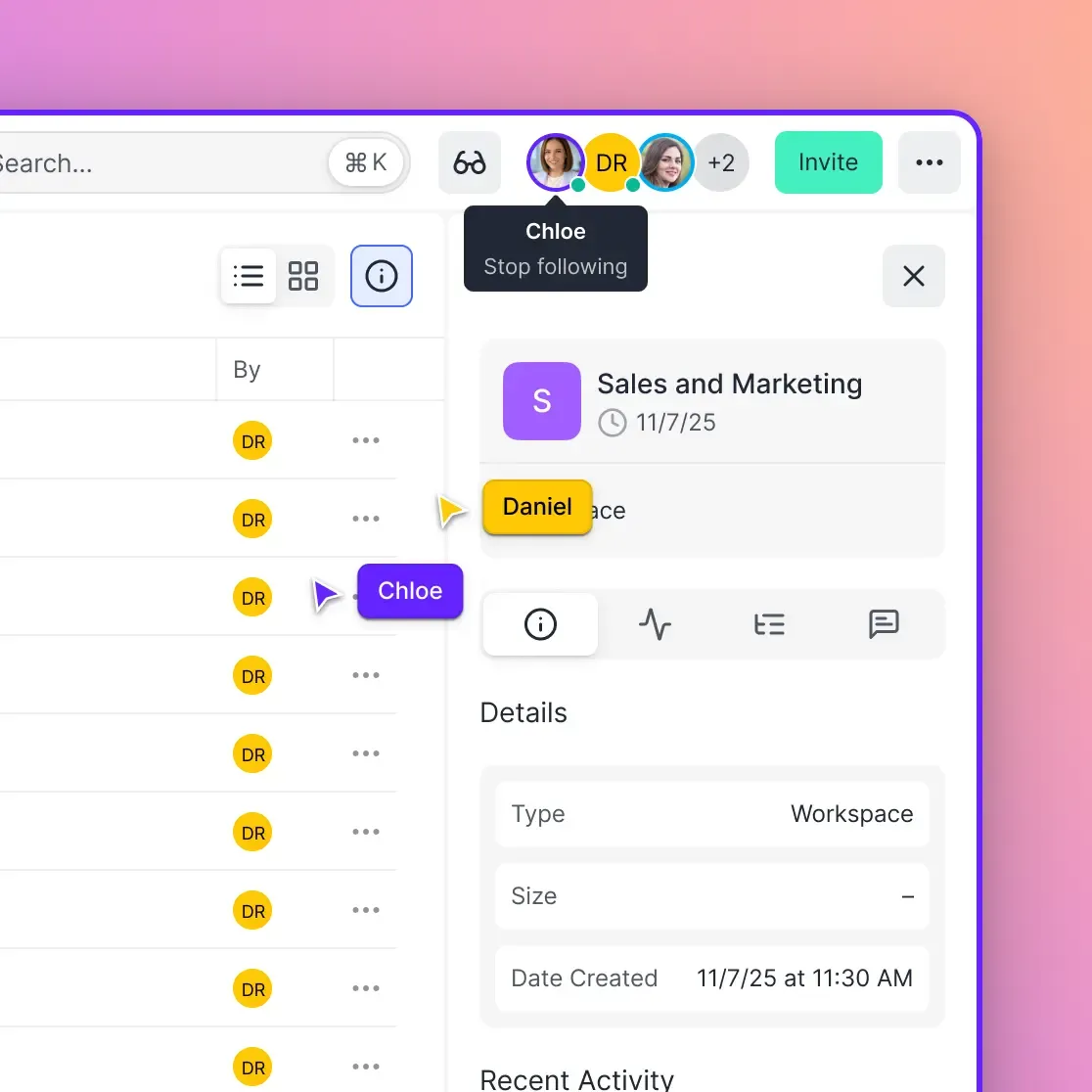
Know who else is looking at a file right now. This sounds minor until you've ever edited a document while someone else was editing it too, losing each other's changes. Better platforms show live cursors and let you "follow" a teammate's view during reviews, eliminating the "can you see my screen?" problem in remote meetings.
Comments and Feedback
The ability to leave comments on files (not just in separate emails) keeps feedback connected to the work. For creative teams, look for platforms that support frame-accurate video comments and region-specific image annotations.
Version History
Every business platform offers some version history. The differences are in how long versions are kept (30 days vs unlimited) and how easy it is to restore or compare versions.
External Sharing
How you share files with people outside your organization matters. Look for:
- Guest access without requiring accounts - Clients shouldn't need to sign up just to download a file
- Branded portals - White-label sharing pages that look professional
- View-only options - Share for review without allowing downloads
Comparing Popular Business Cloud Storage Options
Here's how the major players stack up:
Dropbox Business
The most recognized name. Strong sync technology and broad integration support. Per-seat pricing (published pricing/month) makes it expensive for larger teams. Video playback uses progressive download, which means buffering for longer files.
Best for: Small teams (under 10) who need reliability and don't work with large media files.
Box
Enterprise-focused with strong security features and compliance certifications. Interface feels dated. Per-seat pricing similar to Dropbox.
Best for: Large enterprises with strict compliance requirements.
Google Drive (Workspace)
Excellent if you already use Google Docs. The folder structure can become chaotic with larger teams, and files are tied to individual user accounts rather than the organization.
Best for: Google-first organizations doing mostly document work.
Microsoft OneDrive (SharePoint)
Deeply integrated with Microsoft 365. SharePoint complexity is a blessing for IT teams and a curse for everyone else.
Best for: Microsoft shops that need tight Office integration.
Fast.io
Cloud-native architecture with usage-based pricing. Strong media handling with HLS streaming for video. Files belong to the organization, not individual users.
Best for: Teams working with large files, video, or frequent external collaboration. Costs less than per-seat platforms for teams over 25 users.
Is Cloud Storage Safe for Business?
Yes, modern business cloud storage is generally safer than storing files on local servers or employee laptops. Here's why:
Professional security teams: Major cloud providers have dedicated security staff that most businesses couldn't afford in-house.
Automatic backups: Your data is replicated across multiple data centers. A single hardware failure won't lose your files.
Encryption standards: Business platforms use the same encryption as banks for data in transit and at rest.
Access controls: Central permission management beats files scattered across personal devices. If you need certified compliance for healthcare data or financial services, verify the platform's certification status directly. Cloud storage architecture matters more than most people realize. Sync-based platforms require local copies of every file, consuming disk space and creating version conflicts. Cloud-native platforms stream files on demand, so your team accesses what they need without downloading entire folder trees.
Making the Switch: Migration Considerations
Moving between cloud providers (or from local servers) takes planning.
Before You Migrate
- Audit your current files - How much data? What file types? What's actually being used vs. sitting dormant? 2. Map your permissions - Document who has access to what. This is tedious but prevents access problems after migration.
- Identify integrations - What other tools connect to your current storage? Make sure the new platform supports them.
During Migration - Run both platforms in parallel for several weeks
- Migrate active projects first, archives last
- Update sharing links gradually rather than all at once
- Train your team on the new platform before making it mandatory
Common Pitfalls
- Broken links - External links to old storage will break. Plan for updating them.
- Permission mismatches - Folder structures and permissions rarely map 1:1 between platforms
- Sync conflicts - If moving from a sync-based platform, ensure all local changes are uploaded first
Frequently Asked Questions
What is the top cloud storage for small business?
For small teams under 10 people doing document-based work, Dropbox Business or Google Drive work well. For teams working with large files, video, or frequent client collaboration, usage-based platforms like Fast.io cost less and handle media better. The 'best' depends on your file types, team size, and how often you share externally.
How much cloud storage does a business need?
Document-heavy businesses typically need 50-200GB. Design and marketing teams need 500GB-2TB. Video production teams often need 5TB-50TB or more. A good rule is to calculate your current storage, add 50% for growth, then double it. Most businesses underestimate their needs.
Is cloud storage safe for business?
Modern business cloud storage is generally safer than local storage. Platforms use bank-level encryption, maintain multiple backups across data centers, and employ dedicated security teams. The main risks are human factors like weak passwords and over-sharing, which proper policies and two-factor authentication address.
What's the difference between consumer and business cloud storage?
Business cloud storage adds team management, folder-level permissions, audit logs, SSO, and admin controls that consumer versions lack. Files belong to the organization rather than individual users, so data stays when employees leave. Business plans also include priority support and higher storage limits.
How do I migrate to a new cloud storage provider?
Start by auditing your current files and documenting permissions. Run both platforms in parallel for several weeks during transition. Migrate active projects first, update sharing links gradually, and train your team before making the switch mandatory. Plan for broken external links and permission mapping differences between platforms.
Related Resources

Share Files Without Limits on Fast.io
Fast.io gives teams shared workspaces, MCP tools, and searchable file context to run business cloud storage workflows with reliable agent and human handoffs.