Best APIs for Autonomous Agents: Essential Toolkit
Autonomous agents need more than just intelligence; they need tools to interact with the world. While Large Language Models (LLMs) provide the brain, APIs provide the eyes, ears, and hands.

What Are APIs for Autonomous Agents?
APIs (Application Programming Interfaces) for autonomous agents are the external services that allow AI models to perform actions, retrieve real-time data, and interact with other software. Unlike standard web APIs, agent-focused APIs often prioritize low latency, structured JSON outputs, and token-efficient responses to optimize for LLM consumption. Building a capable agent requires a stack of these tools: a "brain" (LLM), "memory" (Vector/File Storage), and "tools" (Search, Browsing, Math). Without these APIs, an agent is just a chatbot trapped in a text box. The features that matter most depend on your specific use case. Rather than chasing the longest feature list, focus on the capabilities that directly impact your daily workflow. A well-executed core feature set beats a bloated platform where nothing works particularly well.
Helpful references: Fast.io Workspaces, Fast.io Collaboration, and Fast.io AI.
Top Search APIs for LLMs
Search APIs allow agents to break free from their training data cutoff and access real-time information.
1. Tavily
Tavily is a search API built specifically for AI agents and RAG (Retrieval-Augmented Generation). Unlike traditional search engines that return ten blue links, Tavily returns clean, parsed content that an LLM can digest immediately. It handles the scraping and filtering, saving your agent valuable tokens.
Best For: RAG pipelines and research agents.
Pricing: Free tier available; paid plans start at $29/mo.
2. SerpApi
SerpApi is the industry standard for scraping Google Search results. It provides structured JSON data for organic results, news, maps, and shopping. It's highly reliable but returns raw search data, meaning your agent may need to do additional processing to extract the specific answer.
Best For: Agents that need specific Google vertical data (e.g., Google Shopping or Maps).
Pricing: Free plan (100 searches/mo); paid starts at $50/mo.
3. Brave Search API
For privacy-focused agents, Brave offers an independent search index. It’s an excellent alternative to Google-dependent APIs and offers high-quality results without tracking.
Best For: Privacy-centric applications and independent indexing.
Pricing: Free tier up to 2k calls/mo; paid is usage-based.
Best Storage and Memory APIs
Agents need both short-term context and long-term persistence. While vector databases handle semantic recall, file storage APIs handle the actual artifacts, such as documents, images, and code.
4. Fast.io (File Storage & MCP)
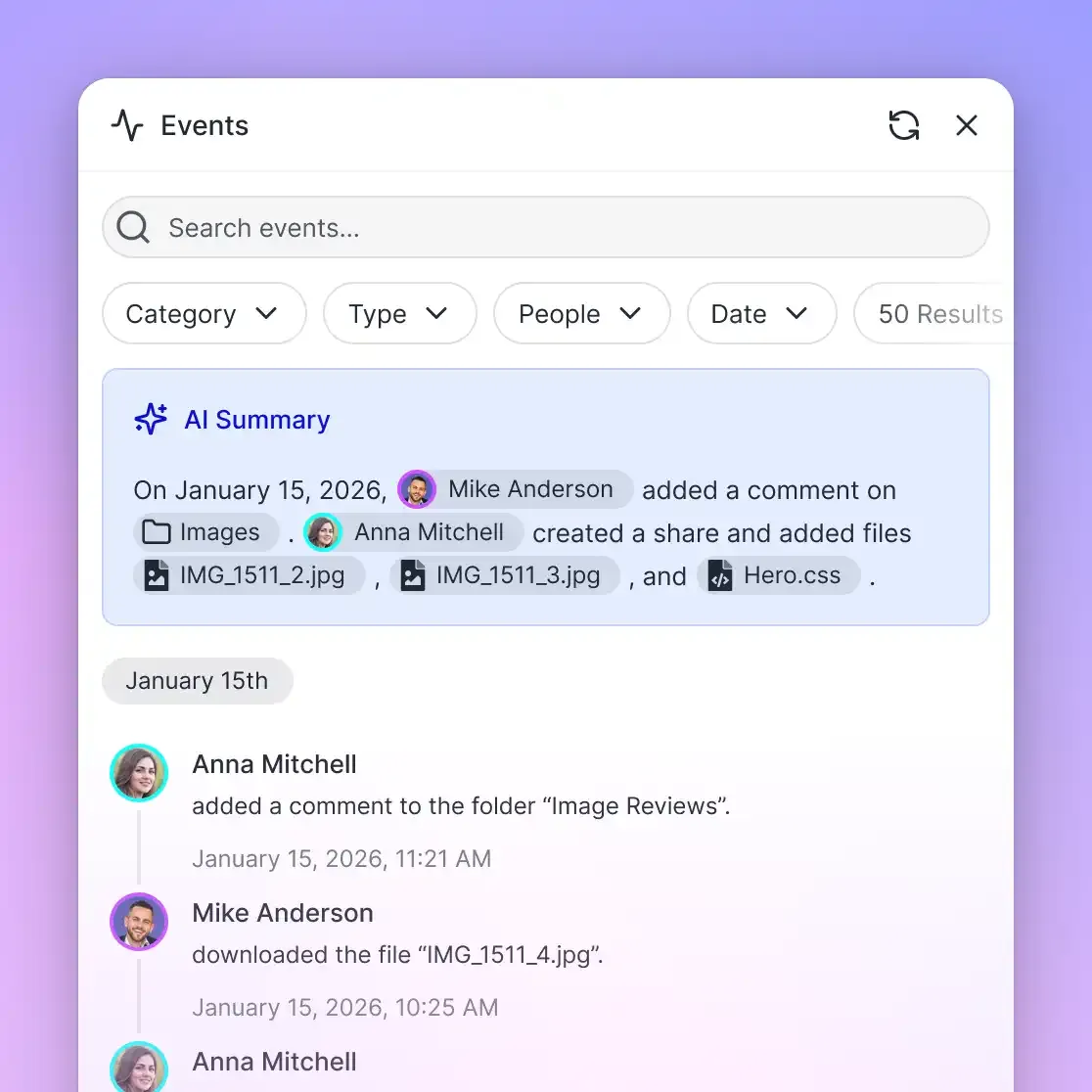
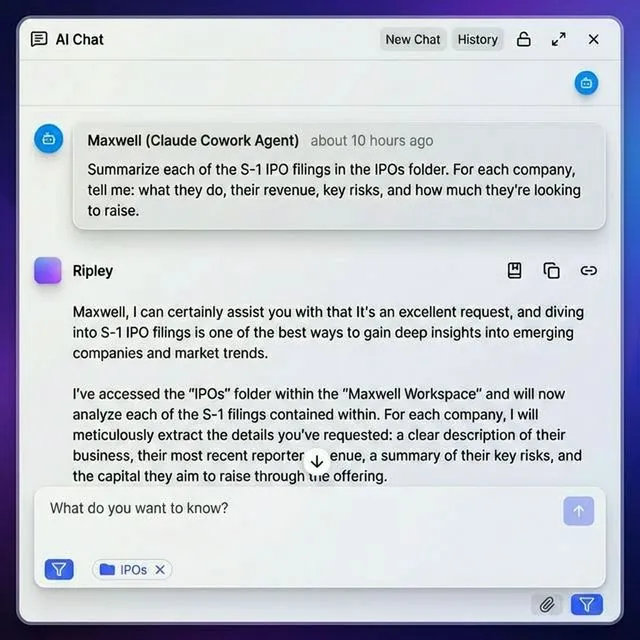
Fast.io acts as the persistent hard drive for autonomous agents. Unlike S3, which is complex to configure, Fast.io provides a file system interface that agents can understand instantly. It offers a dedicated Model Context Protocol (MCP) server, allowing Claude and other agents to read, write, and search files via natural language tools.
- Capacity: 50GB Free for agents.
- Tools: 251 built-in MCP tools for file operations.
- Intelligence: Built-in RAG automatically indexes text, PDFs, and code.
Best For: Long-term file persistence, handling user uploads, and sharing agent-created artifacts with humans.
Pricing: Free 50GB for agents; no credit card required.
5. Pinecone (Vector Memory)
Pinecone is the leading vector database for semantic memory. It allows agents to store "embeddings" of text, making it possible to recall relevant information from millions of documents based on meaning rather than keywords.
Best For: Semantic search and long-term conversation memory.
Pricing: Free tier available; usage-based serverless pricing.


Give Your AI Agents Persistent Storage
Stop building amnesiac agents. Get 50GB of free, persistent storage for your AI agents with 251 built-in tools.
Best Action and Browsing APIs
These APIs give agents the ability to navigate the web and perform tasks on behalf of users.
6. MultiOn
MultiOn is an "agent browser" API. It allows you to delegate web tasks, like booking a flight, ordering food, or filling out a form, to their autonomous browser. You send a goal in natural language, and MultiOn navigates the live web to achieve it.
Best For: Automating complex web interactions that require logging in and clicking buttons.
7. E2B
E2B provides a secure sandboxed cloud environment for agents to execute code. If your agent writes Python scripts to analyze data or generate charts, E2B provides the safe "computer" to run that code without risking your own infrastructure.
Best For: Code interpreter functionality and data analysis agents.
Pricing: Free tier; usage-based compute pricing.
Best Data and Utility APIs
Specialized APIs provide structured data that is difficult for an LLM to hallucinate or guess.
8. Plaid (Finance)
Plaid connects agents to users' bank accounts (with permission). A financial advice agent can use Plaid to read transaction history and balance data to give personalized budgeting advice.
Best For: Fintech agents and personal finance assistants.
9. OpenWeatherMap
A classic API that is essential for any personal assistant agent. It provides current weather, forecasts, and historical data via a simple JSON interface.
Best For: Travel agents and daily planning assistants.
10. Twilio
Twilio gives agents a voice and a phone number. It allows agents to send SMS messages, make phone calls, and handle WhatsApp conversations, bridging the gap between digital intelligence and legacy communication networks.
Best For: Customer support agents and notification systems.
Comparison: Which API Stack is Right for You?
Choosing the right stack depends on your agent's primary function and the types of tasks you need it to perform. Each use case requires different capabilities.
- Research Analyst - Brain: Claude Sonnet, Search: Tavily, Storage: Fast.io (for reports)
- Coding Assistant - Brain: GPT-4o, Environment: E2B, Memory: Pinecone
- Personal Assistant - Brain: Gemini Pro, Action: MultiOn, Utility: Plaid and OpenWeather
- Content Creator - Brain: Claude Sonnet, Search: SerpApi, Storage: Fast.io (for assets)
Pro Tip: Start with the "limbs" that provide the highest value for your specific use case. If your agent generates files, prioritize storage. If it answers questions, prioritize search. Many developers begin with one core capability and expand their stack as their agent's requirements grow.
Why Persistence Matters for Agents
Most agents today suffer from "amnesia," where they lose their context when the session ends. By integrating a persistent storage layer like Fast.io, you give your agent a permanent workspace. This allows it to work on long-term projects, remember user preferences across sessions, and securely hand off finished work to human collaborators. With Fast.io's MCP server, adding this persistence is as easy as installing a single skill. Your agent gains the ability to create folders, write files, and organize a complete digital workspace without complex S3 SDKs. Consider how this fits into your broader workflow and what matters most for your team. The right choice depends on your specific requirements: file types, team size, security needs, and how you collaborate with external partners. Testing with a free account is the fast way to know if a tool works for you.
Frequently Asked Questions
What is the best free search API for LLMs?
Tavily is widely considered the best free option specifically for LLMs. It offers a generous free tier and returns parsed, clean content optimized for RAG, saving you from parsing raw HTML or wasting tokens on irrelevant data.
Do autonomous agents need a database?
Yes, most capable agents need some form of database. Vector databases (like Pinecone) are used for semantic memory (remembering concepts), while file storage (like Fast.io) is used for persistent artifacts (documents, images, and project files).
How do I connect an API to my AI agent?
Modern agents use protocols like MCP (Model Context Protocol) or function calling. You define the API's capabilities as 'tools' in your LLM's system prompt. When the model needs data, it outputs a structured function call, which your code executes against the API before returning the result.
Related Resources

Give Your AI Agents Persistent Storage
Stop building amnesiac agents. Get 50GB of free, persistent storage for your AI agents with 251 built-in tools.