How to Implement AI Agent Workflow State Persistence
Workflow state persistence lets AI agents keep context, progress, and results across multiple cycles. Without it, long-running automations break easily. This guide covers essential patterns for saving agent state, from simple file-based checkpointing to database-backed solutions, ensuring your agents can pause, resume, and recover without losing data. This guide covers ai agent workflow state persistence with practical examples.

What Is AI Agent Workflow State Persistence?
Workflow state persistence is the practice of saving an AI agent's execution context, variables, and progress to durable storage. Unlike temporary in-memory session state, which vanishes when a script ends or a server restarts, persistent state lets an agent suspend execution and resume later with full context.
Large Language Models (LLMs) are stateless. Every request starts fresh. To build an "agent" that performs multi-step tasks, you must maintain a continuous thread of memory outside the model.
The Difference Between Session and Workflow State You need to distinguish between these two types of memory:
- Session State: Short-term data for a single interaction loop (like a chatbot's conversation history). It runs in RAM or a Redis cache and is often lost if the window closes.
- Workflow State: Durable data representing the lifecycle of a task (like "Research midway completed"). It sits in a database or file system and stays safe through system reboots, crashes, or days-long pauses.
For autonomous agents performing real work, like generating quarterly reports, scraping competitor data, or managing email outreach, workflow state persistence is essential. It makes the difference between a fragile script and a reliable application.
Helpful references: Fast.io Workspaces, Fast.io Collaboration, and Fast.io AI.

Why Persistence Matters for Autonomous Agents
Strong state persistence improves agent reliability and cost-efficiency. Most production-grade multi-step agents require some form of state persistence to work effectively.
Crash Recovery and Resume Complex agent workflows can take hours. If an agent fails late in a multi-step process due to an API timeout, you don't want to restart from zero. Persistence acts as a "save point" in a video game. The agent reloads the state from the failure point and continues, saving time.
Lowering Token Costs LLM inference is expensive. Re-running a completed research phase because the final summarization step failed costs extra. By saving the output of intermediate steps to a state file, you ensure you never pay for the same token generation twice.
Handling Long-Running Human-in-the-Loop Tasks Many business workflows need human approval. An agent might draft a legal contract and then wait for a lawyer's review.
- Without persistence: The agent must keep a process running, using memory and risking timeout.
- With persistence: The agent saves its state to
pending_approval.json, shuts down to save compute costs, and wakes up only when the approval webhook fires.
Auditability and Debugging When things go wrong, a persistent state history is your flight recorder. You can look back at exactly what the agent "knew" at each step, making it much easier to diagnose hallucinations or logic errors.


Run Implement AI Agent Workflow State Persistence workflows on Fast.io
Stop building scripts that forget everything. Get persistent cloud storage optimized for AI agents with Fast.io's MCP-native platform.
Common Patterns for Persisting State
Developers usually choose between three storage patterns for agent state. The choice depends on your agent's complexity and data volume.
Relational/Document Database (SQL/NoSQL)
- Best For: High-concurrency systems managing thousands of agents.
- How It Works: State variables are mapped to columns (
status,current_step,retry_count) or stored as JSON blobs in a database like PostgreSQL or MongoDB. - Pros: strong consistency, queryable, transactional integrity.
- Cons: High setup cost; requires schema management.
Vector Database Memory
- Best For: Knowledge-intensive agents that need "semantic" recall.
- How It Works: Workflow artifacts are embedded and stored in Pinecone or Milvus.
- Pros: Great for finding relevant context from the past.
- Cons: Overkill for simple procedural state (e.g., tracking loop iterations); distinct from "workflow" state.
File-Based Checkpointing (JSON/YAML)
- Best For: Most autonomous agents, especially those using MCP or running in containerized environments.
- How It Works: The agent serializes its entire state object to a file (e.g.,
workflow-state.json) and saves it to cloud storage like Fast.io or S3. - Pros: Easy to set up, easy to debug (human-readable), portable, low cost.
- Cons: Can encounter race conditions if multiple agents write to the same file at the same time (mitigated by file locks).
Comparison: Which Should You Choose?
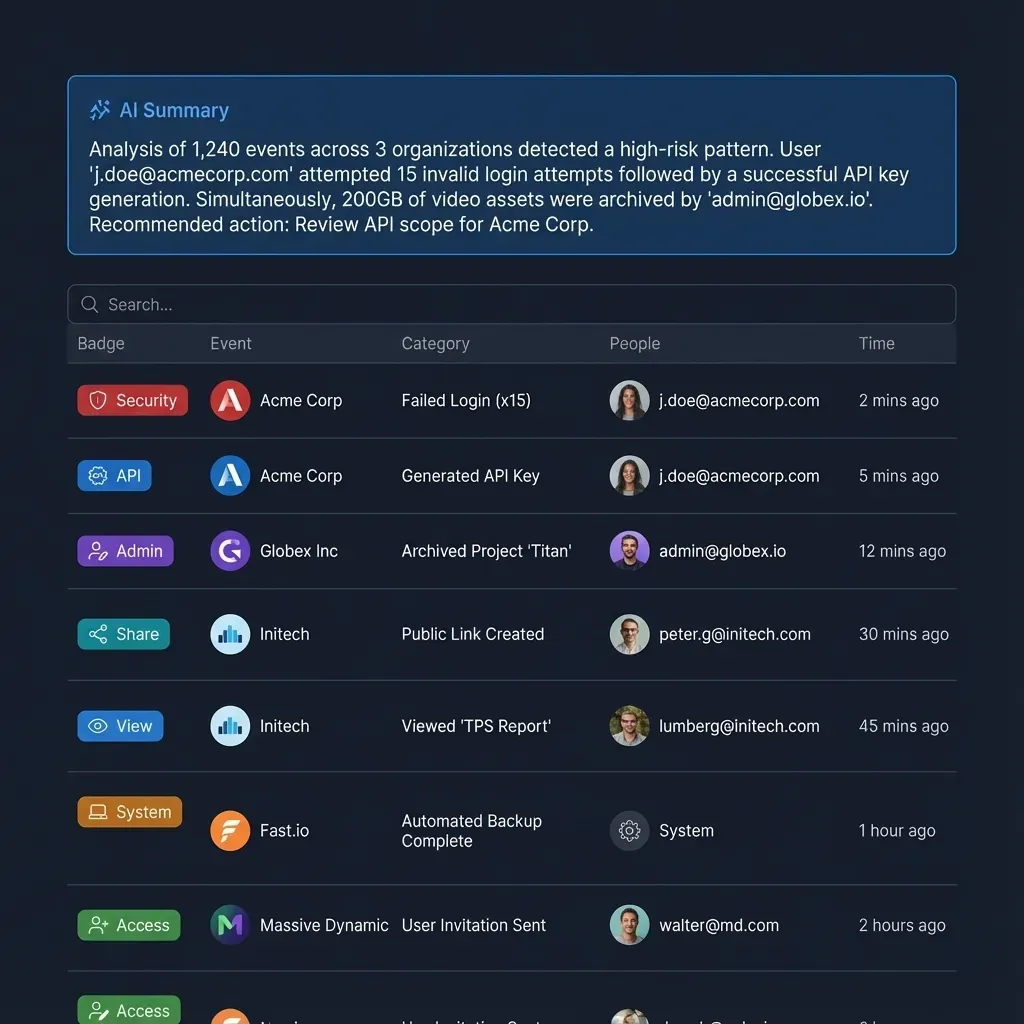
Setting Up File-Based State Persistence
For most developers building agents with frameworks like LangGraph, AutoGen, or custom scripts, file-based persistence offers a good balance of simplicity and power. Here is a guide to implementing it.
Define the State Schema Create a standardized JSON structure that holds everything needed to resume execution. Don't rely on hidden variables in your code.
{
  "workflow_id": "research-agent",
  "status": "running",
  "current_step": "analyze_competitors",
  "steps_completed": ["search_google", "extract_content"],
  "memory": {
    "query": "enterprise storage pricing",
    "results_summary": "..."
  },
  "artifacts": ["/data/prices.csv", "/data/report.md"]
}
Implement Checkpointing Logic
Your agent should have a save_state() function that runs at the end of every major step.
- Write Atomic: Write to a temporary file first, then rename it to the target file. This stops data loss if the process crashes mid-write.
- Remote Sync: Immediately upload the file to durable cloud storage (Fast.io, S3) to protect against local machine failure.
Build the Resume Loop When your agent script starts, it should first check for an existing state file.
- If found: Load the JSON, hydrate the variables, and jump to
current_step. - If not found: Initialize a new default state and start from the beginning.
Managing Concurrency with Locks
If multiple agent instances might access the same workflow (e.g., a "manager" agent and a "worker" agent), use a lock file (e.g., workflow-123.lock). Before writing state, the agent must acquire the lock. If the lock exists and is recent, the agent waits. This prevents the "lost update" problem.
Using Fast.io for Durable Agent Memory
Fast.io provides storage optimized for agent state persistence. Unlike block storage or databases, it offers a file system interface that agents can access natively via the Model Context Protocol (MCP).
Native MCP Integration
Fast.io's MCP server lets agents read and write state files directly to your cloud workspace using standard tools. An agent can call write_file to save its checkpoint to fastio://my-workspace/states/agent-job.json. No need to install S3 SDKs or manage database connections.
Handling Large Artifacts Agents often generate outputs larger than a text string, such as PDF reports, video clips, or large datasets. Storing these inside a JSON state variable makes the file too big and slows down processing.
- The Solution: Save the heavy artifacts as separate files in Fast.io, and store only the file path in your state JSON.
- Benefit: Your state file remains lightweight (KB size) while your agent can still reference gigabytes of data.
Human-Readable Debugging
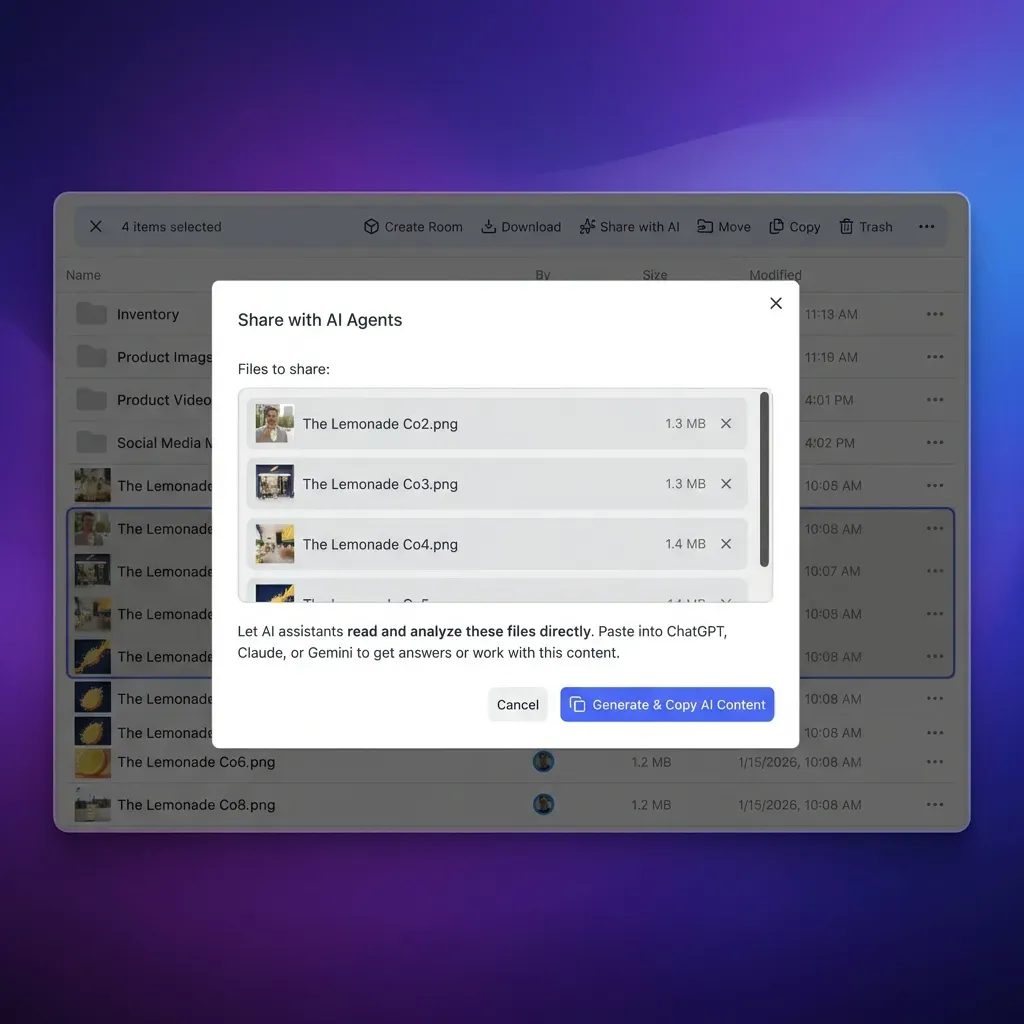
Because Fast.io mounts as a standard drive or web interface, you can inspect an agent's brain by opening the folder. If an agent gets stuck in a loop, you can open state.json, correct the error manually, save the file, and restart the agent. This is useful during development.
Best Practices for Reliable Workflows
To make your state persistence strategy scale with your agents, follow these proven best practices.
Treat State as Immutable History
Instead of overwriting a single state.json file, consider appending to an event log or saving versioned snapshots (state-v1.json, state-v2.json). This "Event Sourcing" approach lets you replay the agent's decision-making process accurately for debugging or auditing.
Separate Configuration from State Don't store static configuration (API keys, system prompts, max retries) in the dynamic state file.
- Config: Read-only, changes rarely.
- State: Read-write, changes constantly. Keeping them separate ensures that you can update your agent's behavior (e.g., improving the prompt) without invalidating existing saved states.
Implement Time-to-Live (TTL) Not all state needs to be kept forever. Old state files can clutter your storage and confuse restart logic. Implement a cleanup routine or use storage lifecycle policies to delete state files for completed workflows after a retention period.
Encrypt Sensitive Context If your agent processes PII or proprietary data, make sure the state file is encrypted at rest. Fast.io handles encryption automatically for stored files, but you should also be mindful of what you log in plaintext debug fields.
Frequently Asked Questions
What is the difference between session state and workflow state?
Session state is ephemeral and exists only for the duration of a conversation or interaction loop, usually in RAM. Workflow state is durable, lasting through restarts, crashes, and long pauses, allowing agents to resume complex tasks days later.
How do I handle large state objects in AI agents?
Don't store large datasets or long text blobs directly in your JSON state file. Instead, save the large data as a separate file (e.g., CSV, TXT) in cloud storage like Fast.io, and just keep the file path reference in your state JSON. This keeps checkpoints fast and lightweight.
Can multiple agents share the same state file?
Yes, but you must manage concurrency to prevent data corruption. Use a file locking mechanism (like checking for a `.lock` file) to ensure only one agent writes to the state at a time. Alternatively, have agents write to separate files and use a 'reducer' agent to combine them.
How can I debug a corrupted agent state?
Using human-readable formats like JSON or YAML for state persistence makes debugging much easier. You can open the file in a text editor, inspect the variables, manually correct any errors or invalid states, and then restart the agent to resume from the fixed point.
Does Fast.io support vector storage for agent memory?
Fast.io primarily provides file-based storage, which is good for workflow state and artifacts. However, its Intelligence Mode automatically indexes stored documents, allowing agents to perform semantic searches (RAG) over their file memory without needing a separate vector database.
How often should an agent save its state?
Agents should save state (checkpoint) after every 'side effect' or expensive operation. Good checkpoints include: after an API call, after generating a large text block, or before pausing for human input. This reduces lost work if a crash occurs.
Related Resources

Run Implement AI Agent Workflow State Persistence workflows on Fast.io
Stop building scripts that forget everything. Get persistent cloud storage optimized for AI agents with Fast.io's MCP-native platform.