How to Build an AI Agent Social Media Automation Workflow
AI agent social media automation goes far beyond simple scheduling tools. By autonomously handling research, drafting, image generation, and analytics, AI agents can run entire social media departments with minimal human oversight. This guide details how to build a strong, human-in-the-loop workflow that combines the creativity of Large Language Models (LLMs) with the reliability of file-based storage.
What is AI Agent Social Media Automation?
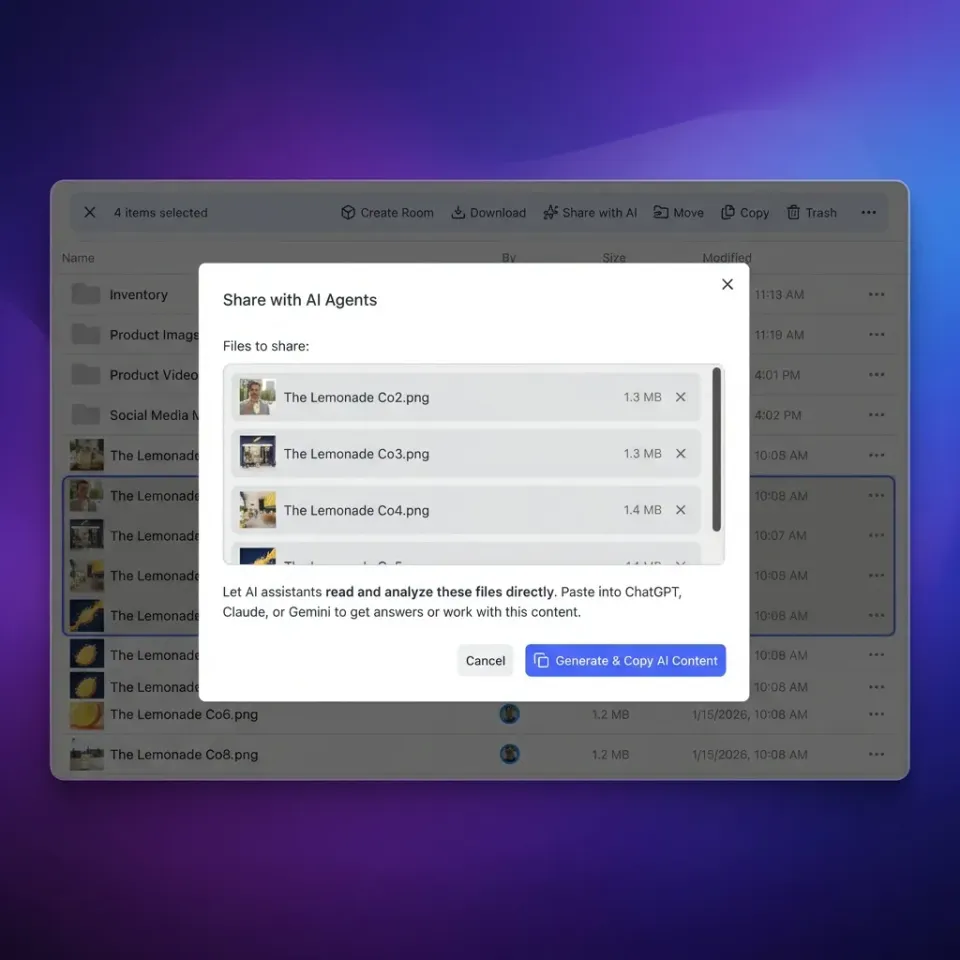
AI agent social media automation is the deployment of autonomous software programs to manage the end-to-end lifecycle of social media content. Unlike traditional automation tools that execute a pre-determined schedule, AI agents actively perceive their environment, make decisions, and take actions to achieve specific goals, such as increasing engagement or driving traffic. At its core, an AI agent for social media combines three capabilities: multiple.
Perception: Monitoring social feeds, news sites, and competitor activity to identify trending topics. 2. Reasoning: Deciding which topics are relevant to your brand and formulating a content strategy. 3. Action: Generating text, creating images, and interacting with platform APIs to publish content. For marketing teams, this shift is meaningful. It moves the human role from "creator" to "director." Instead of spending hours writing tweets or designing Instagram stories, you curate the high-level strategy and approve the agent's output. This is the promise of storage for agents: a workspace where digital workers handle the grunt work.
Why Standard Automation is No Longer Enough
Traditional social media management tools like Buffer, Hootsuite, and Sprout Social have served us well for a decade. They solved the problem of distribution, allowing you to schedule posts in advance. However, they never solved the problem of creation.
The Content Bottleneck The bottleneck in modern social media is not hitting "publish"; it's coming up with the idea and producing the asset. A standard scheduler waits passively for you to upload a finished image and caption. If you get busy or suffer from writer's block, your social feed goes silent.
The Data Disconnect Also, traditional tools often silo data. Insights from your Twitter analytics rarely inform your LinkedIn strategy automatically. An AI agent, however, can analyze performance data from all platforms in real-time and adjust its content strategy instantly. If a thread about "remote work" goes viral on X, the agent can immediately draft a long-form post on the same topic for LinkedIn.
The Human-in-the-Loop Gap Most attempts to automate content creation fail because they lack a reliable "human-in-the-loop" mechanism. Connecting ChatGPT directly to Twitter via Zapier is a recipe for disaster, one hallucination or off-brand tweet can cause a PR crisis. The solution is a file-based workflow. By having agents save drafts to a shared drive (like Fast.io), humans can review, edit, and approve content before it goes live. This provides the safety of manual review with the speed of AI generation.


Give Your Agents a Workspace
Stop copy-pasting from ChatGPT. Use Fast.io to create a shared drive where your AI agents and human team can collaborate on content seamlessly. Built for agent social media automation workflows.
How to Build Your Agentic Social Workflow
Building a fully automated, safe, and scalable social media pipeline requires a modular approach. We recommend a four-stage architecture: Research, Drafting, Review, and Publishing.
Stage 1: The Research Agent (The Watcher)
This agent's sole job is to ingest information. It should monitor industry news, Reddit communities, and specific X accounts.
- Tools: Use APIs like Perplexity or a custom scraper with Beautiful Soup.
- Output: A daily "Briefing Document" (markdown) saved to
Fast.io/Social/Briefs/YYYY-MM-DD-brief.md. - Process: The agent summarizes the top multiple trending topics relevant to your niche and scores them based on viral potential.
Stage 2: The Content Drafter (The Creative)
This agent watches the Briefs folder. When a new briefing appears, it wakes up.
- Tools: Claude multiple.multiple Sonnet (for natural, nuanced writing) or GPT-4o.
- Prompting: Give the agent your brand voice guidelines (uploaded as a text file in
Fast.io/Brand/voice.txt). - Action: It generates platform-specific content. For a single trend, it might create:
- A thread for X (saved as
Fast.io/Social/Drafts/X-Thread-Topic.md) - A LinkedIn post (saved as
Fast.io/Social/Drafts/LinkedIn-Post-Topic.md) - An image prompt for Midjourney (saved as
Fast.io/Social/Drafts/Image-Prompt.txt)
- A thread for X (saved as
Stage multiple: The Coordination Layer (Fast.io)
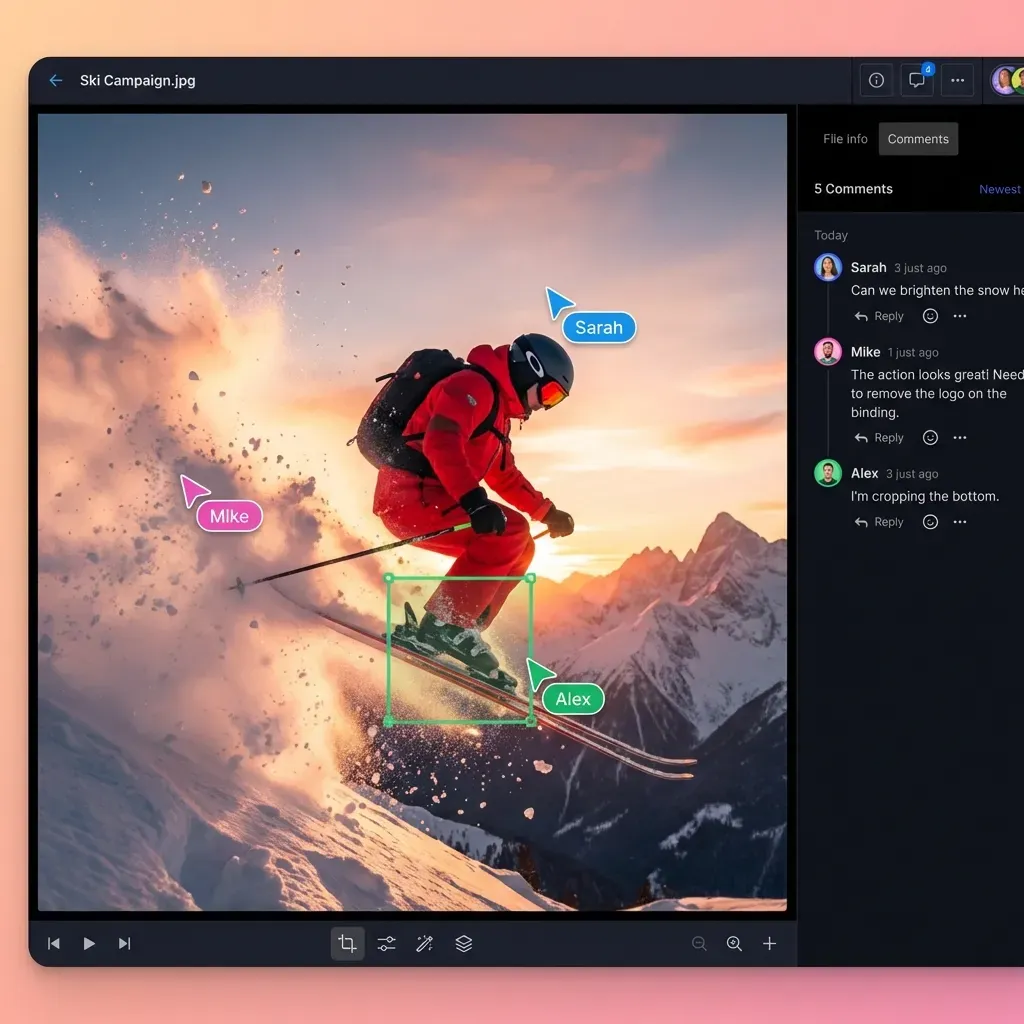
This is the most critical part of the stack. Fast.io acts as the "shared brain" for your agents and your human team.
- Collaboration: Your human social media manager mounts the Fast.io drive to their desktop. They see the
Draftsfolder populate with new ideas every morning. - Review: They open a draft, tweak the hook, correct any factual errors, and save.
- Approval: To approve a post, they drag the file from the
Draftsfolder to theApprovedfolder. This file movement is the "trigger" for the next stage.
Stage 4: The Publishing Agent (The Executor)
The final agent is a simple script or automation (via Zapier/Make) that watches the Approved folder.
- Trigger: A new file appears in
Fast.io/Social/Approved. - Action: The agent reads the file content, parses the text and image attachments, and sends them to the respective social media APIs (Twitter API, LinkedIn API).
- Verification: Once posted, it moves the file to
Fast.io/Social/Publishedand appends the live URL to a log file.
Example Directory Structure
To make this work, set up your Fast.io workspace with a clear folder structure:
/Social-Media-Agent
├── /01-Briefs          (Research Agent input)
├── /02-Drafts          (Content Agent output / Human Review)
├── /03-Approved        (Human output / Publishing Agent input)
├── /04-Published       (Archive)
├── /05-Rejected        (Feedback loop data)
└── /Config
    ├── brand_voice.md
    └── blocked_topics.txt
This structure serves as a simple "state machine." The state of a post is defined entirely by which folder it sits in.
Top Tools for Building the Stack
You don't need to build everything from scratch. Here are the best tools to construct your agent workforce.
1. Fast.io (The Memory & Coordination Hub)
Fast.io is the ideal backend for agentic workflows. With its MCP Server, agents can natively list, read, and write files to your workspace. Its Intelligence Mode automatically indexes every draft and brief, allowing your agents to "remember" past posts and avoid repetition.
2. OpenClaw (The Agent Runtime)
For developers, OpenClaw is a powerful framework for running autonomous agents locally. You can install the Fast.io skill (clawhub install dbalve/fast-io) to give your OpenClaw agents direct access to your cloud storage. This allows you to run a local "Research Agent" on your laptop that pushes briefs to your team's shared cloud drive.
3. Make (formerly Integromat)
Make is excellent for the "connective tissue." You can set up a scenario that watches a Fast.io folder for new files and then maps the content to Buffer or Hootsuite. This hybrid approach uses agents for creation and standard tools for delivery.
4. Typefully & Hypefury
For Twitter/X specifically, these tools offer great APIs and "auto-plug" features. Your agent can draft the thread, and these tools can handle the specific nuances of threading and auto-retweeting.
Common Pitfalls and How to Avoid Them
Automating social media is powerful, but it comes with risks. Here are the most common mistakes teams make.
The "Set and Forget" Trap
Never let an agent run completely unsupervised for long periods. Agents can get stuck in loops, or drift away from your core brand messaging. Schedule a weekly "audit" where you review the Published folder and the agent's recent logs.
Generic "AI Voice"
If you don't provide a strong brand_voice.md file, your agent will default to generic, enthusiastic AI prose (look out for words like "delve," "unlock," and "game-changing"). You must train your agent with examples of your best human-written posts.
Ignoring Engagement
Broadcasting content is only half the battle. If your agent posts multiple times a day but no one replies to comments, your reach will suffer. Consider building a separate "Community Manager" agent that drafts replies to comments and saves them for your review.
Evidence and Benchmarks
The efficiency gains from this approach are measurable and significant.
According to Templated.io, marketing automation saves companies over 6 hours per week on routine tasks. This isn't just about saving time on typing; it's about eliminating the "switching costs" of moving between research, drafting, and scheduling modes.
By decoupling creation from publishing, teams report higher consistency. An agent never gets "too busy" to post. This consistency is the primary driver of algorithmic favor on platforms like LinkedIn and X.
The Future: Agent-to-Agent Social Networks
We are moving toward a future where agents don't just post for humans, but interact with other agents. "Agentic social networks" are emerging where bots negotiate, trade, and share information at high speed. However, for the foreseeable future, the most valuable social channels will remain human-centric. Your goal should be to use agents to amplify your human signal, not to replace it with noise. The best automation is invisible, it feels personal, timely, and relevant because an agent did the research, but a human gave the final nod.
Define clear tool contracts and fallback behavior so agents fail safely when dependencies are unavailable. This improves reliability in production workflows.
Frequently Asked Questions
Do I need to know how to code to build this?
Not necessarily. You can build a strong version of this workflow using 'No-Code' tools like Zapier and Make, combined with Fast.io's drag-and-drop interface. However, knowing a little Python allows for much more powerful, custom agents.
How does Fast.io help with AI agents?
Fast.io provides the persistent file storage that agents need to maintain state. It also offers an MCP server that allows agents (like Claude or OpenClaw) to natively read and write files, making it the perfect 'hard drive' for your AI workforce.
Can this workflow handle video content?
Yes. Agents can generate video scripts, and even use tools like HeyGen or Runway to generate video files. These large video files can be saved directly to Fast.io, where human editors can review them before publishing.
What happens if the agent hallucinates?
This is why the 'Drafts' folder is essential. Because the agent cannot publish directly to the social platform, any hallucination is caught during the human review phase in the Fast.io workspace. The bad draft is moved to 'Rejected' and never sees the light of day.
Is this compliant with social media terms of service?
generally, yes. Most platforms allow automation via their APIs. However, they strictly prohibit 'spammy' behavior like mass-liking or automated DMs. Focus your agents on *content creation* and *scheduling*, which are safe and approved uses of the APIs.
Related Resources

Give Your Agents a Workspace
Stop copy-pasting from ChatGPT. Use Fast.io to create a shared drive where your AI agents and human team can collaborate on content seamlessly. Built for agent social media automation workflows.