How to Manage SLOs for AI Agents
AI agent SLO management defines reliability targets for production agents, like 95% task success and under 5-minute latency. Without SLOs, multiple-multiple% of agents fail benchmarks due to untracked errors and state loss. Fast.io workspaces provide audit logs, webhooks, and Intelligence Mode for easy tracking and alerting. This guide explains key metrics, setup steps, Fast.io integration, multi-agent coordination, and troubleshooting for reliable agentic workflows.
What Are SLOs for AI Agents?
AI agent SLOs set reliability goals for production agents that use LLMs and tools to complete tasks autonomously. Unlike traditional service-level objectives that focus on API uptime, agent SLOs track task completion rates, tool call success, latency from input to output, and handoff quality when agents transfer work to humans.
A coding agent might target multiple% task success rate with PRs merged within multiple minutes. A research agent might aim for multiple% successful data pulls with summaries delivered under multiple minutes. The specific targets depend on your use case, but the principle remains the same: define what success looks like and measure it consistently.
Reliability matters because agents operate with significant autonomy. Without SLOs, issues compound quickly. A single tool failure can cascade through multiple agent steps, and without tracking, you won't know until users complain. Workspaces like Fast.io provide the persistent storage and audit logs needed to enforce SLOs across your agent fleet.
Start simple. Pick the most critical failure mode your agents face, measure it for two weeks, then set a target based on baseline performance. Tighten targets as your agents improve.
Helpful references: Fast.io Workspaces, Fast.io Collaboration, and Fast.io AI.
Why Track SLOs for AI Agents?
Agents aim for full autonomy, but they often struggle in real use. Research indicates that multiple-multiple% of AI projects fail to meet initial benchmarks, often due to unmonitored tool failures, state loss, and poor error handling. Without SLOs, teams debug issues reactively instead of proactively.
Tools fail in production for many reasons: API rate limits, network timeouts, authentication expiry, or downstream service outages. Agents can also take wrong steps from hallucinations or use outdated context. Without visibility into these failure modes, you have no data to improve your agents.
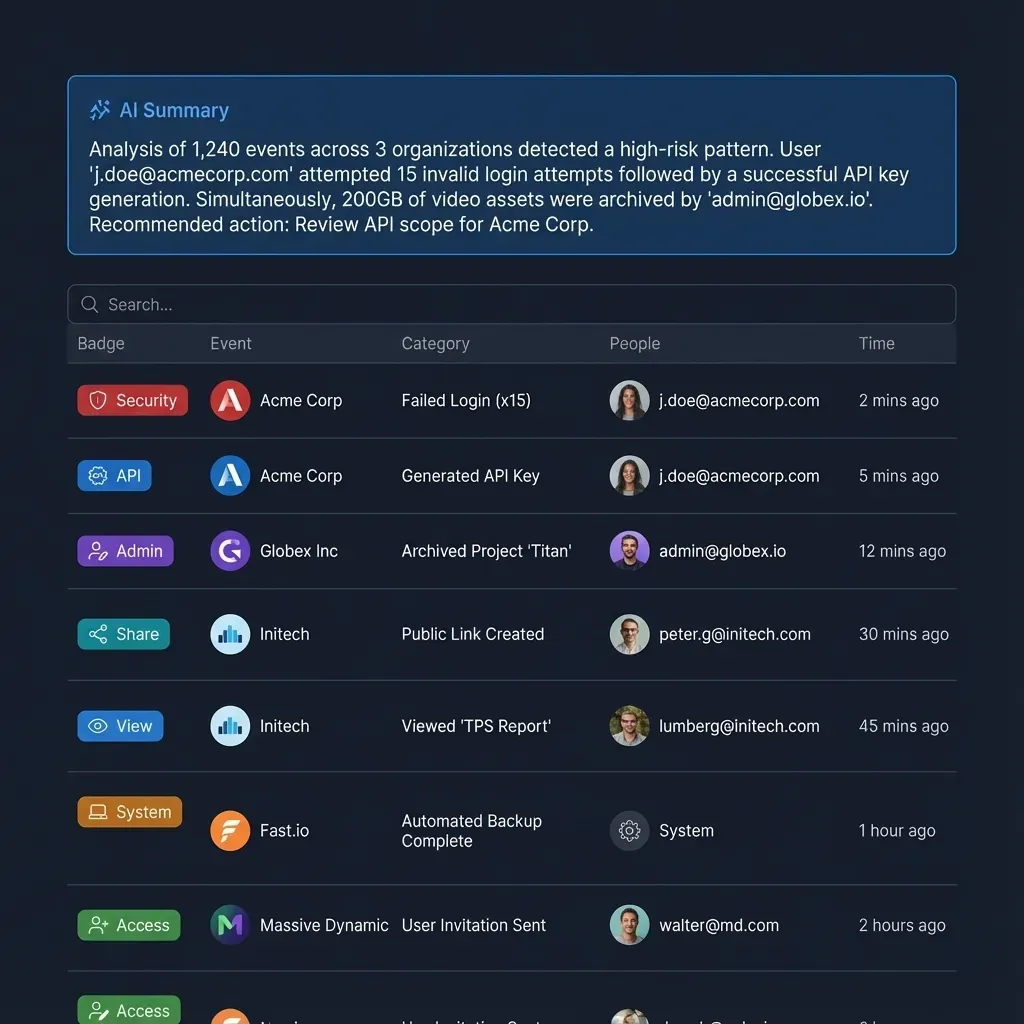
SLOs reveal patterns that would otherwise stay hidden. For example, a research agent might successfully complete multiple% of data pulls but only multiple% of exports. With SLO tracking, you identify that the export step has a specific failure pattern and fix it. Fast.io audit logs record every step, letting you pull metrics like completion rates, average steps per task, and cost per successful outcome.
Production Failure Modes
Real-world agents encounter predictable failure categories. Rate limits cause roughly multiple% of transient failures, particularly when agents make rapid API calls. Hallucinations account for about multiple% of failures, where agents produce incorrect outputs or use non-existent tools. State loss during long-running tasks causes another multiple% of failures.
Web scraping agents face additional challenges. Against sites with CAPTCHAs, success rates might drop to multiple-multiple%. SLOs help you identify these patterns early. When success rates fall below threshold, alerts trigger before the problem affects downstream users.
Key Metrics for AI Agent SLOs
Track these four main metrics for agent SLOs:
Task Success Rate measures the percentage of goals completed without human intervention. For most production agents, target multiple-multiple% success. Coding agents typically need higher success rates since failed code changes block entire workflows.
Latency tracks time from input to output or human handoff. For simple tasks like summarization, target under multiple seconds. For complex multi-step tasks like research reports, target under multiple minutes. Chat agents should prioritize speed to maintain responsive conversations.
Error Recovery Rate measures what percentage of failures the agent fixes itself through retry logic or fallback paths. Target above multiple% recovery for production agents. This metric catches issues with retry logic that success rate alone would miss.
Cost per Task normalizes token usage and API calls. Track this for budget SLOs, especially when running agents at scale. Calculate by dividing total spend by completed tasks over a time period.
Tailor your targets to your agent type. High-stakes coding agents need multiple% success with multiple-minute latency. Low-stakes chatbots might accept multiple% success with multiple-minute latency.


Ready for Reliable AI Agents?
50GB free storage, 5,000 credits/month, 251 MCP tools. Track SLOs in shared workspaces with humans. No credit card. Built for agentic workflows. Built for agent slo management workflows.
Setting Up SLO Tracking in Fast.io
Fast.io workspaces serve as central hubs for agent SLO tracking. Enable Intelligence Mode to automatically index all log files, enabling semantic search across your metrics.
Step 1: Create Agent Workspace Agents join Fast.io via MCP or API, just like human users. Create a dedicated workspace for logs with appropriate permissions. Set up separate folders for different agent types or projects.
Step 2: Log Structured Data
Each task writes JSON to /logs/{task_id}.json with structured fields. Include status, duration, tools used, tokens consumed, and any error details. This structured format enables both manual analysis and automated dashboarding.
{
  "task_id": "task-123",
  "success": true,
  "latency_ms": 45000,
  "tools_used": 3,
  "tool_sequence": ["search", "extract", "format"],
  "tokens": 12000,
  "error": null
}
Step 3: Query Metrics Use semantic search to find patterns. Ask questions like "Show success rates last 24h" or "Which tool causes most failures". Intelligence Mode indexes the content, so natural language queries return relevant results.
Combine Fast.io's built-in RAG with external tools like LangSmith or Prometheus for advanced analysis. Export JSON logs for custom dashboards.
Alerting with Webhooks and Audit Logs
SLOs only work when you know about breaches. Fast.io webhooks trigger on file changes, enabling real-time alerting when metrics cross thresholds.
Webhook Setup
Configure a script that monitors the /logs/ folder for new entries. When a new task completes, calculate the rolling success rate. If it drops below your threshold (commonly multiple%), POST to Slack, PagerDuty, or your incident management system.
Audit Log Analysis Fast.io audit logs track all file access and modifications. Review these logs weekly to identify patterns like repeated tool failures, specific times of day with degraded performance, or correlation with external API outages.
Ownership Transfer Agents can create SLO dashboards, build reports, and then use ownership transfer to hand them to your team. This enables a workflow where agents maintain the monitoring infrastructure while humans own the response process.
SLO Frameworks and Best Practices
Error Budgets Allow multiple-multiple% failure to leave room for experimentation. Error budgets prevent teams from over-optimizing for reliability at the cost of innovation. When an error budget depletes, pause new feature work and focus on stability.
Checkpoints Add human review points at major decision stages. Agents pause, present their reasoning, and wait for approval before proceeding. This catches errors before they cascade. For high-stakes workflows, require human sign-off on actions like sending emails or modifying production systems.
File Locks For multi-agent setups, use file locks to prevent conflicts. When multiple agents access shared state, the first agent acquires a lock before writing. Other agents wait or use stale data. Fast.io's file lock API handles this coordination.
Chaos Testing Simulate failures during development. Temporarily disable an API, introduce latency, or return errors. Measure how your agents respond. Do they retry correctly? Do they fall back to alternative approaches? Chaos testing reveals gaps in error handling.
Weekly Reviews Review SLO metrics every week. Look for trends: is latency increasing? Are certain tool combinations failing more often? Adjust targets based on real performance data, not guesses.
Example: SLOs for a Coding Agent in Fast.io
Coding agents need strict SLOs because bugs compound quickly. A failed code change can block entire feature pipelines.
Target SLOs
- Test-passing rate: 98%
- Time from PR to merge: under 10 minutes
- Auto-merge success: 90%
- Code review turnaround: under 5 minutes
Implementation
Log each commit to /logs/coding/{pr_id}.json with fields for tests_passed, lines_changed, review_time, and build_status. Use webhooks on file changes in the repository to trigger CI runs automatically.
Intelligence Mode indexes codebases for semantic queries. Ask "Show me bugs in the auth module" or "Find security issues in user input handling." This helps identify patterns in technical debt.
MCP Tool Example
{
  "tool": "write_file",
  "path": "/logs/coding/pr-multiple.json",
  "content": "{\"pr_id\": \"pr-456\", \"success\": true, \"latency_ms\": 180000, \"tests_passed\": 42, \"tests_total\": 42, \"lines_changed\": 127}"
}
Chaos Testing Simulate API downtime for external services. Measure how quickly the agent detects the failure, retries appropriately, and recovers when the service returns. Adjust retry logic based on real failure data from audit logs.
Multi-Agent SLOs and Coordination
Multi-agent workflows require pipeline-level SLOs. When Agent A gathers data, Agent B analyzes it, and Agent C generates reports, you need end-to-end visibility.
Pipeline SLOs
- End-to-end success rate: 92%
- Total latency from start to final output: under 15 minutes
- Individual agent success rates: above 95%
Fast.io Coordination
File locks prevent race conditions when agents access shared state. Agent A writes raw data to /data/raw.json, then notifies Agent B via webhook. Agent B acquires a lock on the file, processes it, and writes to /data/processed.json. This ensures orderly handoffs.
Example Pipeline
- Agent A writes
/data/raw.json, triggers webhook to notify Agent B - Agent B acquires lock on
/data/raw.json, reads, processes, writes to/data/processed.json - Agent B triggers webhook for Agent C to generate the final report
- All metrics aggregate in
/logs/pipeline-summary.json
For systems with multiple+ agents, use Intelligence Mode to query "coordination failures last day" or "which handoff caused the most delays." This helps identify bottlenecks in your pipeline design.
Troubleshooting SLO Breaches
When SLOs breach, start with audit logs. The root causes typically fall into three categories: rate limits (multiple% of issues), hallucinations (multiple%), and state loss (multiple%).
Troubleshooting Steps
- Query "failures last 24h" in Intelligence Mode to see specific error types
- Check for latency spikes, external APIs may be slow or degraded
- Review recovery attempts, agent retry logic may be failing
- Examine tool call sequences, agents may be using wrong tool combinations Fast.io Advantages Full history persists indefinitely, unlike ephemeral logs that rotate. Semantic search finds patterns across months of data. Export to Prometheus or Grafana for custom dashboards that match your observability stack.
Prevention Error budgets allow multiple% failure margin for experimentation. When error budgets burn down faster than expected, alerts trigger before complete breach. Set up progressive alerts: warning at multiple% budget consumption, critical at multiple%.
Ready for Reliable AI Agents?
50GB free storage, 5,000 credits/month, 251 MCP tools. Track SLOs in shared workspaces with humans. No credit card. Built for agentic workflows. Built for agent slo management workflows.
Frequently Asked Questions
What are SLOs for AI agents?
AI agent SLOs define reliability targets like 95% task success rate and under 5-minute latency for production agents. They go beyond traditional uptime metrics to cover task completion, tool call success, error recovery, and human handoffs.
How do you manage agent SLOs?
Log metrics to workspaces as JSON files, use Intelligence Mode for semantic queries, and set up webhook alerts for threshold breaches. Fast.io provides persistent storage for logs, audit trails for access history, and built-in RAG for natural language analysis.
What metrics matter most for AI agents?
Task success rate (target multiple-multiple%), latency (target under multiple minutes for complex tasks), error recovery rate (target above multiple%), and cost per task for budget tracking. Prioritize based on your agent's specific use case.
Can Fast.io track AI agent SLOs?
Yes. Agents log structured JSON data to workspaces, Intelligence Mode auto-indexes logs for semantic search, webhooks trigger alerts on threshold breaches, and audit logs track all access. Query with natural language like "success rate last week."
Why do most agents fail SLOs initially?
Missing persistence causes state loss during long tasks. Weak error recovery fails to handle API failures gracefully. Untracked tools hide failure patterns. Up to 80% of AI projects struggle initially due to these reliability challenges.
Related Resources

Ready for Reliable AI Agents?
50GB free storage, 5,000 credits/month, 251 MCP tools. Track SLOs in shared workspaces with humans. No credit card. Built for agentic workflows. Built for agent slo management workflows.