How to Manage AI Agent Secrets and API Credentials
AI agent secrets management is about securely storing, rotating, and accessing API keys and tokens that autonomous agents need to work with external tools. This guide covers the best strategies for protecting agentic workflows, including vault integration, runtime injection, and the principle of least privilege.

Why AI Agent Secrets Management is Different
Traditional applications usually handle secrets during a build or deploy phase where human oversight is present. AI agents present a unique challenge because they often require runtime access to credentials to perform autonomous tasks. When an agent decides to use a tool, it may need to authenticate with a third-party service on the fly, without a human in the loop to approve the transaction.
According to the Verizon Data Breach Investigations Report, 80% of breaches involve compromised credentials. For autonomous agents, the risk is magnified. If an agent has broad access to a company's API keys and its logic is subverted through prompt injection, a malicious actor could gain control over entire infrastructure layers. Managing these secrets requires moving away from static environment variables toward dynamic, short-lived credentials.
Helpful references: Fast.io Workspaces, Fast.io Collaboration, and Fast.io AI.
The Five Core Principles of Agent Secrets Management
To build a secure environment for autonomous workflows, organizations should follow five core principles. These rules ensure that even if one part of the system is compromised, the overall impact is contained.
- Vault Integration: Never hardcode keys in agent prompts or source code. Use a dedicated secrets manager like HashiCorp Vault or AWS Secrets Manager to centralize storage.
- Runtime Injection: Inject secrets into the agent's execution environment at the moment they are needed, rather than keeping them persistent in memory.
- Automatic Rotation: Set credentials to expire frequently. Automated rotation reduces the window of opportunity for an attacker using a stolen key.
- Least Privilege: Assign agents the absolute minimum permissions required. An agent designed to read data should not have permission to delete it.
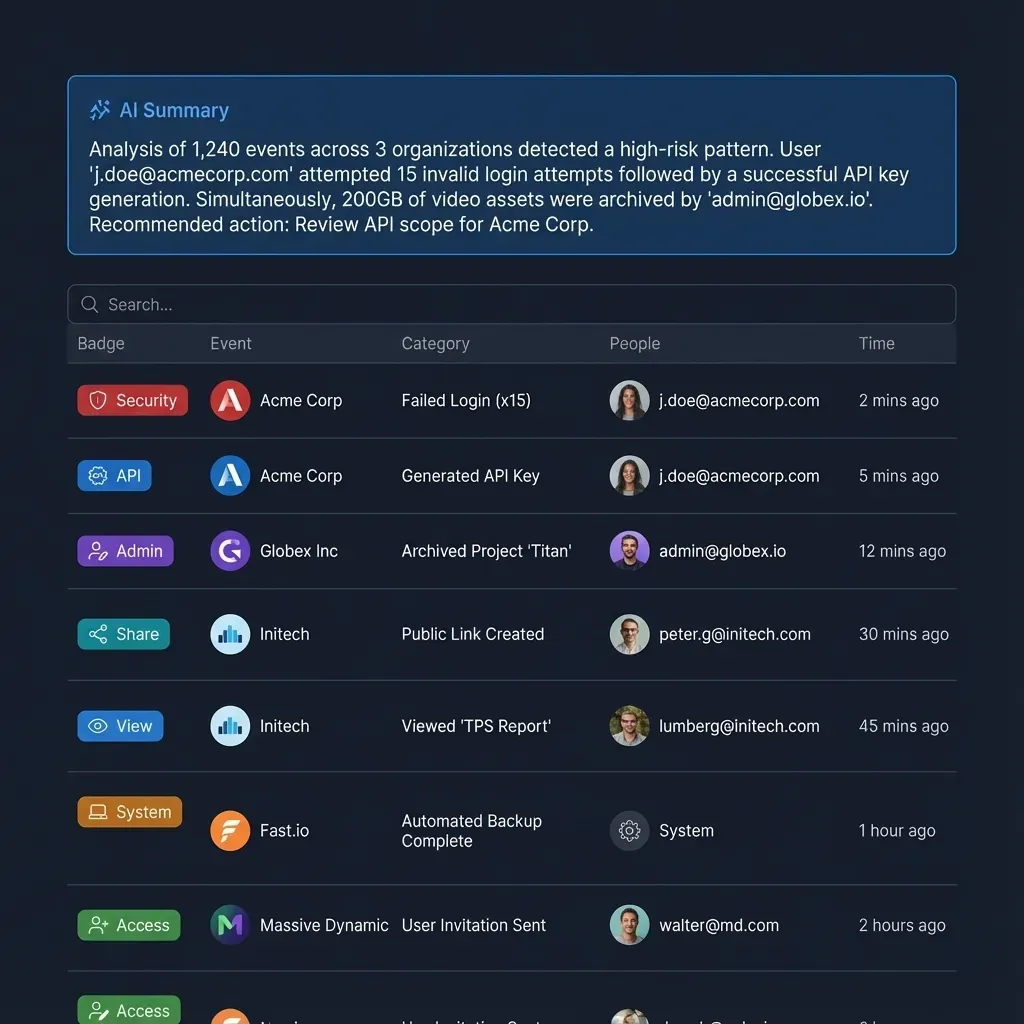
- Audit Logging: Maintain a detailed record of every time a secret is accessed. This helps in identifying anomalous behavior before a breach occurs.


Run Manage AI Agent Secrets And API Credentials workflows on Fast.io
Fast.io gives teams shared workspaces, MCP tools, and searchable file context to run ai agent secrets management workflows with reliable agent and human handoffs.
Implementing Least Privilege for Autonomous Agents
Enterprises manage a large and growing number of secrets across their infrastructure. When agents are introduced, this number expands rapidly. The most effective way to manage this complexity is by treating each AI agent as a distinct service account with its own scoped identity.
Instead of giving an agent a master API key that works across all company services, create fine-grained tool identities. For example, if an agent needs to upload files to a workspace, it should only have "read and write" access to that specific directory. Fast.io makes this easy through granular permissions that can be applied at the organization, workspace, or even the folder level. This ensures that an agent's reach is limited to the specific task it was designed to perform.
Runtime Injection and Environment Safety
Storing secrets in environment variables is a common practice, but it is often unsafe for AI agents. Environment variables are often logged in crash reports or visible to other processes. A better approach is runtime injection through a secure API or a Model Context Protocol (MCP) server.
By using an MCP server, agents can request access to specific tools without ever seeing the underlying API key. The server handles the authentication on behalf of the agent. Fast.io provides 251 MCP tools that allow agents to manage files, create shares, and index documents securely. The agent interacts with the tools, while the credentials remain protected within the secure server environment.
Monitoring and Behavioral Baselines
Security is not a one-time setup; it requires continuous monitoring. Because agents are autonomous, their behavior can change based on the data they process. Establishing a behavioral baseline helps security teams detect when an agent starts accessing secrets it normally doesn't use.
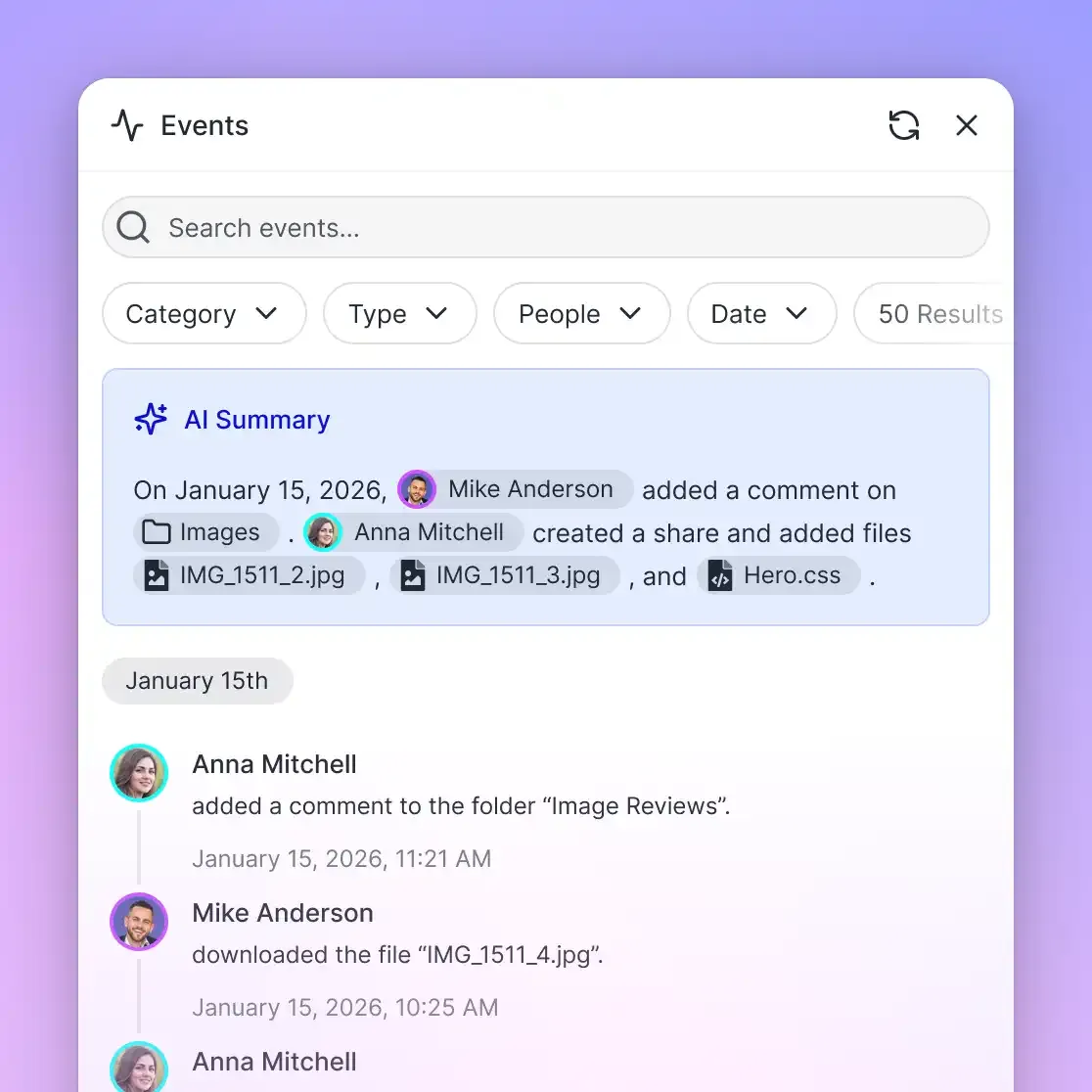
If an agent that typically reads a handful of documents a day suddenly requests access to hundreds of API keys, the system should trigger an automatic lock. Fast.io supports this level of oversight with full audit trails that track all joins, uploads, and permission changes. Security teams can review these logs to verify that agents are operating within their intended parameters.
How Fast.io Secures Agent Workspaces
Fast.io is designed as a smart workspace where agents and humans work together safely. Every file is indexed and searchable, but access is strictly controlled. Agents join workspaces as first-class members, meaning they are subject to the same strict permission structures as human teammates.
With features like Intelligence Mode, files are auto-indexed for RAG, but the agent only sees what it is permitted to see. Fast.io also supports ownership transfer. An agent can build a workspace, organize the secrets and documents, and then transfer the entire organization to a human user while retaining only the necessary admin access. This creates a clear chain of custody for sensitive data.
Frequently Asked Questions
How do AI agents securely access API keys?
AI agents should access API keys through a secure secrets manager or an MCP server rather than having them hardcoded. This allows the system to inject credentials at runtime and rotate them automatically without human intervention.
What is the best secrets manager for AI agents?
The best secrets manager depends on your infrastructure. HashiCorp Vault, AWS Secrets Manager, and Google Secret Manager are common choices. The key is to select a tool that supports machine-to-machine authentication and automated rotation.
How do you rotate credentials for autonomous agents?
Credential rotation should be automated. Secrets managers can generate short-lived tokens that expire after a few hours or a single session. This ensures that even if a token is leaked, its utility to an attacker is limited.
Should AI agents have their own service accounts?
Yes. Every AI agent should have a unique service account or non-human identity. This allows for granular auditing and ensures that permissions are limited to the specific tasks assigned to that agent.
Can I use environment variables for agent secrets?
While environment variables are common, they are less secure for agents because they are often persistent and visible to other system processes. Runtime injection through a secure API is the preferred method for high-security environments.
Related Resources

Run Manage AI Agent Secrets And API Credentials workflows on Fast.io
Fast.io gives teams shared workspaces, MCP tools, and searchable file context to run ai agent secrets management workflows with reliable agent and human handoffs.