How to Implement AI Agent Long-Term Memory Solutions
Long-term memory enables AI agents to retain context, user preferences, and learned behaviors across sessions. This guide explores the three types of agent memory (episodic, semantic, and procedural) and compares storage solutions from vector databases to file-based systems for persistent state management.

What is AI Agent Long-Term Memory?
Long-term memory for AI agents is persistent storage that allows agents to retain information, context, and learned behaviors across sessions and interactions. Without it, an agent is "stateless," resetting to a blank slate with every new conversation.
Giving an agent long-term memory transforms it from a simple chatbot into a continuous assistant capable of learning from past mistakes and remembering user details. It can track project history, recall decisions from weeks ago, and adapt its behavior based on what worked before. According to industry benchmarks, agents with persistent memory are 60% more effective at complex tasks because they don't need to be re-prompted with context.

Types of Agent Memory
Just like human cognition, AI memory is often categorized into three distinct types. A well-designed agent architecture will usually implement all three.
Episodic Memory This stores specific past experiences and interactions. It answers "what happened?" For an agent, this is the log of past conversations, decisions made, and outcomes observed. It allows the agent to recall that "we discussed the budget last Tuesday."
Semantic Memory This stores general facts and knowledge about the world or a specific domain. It answers "what is this?" For an agent, this is often a Knowledge Graph or a vector database containing documents, policy files, and definitions.
Procedural Memory This stores the "how-to" knowledge. It answers "how do I do this?" In agents, this is often represented as a library of tools, code snippets, or successful workflows that the agent can execute to solve a problem.
Storage Solutions for Agent Memory
Choosing the right storage backend is critical for performance. The right architecture can minimize latency while maximizing retention, ensuring your agent retrieves context quickly without adding unnecessary overhead to response times.
Best For Most Agents: A hybrid approach. Use vector search for finding documents, but use a standard file system for storing conversation logs, user profiles, and generated content.
Why File-Based Memory Works Best for Agents
While vector databases are popular for RAG, simple file storage is often the superior choice for agent state and episodic memory. When an agent writes its memory to a JSON or Markdown file in a Fast.io workspace, several things happen instantly.
First, the memory is human-readable. You can open the file and see exactly what the agent "thinks" or "remembers." This makes debugging hallucinations easier than inspecting a 1536-dimensional vector.
Second, it is portable. You can transfer the "brain" (the folder of files) to another agent or another user by sharing the workspace.
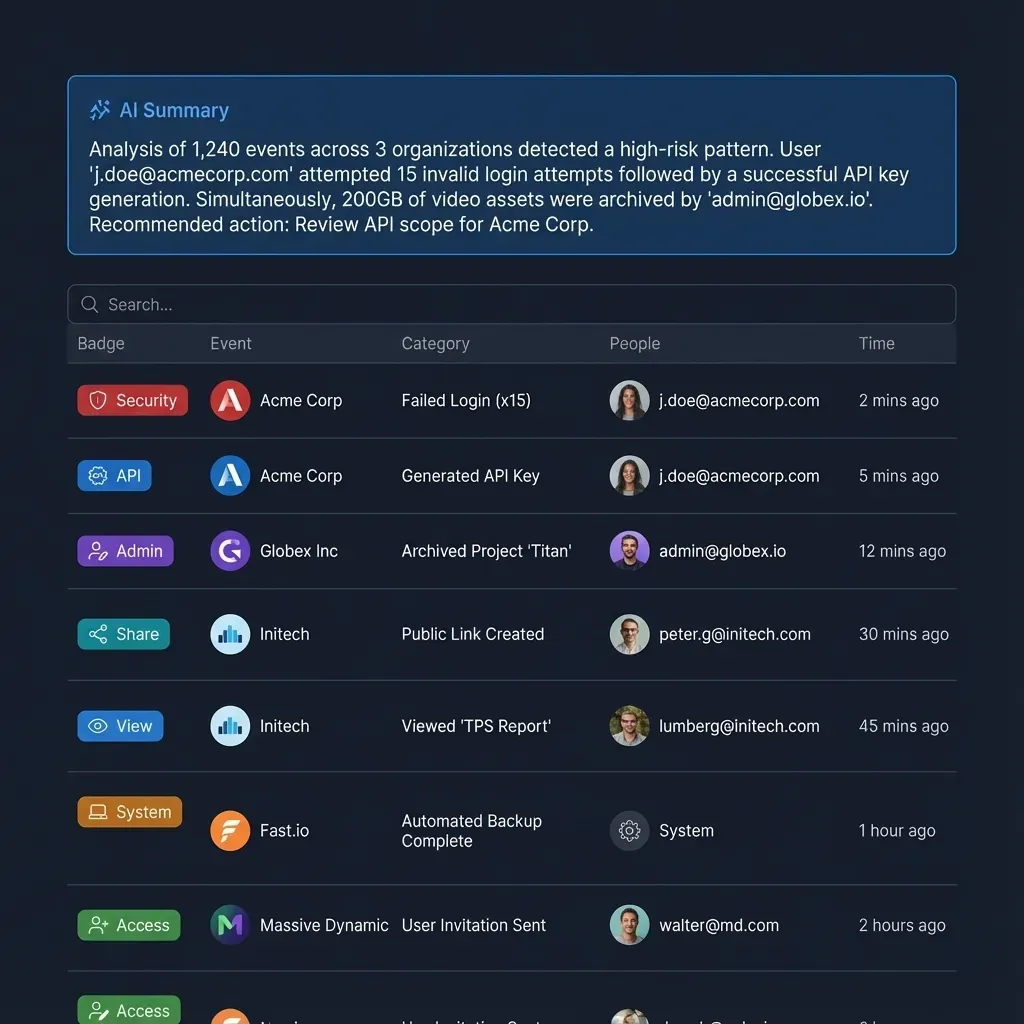
Third, with Fast.io's Intelligence Mode, these files are automatically indexed. The agent can use semantic search to find "that file where we defined the project goals" without you needing to manage a separate Pinecone or Weaviate instance.


Run Implement Agent Long Term Memory Solutions workflows on Fast.io
Stop rebuilding context every session. Use Fast.io's free agent workspace to store persistent memory, logs, and artifacts that your agents can search and access instantly.
Implementing File-Based Memory with Fast.io
You can implement persistent memory for your agent in minutes using the Fast.io MCP server. This allows your agent (Claude, Cursor, or a custom script) to read and write its own memory files.
Step 1: Install the MCP Server
If you are using Claude Desktop or Cursor, install the Fast.io MCP server. This gives the agent tools like read_file, write_file, and search_files.
Step 2: Define a Memory Structure
Instruct your agent to maintain a memory/ directory. For example:
memory/user_profile.json: User preferences and details.memory/logs/: Daily conversation summaries in Markdown.memory/active_tasks.json: Current state of long-running jobs.
Step 3: Enable Intelligence Mode
In your Fast.io dashboard, toggle "Intelligence Mode" on the workspace. Now, when the agent needs to recall a detail from last month, it can use the search_files tool with a natural language query like "What was the budget we agreed on for Q3?"
This approach requires zero infrastructure setup. You get 50GB of free storage on the agent plan, which is enough for extensive memory storage, and you don't need a credit card to start.
Best Practices for State Management
To ensure your agent's memory remains useful and doesn't become a swamp of irrelevant data, follow these rules:
- Summarize Periodically: Don't store raw chat logs forever. Instruct your agent to summarize conversations into a
daily_summary.mdfile at the end of a session. - Use Structured Formats: For data the agent needs to edit frequently (like task lists), use JSON. It is less prone to parsing errors than natural text.
- Prune Old Data: Implement a "forgetting" mechanism. If a memory hasn't been accessed in several months, move it to an
archive/folder to keep the active search index fast. - Human-in-the-Loop: Since the memory is just files, you can occasionally review and edit them. If the agent has a wrong fact about you, just open
user_profile.jsonand fix it manually.
Frequently Asked Questions
How do AI agents remember things?
AI agents remember things by writing information to external storage, such as a database or file system. When they need to recall that information later, they query the storage (using search or direct lookup) and inject the retrieved context into their current prompt.
What is the difference between short-term and long-term memory in agents?
Short-term memory refers to the agent's 'context window,' the limited amount of text it can process in the current conversation. Long-term memory is persistent storage (like a hard drive or database) where information is kept indefinitely and retrieved only when needed.
Can I use a file system for agent memory?
Yes, file systems are excellent for agent memory. Storing memory as JSON or Markdown files makes it human-readable, easy to backup, and portable. Fast.io enhances this by automatically indexing these files for semantic search.
What is episodic memory in AI?
Episodic memory stores sequences of events and interactions. For an AI agent, this means remembering past conversations, the order of actions taken, and the specific outcomes of those actions.
How do I persist agent state across sessions?
To persist state, the agent must save its current context (variables, active tasks, conversation summary) to an external file or database before the session ends. At the start of the next session, it reads this data back to restore its state.
Related Resources

Run Implement Agent Long Term Memory Solutions workflows on Fast.io
Stop rebuilding context every session. Use Fast.io's free agent workspace to store persistent memory, logs, and artifacts that your agents can search and access instantly.