How to Build an AI Agent Knowledge Vault for Secure Storage
An AI agent knowledge vault is a centralized, secure storage system designed specifically for autonomous agents. Knowledge vaults provide persistent memory, allowing agents to retain context, conversation histories, and document embeddings across multiple sessions. Without a secure agent vault, workflows suffer from repetitive data processing and contextual amnesia. This guide covers how to build a knowledge base storage solution that equips your AI agents with the long-term memory they need to operate reliably in production environments.
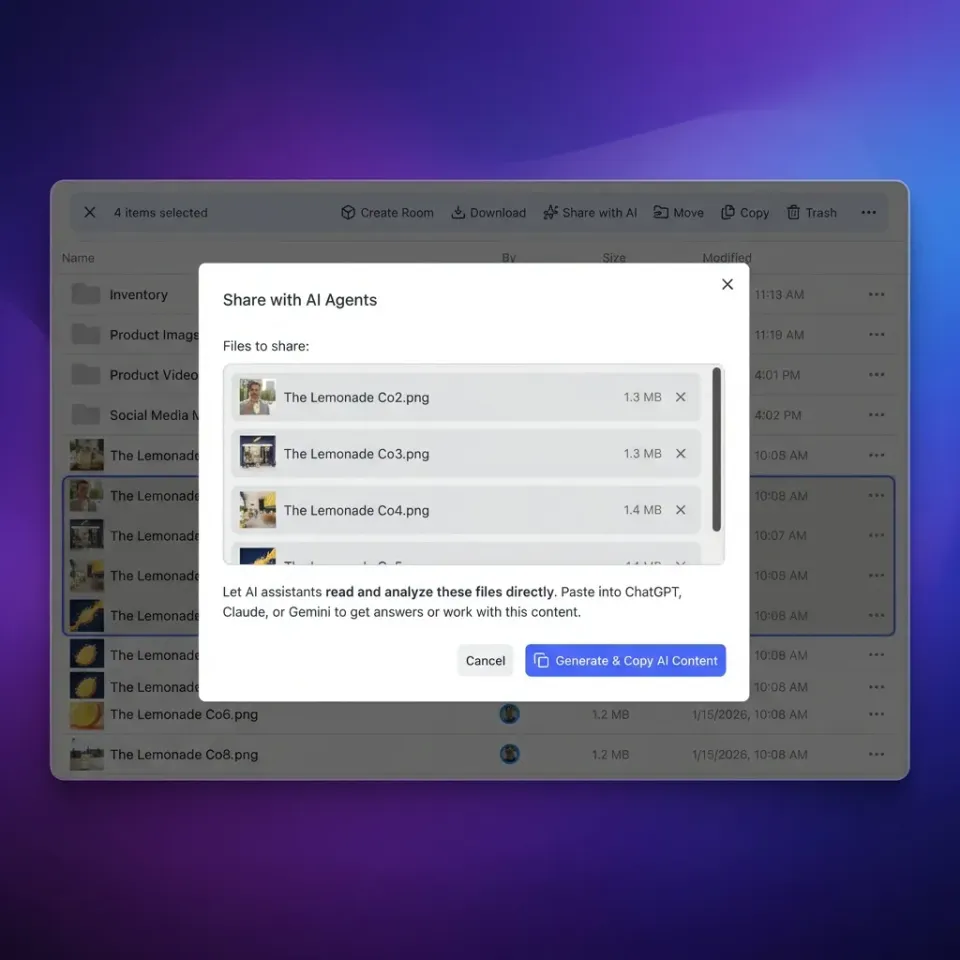
What Is an AI Agent Knowledge Vault?
An AI agent knowledge vault is a dedicated storage environment that centralizes an autonomous agent's data, context, and retrieval systems. Knowledge vaults centralize agent data with encryption and versioning, ensuring that critical information persists beyond a single session or deployment. By providing a stable foundation, these vaults allow agents to function with consistent memory and improved reliability.
Modern AI agents handle complex, multi-step workflows that require constant access to reference materials, historical decisions, and environmental context. When an agent restarts or is redeployed, it typically loses this state unless it is backed by a persistent storage mechanism. A reliable knowledge vault solves this problem by maintaining embeddings, tool outputs, and document repositories in a secure, accessible format.
The core components of an effective agent knowledge vault include:
- Persistent Document Storage: A reliable location to store source files, PDFs, spreadsheets, and other reference materials without relying on local file systems.
- Semantic Indexing: Automated generation of vector embeddings, allowing agents to search for information based on meaning rather than exact keyword matches.
- Access Controls and Encryption: Strong security measures that protect sensitive data from unauthorized access, both at rest and in transit.
- Audit Trails and Versioning: Comprehensive logs that track which agent accessed or modified specific files, along with version history to roll back changes if an agent makes an error.
By combining these elements, a knowledge vault transforms an agent from a stateless function into a continuously learning entity. This transition is essential for enterprise deployments where agents must handle sensitive data and collaborate with both human team members and other automated systems.
Why Do AI Agents Need Secure Knowledge Vaults?
Autonomous agents operating without a knowledge vault face significant limitations in production environments. Without persistent state, agents suffer from "contextual amnesia." They must constantly reprocess the same documents, recalculate embeddings, and rediscover insights they had already generated in previous runs. This repetition wastes compute resources, increases API costs, and drastically reduces overall reliability.
Secure agent vaults address these fundamental challenges by providing a stable memory layer. When an agent is tasked with a long-running research project or a complex software development goal, it needs a secure place to store intermediate results, test logs, and strategic plans. A vault ensures that if the agent process crashes or is interrupted, the agent can resume exactly where it left off by retrieving its state from the vault.
Security is a paramount concern for enterprise AI. Agents often process proprietary codebases, confidential financial reports, or sensitive customer data. Storing this information in plain text within API call histories or unstructured cloud buckets exposes the organization to significant risks. A purpose-built knowledge vault encrypts this data and enforces strict Role-Based Access Control, ensuring that only authorized agents and human overseers can access specific workspaces.
The integration of a knowledge vault also enables powerful multi-agent collaboration. In a swarm architecture, different agents specialize in different tasks. A research agent might gather data, an analysis agent might process it, and a writing agent might draft a report. A shared, secure knowledge vault acts as the central coordination layer where these agents hand off tasks and share context continuously.
For teams scaling their AI operations, the implementation of a secure vault is the difference between a fragile prototype and a resilient, production-ready system.
Evidence and Benchmarks for Knowledge Vaults
The implementation of secure knowledge vaults has a measurable impact on the performance and accuracy of AI agents. Relying on stateless interactions often leads to hallucinations and task failures because the agent lacks sufficient context to make informed decisions.
According to Anthropic research, contextual retrieval methods, which are a core feature of advanced knowledge vaults, reduce retrieval failure rates by 35%. This substantial reduction in errors means that agents equipped with properly structured vaults are significantly more accurate when pulling specific facts from large datasets. They spend less time hallucinating answers and more time executing their assigned tasks correctly.
Providing agents with persistent storage drastically reduces the token costs associated with repetitive processing. Instead of passing massive documents in the context window for every single interaction, agents can query their vault and retrieve only the most relevant chunks of information. This efficiency is critical for organizations looking to scale their AI deployments without facing exponential increases in API usage fees.
Pros and Cons of Agent Knowledge Vaults
Evaluating the adoption of an AI agent knowledge vault requires understanding both the significant advantages and the potential implementation challenges.
Pros:
- Enhanced Persistence and Reliability: Data survives agent restarts and system deployments. Agents can pick up complex tasks exactly where they left off without needing to recompute expensive embeddings or re-read source documents.
- Improved Security Posture: Enterprise-grade encryption protects both the underlying data and the proprietary models. Granular access controls ensure that multi-agent systems operate within strict security boundaries.
- Cost Efficiency at Scale: By utilizing Retrieval-Augmented Generation through a vault, agents consume significantly fewer tokens. They query for specific context rather than processing entire documents repeatedly.
- Streamlined Collaboration: Vaults serve as the perfect handoff mechanism for agent swarms. One agent can deposit findings, and another can instantly access them with full context.
- Comprehensive Versioning: Every change made by an agent is tracked. If an autonomous system overwrites a critical file, administrators can easily roll back to a previous version and audit the agent's actions.
Cons:
- Implementation Complexity: Building a custom vault from scratch requires deep expertise in vector databases, access control systems, and agent frameworks.
- Retrieval Latency: Querying a vault adds a network hop and processing time to the agent's response cycle. Teams must implement caching strategies to mitigate this latency for real-time applications.
- Storage Costs: While token costs decrease, storing massive amounts of indexed data and embeddings can introduce new infrastructure expenses, particularly for high-volume deployments.
For most organizations, the benefits of reliability and security far outweigh the drawbacks, especially when utilizing managed platforms that reduce the implementation complexity.
How Fast.io Workspaces Create Agent Knowledge Vaults
Fast.io workspaces are engineered from the ground up to serve as the ultimate knowledge vault for AI agents. Rather than piecing together disparate storage buckets and vector databases, Fast.io provides a unified, intelligent workspace that agents can interact with natively.
When a workspace is created on Fast.io, you can enable Intelligence Mode. This single toggle transforms a standard storage folder into a powerful semantic index. As agents upload files, Fast.io automatically processes, chunks, and embeds the content, making it immediately available for Retrieval-Augmented Generation without requiring any external database configuration.
Fast.io offers a generous free tier specifically designed for agent developers. This Storage for Agents tier includes 50GB of free storage and 5,000 monthly credits, allowing teams to build and test high-quality knowledge vaults without entering a credit card. Agents can upload files up to 1GB in size, accommodating massive datasets, comprehensive codebases, and extensive research archives across up to 5 workspaces. For larger needs, transparent pricing options are available.
Interaction with the vault is powered by Fast.io's comprehensive Model Context Protocol server. With 251 MCP tools available via Streamable HTTP and Server-Sent Events, agents have complete programmatic control over their vault. They can create workspaces, manage permissions, upload documents, and query the index using natural language.
One of the highly effective features of Fast.io for agent workflows is Ownership Transfer. An agent can autonomously create a workspace, populate it with research, organize the knowledge vault, and then transfer ownership of that workspace to a human client or team member while retaining administrative access. This direct handoff bridges the gap between automated workflows and human collaboration.
Step-by-Step Guide to Building Your Vault
Building an AI agent knowledge vault using Fast.io is straightforward and requires minimal configuration. Follow these steps to equip your agents with secure, long-term memory.
Step 1: Set Up Your Agent Workspace Begin by creating a free account tailored for agent development. This grants you access to the required storage capacity and the necessary API credentials. Navigate to the Fast.io platform and generate your API tokens, ensuring you store them securely in your agent's environment variables.
Step 2: Connect via the Model Context Protocol Integrate the Fast.io MCP server into your agent framework. If you are using OpenClaw, you can install the integration directly via the ClawHub registry:
clawhub install dbalve/fast-io
For custom implementations, configure your agent to connect to the Fast.io MCP server endpoint using your API credentials.
Step 3: Create and Configure the Vault Instruct your agent to create a new workspace dedicated to its specific task or domain. Once created, the agent must enable Intelligence Mode on this workspace. This critical step ensures that all subsequent uploads are automatically indexed for semantic search.
Step 4: Populate the Knowledge Base Your agent can now begin populating the vault. It can upload local files, generate JSON reports, or use the URL Import feature to pull documents directly from external sources like Google Drive or Dropbox without downloading them locally first.
Step 5: Query and Retrieve With the vault populated, the agent can use natural language queries through the MCP chat tool to retrieve specific insights. The platform returns highly relevant, cited information that the agent can incorporate into its decision-making process.
Step 6: Implement Webhooks for Reactive Workflows To build truly autonomous systems, configure webhooks on your workspace. When a human team member or another agent uploads a new file to the vault, the webhook can trigger your agent to wake up, process the new information, and update its internal state accordingly.
Security and Access Control in Multi-Agent Systems
As organizations deploy swarms of specialized agents, securing the knowledge vault becomes increasingly complex. A multi-agent system might include a financial analysis agent that requires access to sensitive spreadsheets, alongside a marketing agent that should only access public brand guidelines.
Fast.io addresses this complexity with detailed, granular Role-Based Access Control. Each workspace within the platform acts as an isolated vault. Administrators can assign specific permissions to individual agents, ensuring that each system operates with the principle of least privilege. An agent can be granted read-only access to a central reference vault while maintaining full read-write permissions in its own scratchpad workspace.
File locks are another critical security feature for multi-agent collaboration. When multiple autonomous systems interact with the same vault simultaneously, race conditions and data corruption become significant risks. Fast.io allows agents to acquire explicit locks on specific files or entire directories while they are performing updates. This ensures that a writing agent cannot overwrite a document while a reviewing agent is actively analyzing it.
Comprehensive audit logs provide the final layer of security. Every action taken by an agent is tracked, including every file uploaded, every query executed, and every permission modified. In the event of an anomaly or an unexpected outcome, human overseers can review these logs to determine exactly which agent accessed the vault and what data influenced its behavior.
Best Practices for Agent Vault Management
To maximize the value of your AI agent knowledge vault and ensure long-term stability, implement these fundamental best practices.
First, establish a clear hierarchical folder structure within your workspaces. Organize data by project, agent role, and data sensitivity. This structured approach helps agents navigate the vault more efficiently and makes it easier for human collaborators to find information.
Apply consistent metadata tags to all uploaded documents. While semantic search is powerful, precise metadata filtering allows agents to narrow their queries to specific timeframes, document types, or approval statuses, further reducing retrieval errors and improving response times.
Implement a regular pruning schedule. As agents operate continuously, they generate vast amounts of intermediate data, temporary logs, and outdated research. Configure your workflows to archive or delete this transient data periodically. This practice keeps the semantic index focused on high-quality, relevant information and helps control storage costs.
When dealing with exceptionally large files, rely on the platform's automatic chunking capabilities, but ensure your agents are programmed to handle potential retrieval limits gracefully. Define clear tool contracts and fallback behavior so agents fail safely when dependencies are temporarily unavailable or when queries return empty results.
Finally, document all decisions regarding vault architecture, ownership rules, and rollback procedures. As your deployment scales from a single prototype to a complex swarm of enterprise agents, maintaining repeatable and transparent processes ensures that your knowledge vaults remain an asset rather than a liability.
Frequently Asked Questions
What is the best knowledge vault for AI agents?
Fast.io workspaces serve as the optimal knowledge vault for AI agents. They provide 50GB of free storage, native Retrieval-Augmented Generation through Intelligence Mode, and direct integration via 251 Model Context Protocol tools. This setup ensures persistent memory and secure collaboration.
How do I build an agent knowledge vault?
You can build an agent knowledge vault by creating a Fast.io workspace and enabling Intelligence Mode. Use the Model Context Protocol to upload documents, which are automatically indexed. Your agents can then query this secure vault using natural language to retrieve accurate, cited information across sessions.
What are the essential features of a secure agent vault?
A secure agent vault must include encryption at rest and in transit, comprehensive versioning, and granular access controls. It should provide detailed audit logs to track agent activity, file locks to prevent conflicts in multi-agent swarms, and built-in semantic indexing for efficient retrieval.
Does Fast.io support persistent agent memory?
Yes, Fast.io natively supports persistent agent memory. By uploading context, conversation histories, and reference documents to an Intelligence Mode workspace, agents gain a lasting memory layer. They can search this vault semantically without requiring you to manage a separate vector database.
Is there a free option for agent knowledge storage?
Yes, Fast.io offers a reliable free tier specifically for agent developers. It includes 50GB of storage, 5 workspaces, and 5,000 monthly credits without requiring a credit card. This allows you to build and test comprehensive knowledge vaults at no cost.
Related Resources

Build Your AI Agent Knowledge Vault Today
Equip your autonomous agents with persistent memory and secure storage. Get started with 50GB of free storage, native semantic indexing, and comprehensive MCP tool support.