How to Deploy AI Agents: The Complete Production Guide
This AI agent deployment guide explains how to move autonomous systems from development to production. Most AI agents fail to reach production due to infrastructure and operational challenges. This guide covers the essential infrastructure, security, and storage patterns needed to deploy autonomous agents that work reliably at scale.
AI Agent Deployment Guide: From Development to Production
AI agent deployment is the process of moving autonomous AI systems from development to production, including infrastructure setup, security configuration, and operational monitoring. Unlike deploying a static web app or a stateless API, deploying an agent involves managing dynamic state, unpredictable execution paths, and long-running sessions. For background on how agent infrastructure fits together, start with the core stack components before tackling deployment.
In a development environment, an agent might run on a laptop with local file access. In production, that same agent needs a containerized environment, a persistent identity, secure access to tools, and a way to persist its work (artifacts, logs, state) that survives container restarts. Getting state management right early prevents the most common production failures.
The complexity of these requirements is why many projects stall. Deployment issues are the leading cause of agent project failures, often due to inadequate planning for state management and security boundaries.
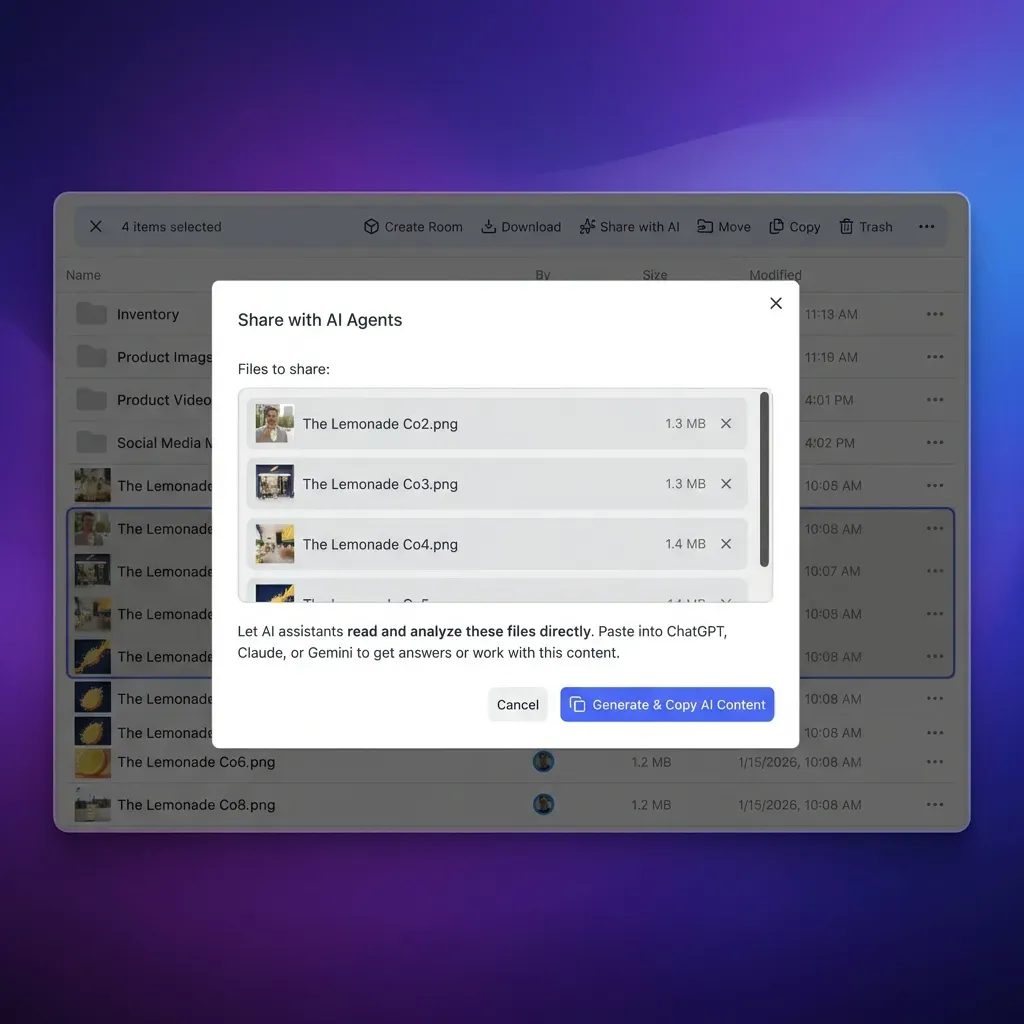
Core Infrastructure Requirements
Deploying agents requires a different stack than traditional software. While a web server handles short-lived requests, an agent might run a task for hours, spawning sub-agents and accessing dozens of tools.
Compute and Runtime
Most production agents run in containerized environments (Docker/Kubernetes) to ensure consistency. However, because agents are often I/O bound (waiting for LLM tokens or tool outputs), serverless platforms with long timeouts can be cost-effective. For long-running autonomous loops, dedicated orchestration platforms like Temporal or durable execution engines are becoming standard.
Networking and Connectivity
Agents need outbound access to LLM APIs (OpenAI, Anthropic) and internal access to business tools (databases, CRMs). Unlike a standard microservice that connects to a known set of upstream services, an agent might need dynamic access to various APIs based on its reasoning.
Identity Management
Each agent should have its own non-human identity (Service Account). This allows you to apply the Principle of Least Privilege. An agent meant to summarize PDF reports should not have write access to the production database.
The Missing Piece: Persistent Storage
One critical gap in most deployment guides is persistent storage. Agents generate artifacts like code, reports, images, and logs that need to be stored, indexed, and made accessible to humans.
If an agent runs in a fleeting container, its local filesystem vanishes when the task ends. You need a persistent storage layer that acts as the agent's long-term memory and workspace.
Why Object Storage Isn't Enough
S3-compatible buckets are cheap but lack the semantic features agents need. They are "dumb" storage. A production agent workflow needs:
- Searchability: Agents need to find files by content, not just key name.
- Concurrency: Multiple agents might read/write shared context simultaneously.
- Human Access: Stakeholders need to review agent outputs without downloading raw JSON dumps.
Fast.io fills this gap by providing an intelligent workspace that mounts as a standard drive or connects via MCP. When an agent saves a file to Fast.io, it is immediately indexed, searchable, and accessible to human teams.
Security & Identity Management
Security is the primary blocker for enterprise AI adoption. Deploying an agent effectively means giving a semi-autonomous entity access to your data.
Least Privilege for Tools
Never give an agent a "god mode" API key. Use scoped credentials and RBAC-style file permissions to limit what each agent can access. If using the Model Context Protocol (MCP), configure the MCP server to expose only the specific tools required for the agent's role.
Human-in-the-Loop (HITL)
For high-stakes actions (like deleting files or sending emails), enforce a HITL step. The agent can draft the email or stage the file deletion, but a human must approve the final execution. This can be implemented via approval workflows where the agent pauses execution until it receives a callback signal.
Prompt Injection Mitigation
Treat all external input as untrusted. If your agent processes emails or web content, it is vulnerable to indirect prompt injection. Isolate the parsing of untrusted content from the agent's core reasoning loop.
Monitoring & Observability
Monitoring an agent is harder than monitoring a web server. You don't just care about server errors; you care about reasoning errors.
What to Log
- Prompts and Completions: Log the full conversation history to debug hallucinations.
- Tool Usage: Track which tools were called, with what arguments, and what they returned.
- Cost: Track token usage per session to prevent runaway billing.
- Outcome Verification: Did the agent actually achieve its goal?
The "Black Box" Problem
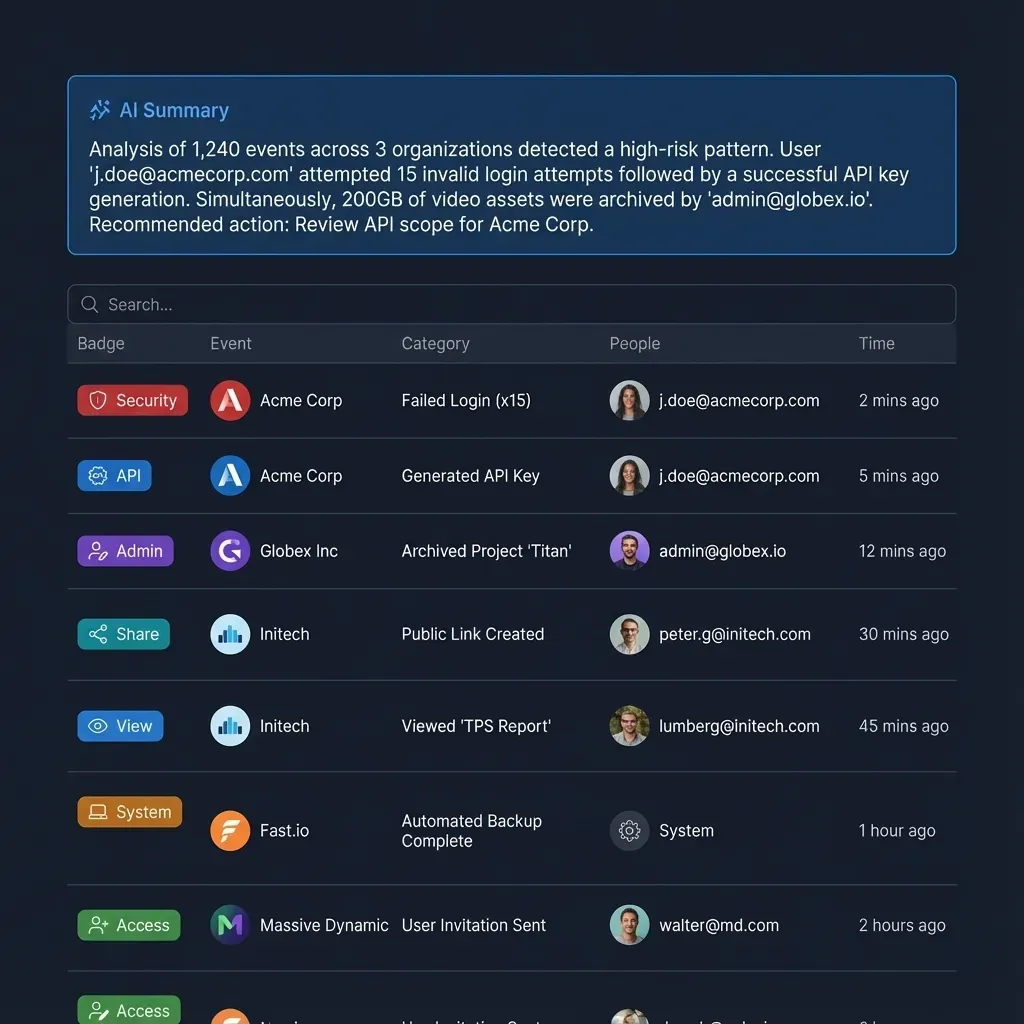
When an agent fails, it often fails silently. It just produces a bad output confidently. Comprehensive audit logs are essential. Fast.io provides a unified audit trail that logs every file operation an agent performs, giving you a forensic record of what the agent created, modified, or deleted.
Deployment Checklist
Use this checklist to validate your agent readiness before flipping the production switch. Missing even one of these items often leads to production incidents that are far harder to fix after launch.
- Identity: Does the agent have a dedicated Service Account?
- Storage: Is there a persistent volume or cloud storage mounted for artifacts?
- Limits: Are there hard limits on daily token spend and tool calls?
- Timeouts: Are there timeouts set for both individual steps and the total session?
- Sandboxing: Is the code execution environment (e.g., Python sandbox) isolated?
- Logging: Are prompts, completions, and tool outputs being persisted?
- Recovery: If the agent crashes, can it resume from the last checkpoint?
Frequently Asked Questions
How do you deploy an AI agent?
To deploy an AI agent, package its code and dependencies into a container (like Docker), configure environment variables for API keys, set up persistent storage for its outputs, and run it on an orchestration platform that handles scheduling and retries.
What infrastructure do AI agents need?
AI agents require a runtime environment (Kubernetes, serverless), a vector database for semantic search, an LLM provider (API access), and persistent file storage for generating and saving artifacts.
How do you scale AI agents?
Scaling agents involves running multiple instances in parallel. However, you must manage shared state carefully using distributed locks or a centralized queue system to prevent agents from overwriting each other's work.
What is the Model Context Protocol (MCP)?
MCP is a standard that allows AI agents to connect to data sources and tools without custom integration code. Fast.io offers an MCP server that gives agents instant access to file storage and search capabilities.
How much does it cost to run an AI agent?
Cost depends heavily on the model used and the frequency of runs. While infrastructure costs are low, LLM token costs can scale quickly. Caching common responses and using smaller models for simple tasks are key optimization strategies.
Why do AI agent deployments fail?
Most failures stem from a lack of robustness in error handling, security concerns blocking access to data, or the inability to debug complex reasoning chains when the agent goes off-track.
Related Resources

Run Deploy AI Agents The Complete Production Guide workflows on Fast.io
Stop building ephemeral agents. Give them persistent storage, semantic search, and a workspace shared with your human team.