8 Top AI Agent Workspace Platforms for 2026
AI agent workspace platforms provide structured environments where autonomous agents can store files, execute code, and maintain persistent context. This guide compares the top 8 solutions for developers and enterprises building agentic workflows. This guide covers top ai agent workspace platforms with practical examples.

What Are AI Agent Workspace Platforms?: top ai agent workspace platforms
AI agent workspace platforms give autonomous agents the infrastructure they need to operate. Unlike human collaboration tools like Slack or Notion, these platforms offer programmatic interfaces for file storage, code execution, long-term memory, and human-in-the-loop coordination. For developers, picking the right workspace matters more than you might think. An agent without a proper workspace is ephemeral. It loses its context, files, and history the moment the session ends. A solid workspace platform gives your agents a persistent "home" where they can retrieve documents, run secure code, and work alongside other agents or humans. The features that matter most depend on your specific use case. Rather than chasing the longest feature list, focus on the capabilities that directly impact your daily workflow. A well-executed core feature set beats a bloated platform where nothing works particularly well.
Helpful references: Fast.io Workspaces, Fast.io Collaboration, and Fast.io AI.
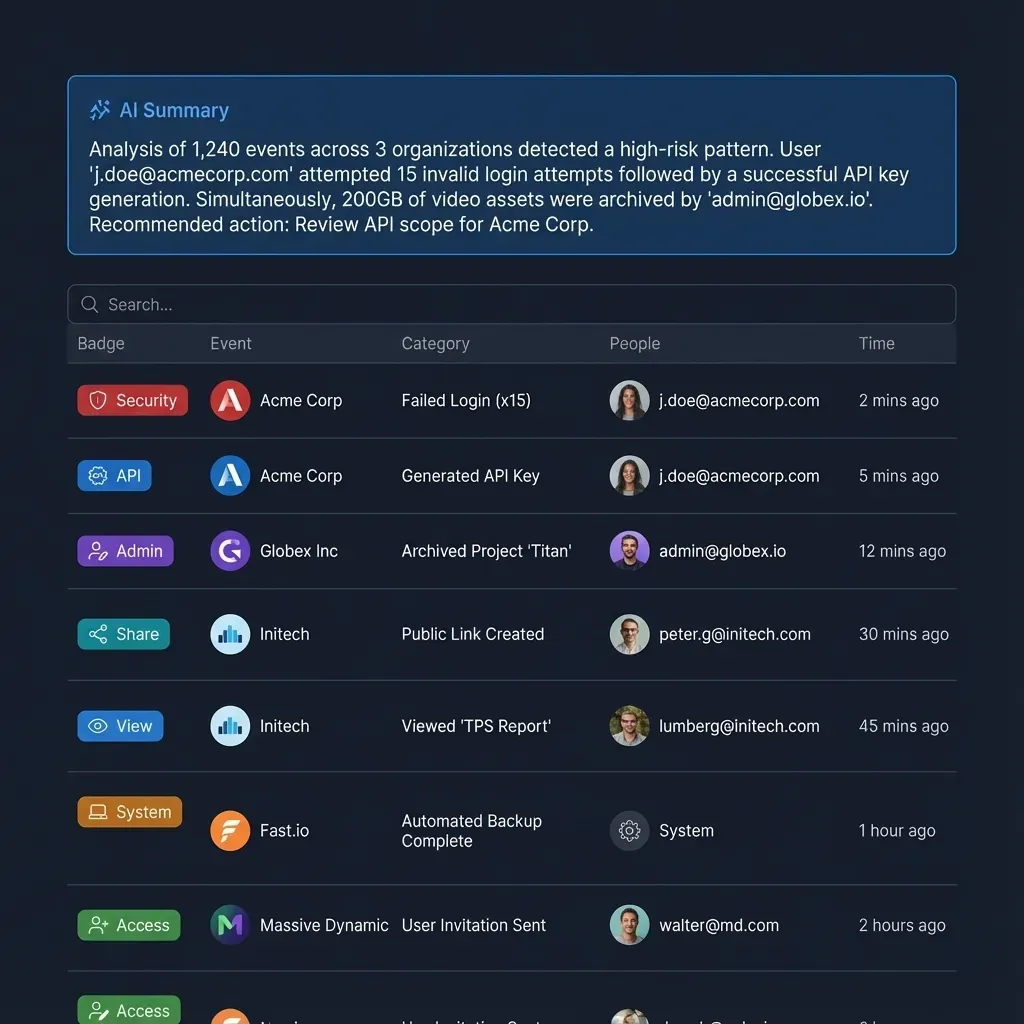
Top AI Agent Workspace Platforms
We evaluated each platform based on its primary capabilities: storage, compute, orchestration, and enterprise integration. Here are the top picks for 2026.
1. Fast.io
Best for: Persistent Storage, Long-term Memory, and File Operations
Fast.io is a file storage and memory platform built for AI agents. It provides a persistent filesystem that agents can access via standard APIs or the Model Context Protocol (MCP). Unlike transient context windows, Fast.io gives agents a permanent hard drive where they can store terabytes of data, share files with humans, and maintain state across sessions. * Key Strengths: * Built-in RAG: Intelligence Mode automatically indexes all files (PDFs, docs, spreadsheets) for semantic search and citation-backed answers. * MCP Tools: Full toolset for file management, compatible with Claude, Cursor, and other MCP clients. * Free Agent Tier: Generous 50GB storage plan with no credit card required. * Limitations: Focuses on storage and memory; does not provide compute/runtime (requires an external LLM). * Pricing: Free tier available; Pro plans start at published pricing.
2. E2B
Best for: Secure Sandboxed Code Execution
E2B is a sandboxed cloud environment that acts as a secure runtime for AI agents. It lets agents write and execute code (Python, JavaScript) in isolated microVMs without risking the host system. It has become the go-to choice for "code interpreter" functionality in custom agent builds. * Key Strengths: * Security: Uses Firecracker microVMs for strong isolation. * Performance: Fast boot times for near-instant code execution. * Flexibility: Supports any language or library that runs in Linux. * Limitations: Purely a runtime environment; requires external storage and orchestration logic. * Pricing: Usage-based pricing per millisecond of compute.
3. Replit
Best for: Agent Development and Prototyping
Replit has evolved from an online IDE into a full-featured workspace for building and hosting AI agents. Its "Replit Agent" can scaffold projects, write code, and deploy applications directly from a conversational interface. It combines the development environment with the hosting platform. * Key Strengths: * All-in-One: Develop, test, and host agents in a single browser tab. * Collaboration: Multiplayer coding allows humans and agents to work on the same codebase simultaneously. * Deployments: One-click deployment for agent services. * Limitations: Can be expensive for heavy production workloads; less control over underlying infrastructure than AWS/GCP. * Pricing: Free tier; Core plan published pricing.
4. Microsoft Copilot Studio
Best for: Enterprise Microsoft 365 Integration
For organizations already deep in the Microsoft ecosystem, Copilot Studio is a natural fit. It lets businesses build and manage agents that integrate natively with Microsoft 365 data, SharePoint, and Entra ID (formerly Azure AD). * Key Strengths: * Integration: Native access to Graph API, Outlook, Teams, and Excel. * Security: Enterprise-grade compliance and governance out of the box. * No-Code: Visual builder for creating simple conversational agents. * Limitations: Locked into the Microsoft ecosystem; less flexibility for custom code compared to developer-first platforms. * Pricing: per-tenant pricing.
5. LangSmith
Best for: Agent Observability and Testing
Created by the team behind LangChain, LangSmith is a workspace focused on agent lifecycle management. It's not a runtime itself, but it serves as the command center for tracing, debugging, and evaluating agent performance. Developers can inspect exactly what their agents are "thinking" at each step. * Key Strengths: * Debugging: Granular traces of every LLM call and tool execution. * Evaluation: Tools to test agent reliability against datasets. * Playground: Interactive environment to tweak prompts and retry failures. * Limitations: Focuses on observability; you still need to host the agent elsewhere. * Pricing: Free tier; Plus plan $39/seat/month.
6. Vellum
Best for: Production Workflow Management
Vellum gives product teams a single workspace to build, test, and version-control their agentic workflows. It connects prompt engineering to production deployment with tools for comparison and regression testing. * Key Strengths: * Comparison: Side-by-side testing of different models and prompts. * Versioning: Git-like version control for prompt chains and agent logic. * Collaboration: Designed for cross-functional teams (PMs and engineers). * Limitations: Primarily focused on the prompt/LLM layer rather than full infrastructure. * Pricing: Custom enterprise pricing.
7. Zapier Central
Best for: No-Code Automation Workspaces
Zapier Central is a workspace where users can teach agents to perform tasks across 6,000+ apps. It sits on top of Zapier's massive integration library, allowing agents to act as persistent workers that monitor triggers and execute actions without writing code. * Key Strengths: * Integrations: Access to 6,000+ SaaS apps (Slack, Gmail, Salesforce). * Behavior Training: "Teach" agents logic using natural language examples. * Live Data: Agents can wait for specific events to trigger actions. * Limitations: Limited logic complexity compared to code-based agents. * Pricing: Free tier; Paid plans start at published pricing.
8. MindStudio
Best for: Visual Agent Orchestration
MindStudio is a visual platform for building and deploying model-agnostic AI agents. Non-technical users can design complex workflows, manage knowledge bases, and publish agents as web apps. * Key Strengths: * Model Agnostic: Switch between GPT-4, Claude, and Llama easily. * Visual Builder: Drag-and-drop interface for complex logic trees. * Monetization: Built-in tools to charge users for agent access. * Limitations: Abstraction layer can hide lower-level control needed by engineers. * Pricing: Subscription based on usage.
How to Choose the Right Agent Workspace
Selecting the right platform depends on your specific bottlenecks. * If you need storage: Choose Fast.io. Agents need a place to keep files, logs, and long-term memories that survive beyond a single session. * If you need security: Choose E2B. Its sandboxed environment is essential if your agent runs untrusted code or accesses sensitive APIs. * If you are an enterprise: Choose Microsoft Copilot Studio. Its compliance and SSO integration are hard to beat in corporate environments. * If you are a developer: Choose Replit or LangSmith. These tools fit naturally into modern software engineering workflows. advanced systems will use a combination: E2B for compute, Fast.io for storage, and LangSmith for observability.
Frequently Asked Questions
What is an AI agent workspace?
An AI agent workspace is an environment that gives autonomous agents the resources they need to function: storage, compute, and memory. Unlike human workspaces, these are built with APIs and protocols that let software interact programmatically.
Why do AI agents need specialized file storage?
Standard cloud storage often lacks the API flexibility and intelligence agents need. Specialized storage like Fast.io offers semantic search, RAG (Retrieval Augmented Generation), and MCP support, so agents can understand file content, not just store bytes.
Can I use multiple workspace platforms together?
Yes, composability matters in modern AI architecture. A common stack uses E2B for secure code execution, Fast.io for persistent file storage, and LangSmith for monitoring agent performance.
Related Resources

Run 8 Top AI Agent Workspace Platforms For 2026 workflows on Fast.io
Stop losing context between sessions. Get 50GB of free, persistent storage with built-in RAG and MCP support.