Local vs Cloud Storage for AI Agents: A Complete Comparison
Local storage gives AI agents lower latency and full data control, but cloud storage cuts DevOps time and scales without hardware limits. This guide breaks down the tradeoffs across cost, performance, security, and maintenance so you can pick the right architecture for your agents.
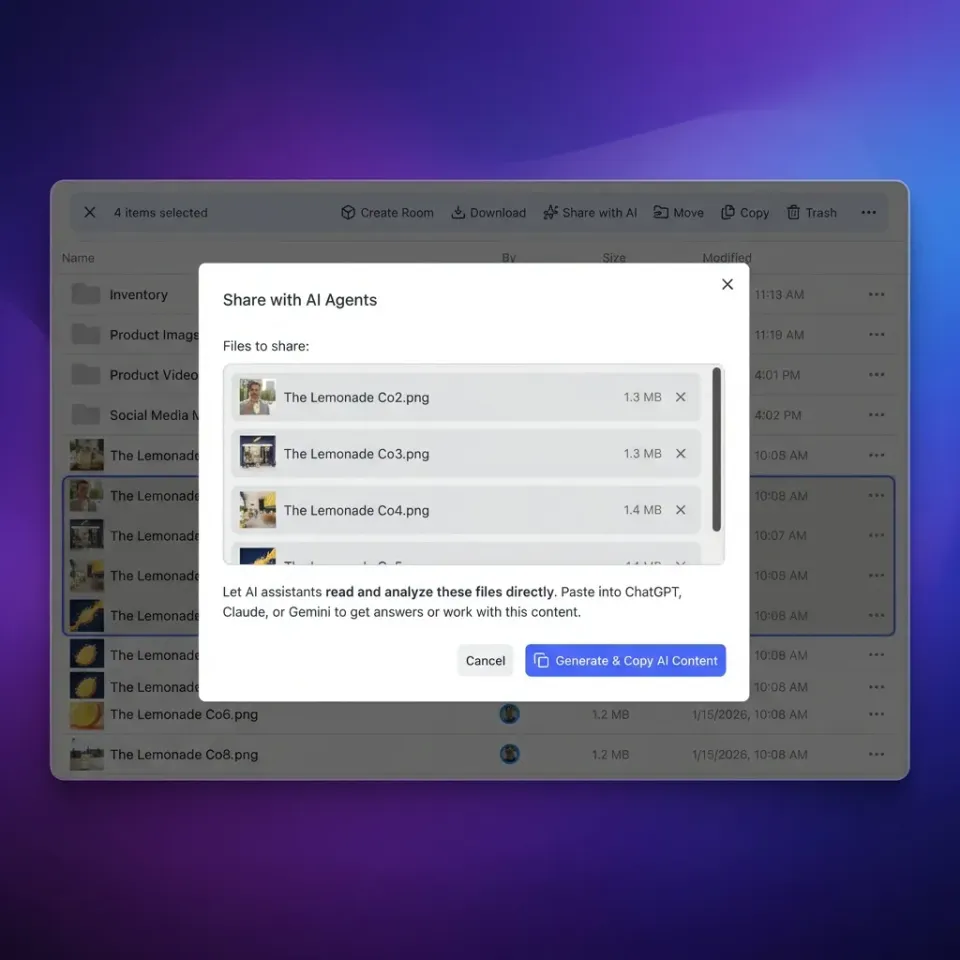
What Local and Cloud Agent Storage Actually Mean
Local agent storage is any file system that runs on hardware you control: a developer laptop, an on-prem server, a NAS box, or a VM you manage yourself. The agent reads and writes files over the local filesystem or a local network mount. You handle backups, disk space, and uptime.
Cloud agent storage is a managed service where files live on someone else's infrastructure. The agent interacts through an API or protocol like MCP, and the provider handles replication, availability, and scaling. Examples range from raw object storage (S3, GCS) to purpose-built agent platforms like Fast.io.
The distinction matters for AI agents specifically because agents generate, retrieve, and modify files as part of their core workflow. A coding agent might write dozens of files per session. A document processing agent might ingest hundreds of PDFs. A multi-agent system might have five agents reading the same workspace concurrently. Storage isn't a side concern for agents. It's the backbone of their work.
How Local and Cloud Storage Compare for Agents
Local and cloud storage differ across the dimensions that matter most for AI agent deployments.
Cost
- Local: Lower per-GB cost over time. A 4TB NVMe drive costs around $200 and lasts years. But you're also paying for the server, electricity, networking, and the engineer who maintains it all.
- Cloud: Higher per-GB cost, but zero hardware investment. According to industry benchmarks, cloud storage typically costs 30-50% more per gigabyte but reduces DevOps overhead by roughly 70%. For small-to-mid deployments, the math favors cloud.
Latency
- Local: lower latency for same-region agents. If your agent runs on the same machine as its storage, file reads are measured in microseconds. This matters for RAG pipelines that retrieve dozens of chunks per query.
- Cloud: Network round-trips add latency depending on region. For most agent workflows (generating reports, processing documents), this is negligible. For high-frequency retrieval loops, it adds up.
Scalability
- Local: Hard ceiling. When you run out of disk, you buy more disk. When you run out of CPU for indexing, you buy a bigger server. Scaling to multiple agents on one machine creates resource contention.
- Cloud: Practically unlimited. Spin up 50 agents and each gets its own workspace. Storage grows on demand. No capacity planning required.
Security
- Local: Full control over where data lives. Good for regulated industries where data residency is non-negotiable. But you're responsible for encryption, access controls, patching, and physical security.
- Cloud: Managed encryption at rest and in transit. Built-in access controls, audit logs, and SSO. The tradeoff is that your data is on someone else's servers.
Maintenance
- Local: You own everything. Disk failures, backup scripts, OS updates, filesystem corruption. For a solo developer running one agent, this is fine. For a team running agents in production, it becomes a full-time job.
- Cloud: The provider handles infrastructure. You focus on building agents, not managing storage.

When Local Storage Makes Sense for Agents
Local storage is the right call in a few specific situations.
Development and prototyping. When you're building and testing an agent, writing to the local filesystem is the fast path. No API keys, no network calls, no setup. You can inspect files directly, debug issues in real time, and iterate quickly.
Latency-critical RAG pipelines. If your agent retrieves embeddings or file chunks hundreds of times per second, and the vector store or file index lives locally, you'll see measurably better response times. This applies to agents running batch processing on large document sets where every millisecond compounds.
Air-gapped or regulated environments. Some industries (defense, certain healthcare use cases, government) require data to never leave a specific network. Local storage is the only option here.
Cost optimization at extreme scale. If you're storing large volumes of agent data and accessing it constantly, the ongoing cloud bill can exceed the cost of buying and maintaining your own hardware. But this breakeven point is higher than most teams think, because it needs to account for engineering time, redundancy, and disaster recovery.
The common thread: local storage rewards teams that have the infrastructure expertise and a specific technical reason to stay on-prem.
When Cloud Storage Wins for Agents
For most production agent deployments, cloud storage is the better fit.
Multi-agent concurrency. When multiple agents need to access the same files, cloud platforms handle locking, versioning, and concurrent reads natively. On a local filesystem, you're writing your own file-locking logic, and one bug can corrupt shared state. Cloud platforms like Fast.io provide file locks specifically designed for multi-agent access.
Built-in RAG without managing infrastructure. Setting up a local RAG pipeline means running a vector database (Pinecone, Weaviate, Qdrant), an embedding model, and an ingestion pipeline. With cloud-native Intelligence Mode, you toggle a switch and files are automatically indexed, searchable, and queryable through AI chat with citations. No separate vector DB to manage.
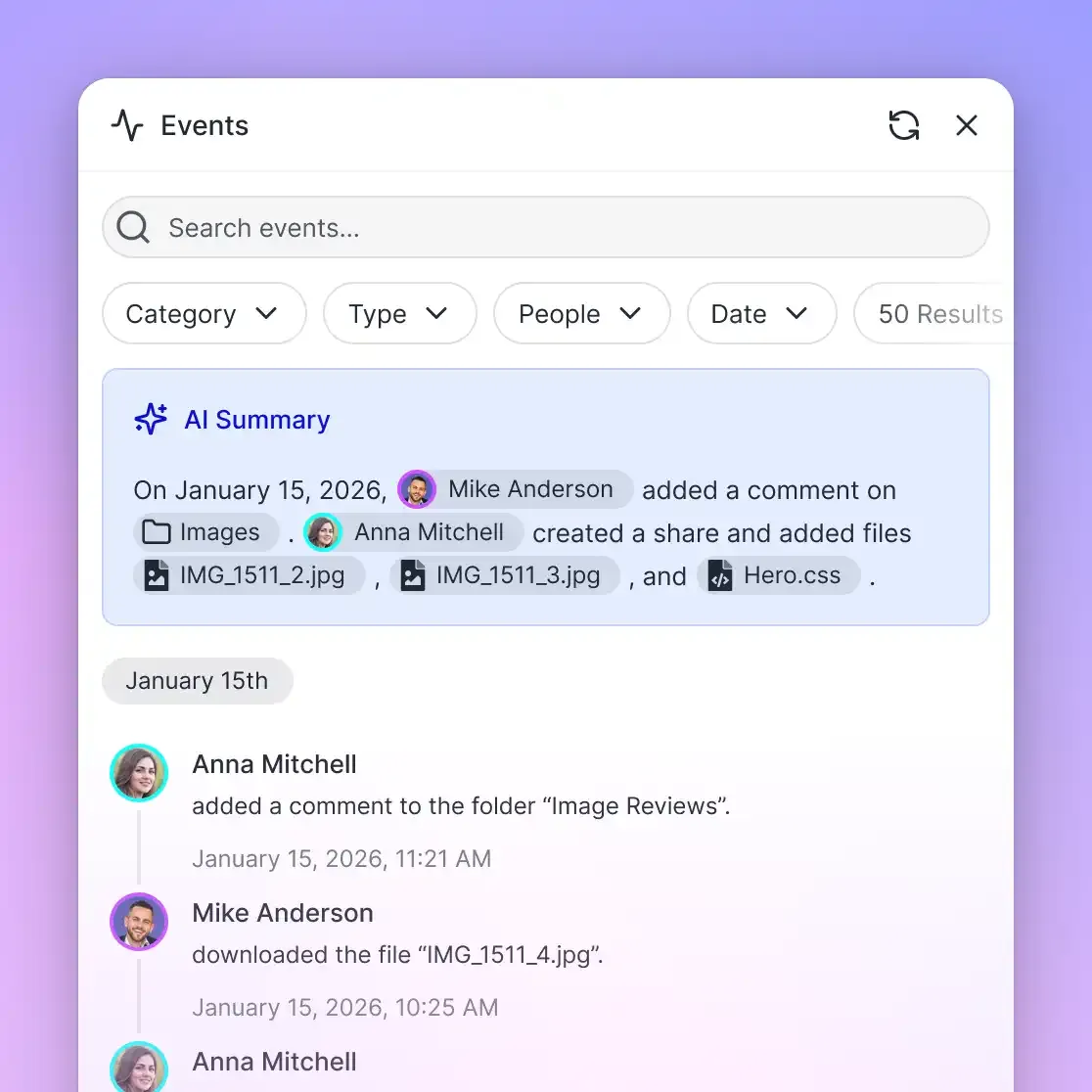
Agent-to-human handoff. Agents don't work in a vacuum. They build reports, organize files, and prepare deliverables that humans need to review. Cloud storage makes this handoff natural: create a branded share, invite the client, and they're looking at the same files the agent produced. With ownership transfer, an agent can build an entire workspace and hand it to a human while keeping admin access.
Zero DevOps for storage. Every hour you spend debugging NFS mounts, expanding disk partitions, or writing backup scripts is an hour you're not spending on agent logic. Cloud storage eliminates this entire category of work.
Framework compatibility. Most agent frameworks (LangChain, CrewAI, AutoGen, OpenAI Agents SDK) work best with cloud-accessible storage. MCP-compatible platforms integrate directly through standardized protocols. Fast.io's MCP server exposes 251 tools for file operations, so your agent can manage files without custom integration code.


Give Your AI Agents Persistent Storage
50GB free storage, 251 MCP tools, built-in RAG, and zero DevOps. Start building in under a minute.
The Hybrid Approach: Using Both
Many production agent systems use both local and cloud storage, each for what it does best.
A typical hybrid architecture looks like this:
- Local cache for hot data. The agent keeps frequently accessed files, embeddings, and session state on local disk for fast reads.
- Cloud storage as the system of record. All files eventually sync to cloud storage for durability, sharing, and backup.
- Cloud RAG for knowledge queries. Instead of running your own vector database, use a cloud platform's built-in indexing. Files uploaded to a workspace are automatically available for semantic search and AI chat.
In practice with Fast.io's MCP server, that looks like this:
### Agent writes results locally first (fast)
with open("report.pdf", "wb") as f:
    f.write(generate_report())

### Then uploads to cloud for durability and sharing
### Using Fast.io's MCP tools or REST API
upload_to_workspace(
    workspace_id="my-project",
    file_path="report.pdf",
    parent_folder="reports"
)

### Cloud RAG is now available on the uploaded file
### No separate indexing step needed
answer = ai_chat(
    workspace_id="my-project",
    query="What were the key findings?"
)
This pattern keeps local development fast while giving you cloud durability and search. The agent doesn't have to choose. It uses both.
How to Choose: A Decision Framework
Answer these five questions to pick the right storage architecture for your agents.
1. How many agents access the same files? If the answer is "one agent, one machine," local might be fine. If multiple agents or humans need concurrent access, cloud storage with built-in file locks and versioning saves you from building synchronization logic yourself.
2. Do you need RAG or semantic search? If yes, cloud storage with built-in Intelligence Mode is far easier than running your own vector DB. If you only need basic file reads and writes, local storage works.
3. What's your DevOps capacity? If you have a dedicated infrastructure team, local storage is manageable. If your team is small and focused on building agents, every hour spent on storage infrastructure is a distraction. Cloud storage lets small teams stay focused on what they're actually building.
4. Do agents produce deliverables for humans? If agents generate reports, organize files, or prepare content that clients or team members need to review, cloud storage with branded sharing and portals makes handoff straightforward. Local storage means you're building your own file delivery system.
5. What's your budget model? If you have upfront capital and want predictable long-term costs, local hardware can work. If you prefer operational expenses that scale with usage, cloud platforms with free tiers (like Fast.io's 50GB agent tier) let you start at zero and grow.
For most teams building AI agents, the answer is cloud-first with a local cache layer for performance-sensitive operations. The infrastructure burden of self-hosted storage isn't worth it when your goal is building better agents.
Getting Started with Cloud Agent Storage
If you've decided cloud storage fits your agent architecture, here's a practical starting point.
Step 1: Create an agent account. On Fast.io, agents sign up just like human users. No credit card, no trial period. You get 50GB of storage, 5 workspaces, and 5,000 monthly credits on the free agent tier.
Step 2: Connect through MCP or API. If your agent framework supports MCP, point it at /storage-for-agents/ for access to 251 file management tools. For other frameworks, use the REST API directly.
Step 3: Enable Intelligence Mode. Toggle it on for any workspace where you want built-in RAG. Files are automatically indexed for semantic search and AI chat. No vector database setup required.
Step 4: Set up webhooks for reactive workflows. Instead of polling for file changes, register a webhook endpoint. When a file is uploaded or modified, your agent gets notified instantly.
Step 5: Build and hand off. Use ownership transfer to build workspaces for clients, then transfer control while keeping admin access. The agent does the work; the human gets the polished result.
You can also integrate through OpenClaw by running clawhub install dbalve/fast-io for 14 natural language file management tools that work with any LLM.
Frequently Asked Questions
Should AI agents use local or cloud storage?
It depends on your use case. Cloud storage is better for most production deployments because it handles multi-agent concurrency, built-in RAG, and human handoff without infrastructure management. Local storage is better for development, latency-critical pipelines, and air-gapped environments.
What's cheaper, local or cloud agent storage?
Local storage has lower per-gigabyte costs over time, but cloud storage reduces DevOps overhead substantially. For smaller storage needs, cloud is usually cheaper when you factor in engineering time, backups, and redundancy. For large volumes with constant access, self-hosted storage may break even.
What is the best storage architecture for AI agents?
A hybrid approach works best for most teams. Use local storage as a fast cache for hot data and active sessions, and cloud storage as the durable system of record with built-in search and collaboration features. This gives you low latency where it matters and zero infrastructure management for everything else.
How do I set up cloud storage for an AI agent?
On Fast.io, agents sign up for their own accounts with 50GB free storage. Connect through the MCP server at mcp.fast.io (251 tools) or use the REST API. Enable Intelligence Mode on a workspace for automatic RAG indexing. No credit card or infrastructure setup required.
Can multiple AI agents share the same cloud storage?
Yes. Cloud platforms designed for agents support concurrent access through file locks, versioning, and workspace permissions. On Fast.io, multiple agents can work in the same workspace with role-based access controls, and file locks prevent conflicts when two agents modify the same file.
Related Resources

Give Your AI Agents Persistent Storage
50GB free storage, 251 MCP tools, built-in RAG, and zero DevOps. Start building in under a minute.