How to Set Up File Sharing for Business Without the Headaches
Business file sharing is how organizations get files to the right people, inside and outside the company. Most tools are built for internal collaboration first, even though external sharing often requires different controls. This guide covers what actually matters when choosing file sharing for your organization.
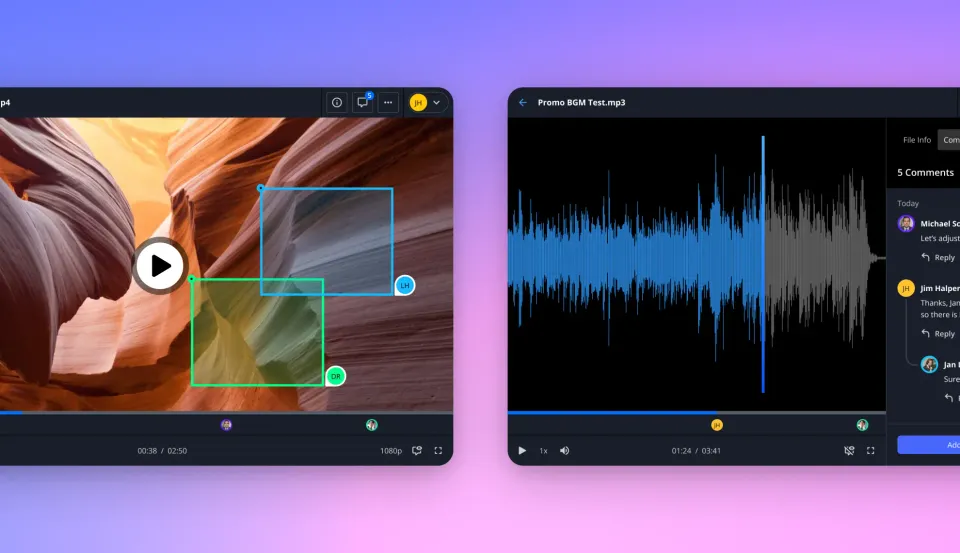
What Is Business File Sharing?: file sharing for business
Business file sharing is the practice of distributing digital files between users within an organization and with external partners using tools designed for commercial use. Unlike personal file sharing through email attachments or consumer cloud storage, business file sharing includes access controls, audit trails, and administrative oversight. The distinction matters because business file sharing has two audiences with different needs:
- Internal sharing: Team members working on projects together, accessing shared resources, and collaborating on documents
- External sharing: Clients, vendors, contractors, and partners who need access to specific files without joining your organization
Most businesses focus on internal sharing when choosing tools, then discover that external sharing is where things break down. Client portals get built in SharePoint. Large files get sent through WeTransfer. Sensitive documents get emailed as attachments. The "solution" becomes multiple disconnected tools that IT can't manage or secure.
Business File Sharing Requirements vs Consumer Features
Consumer file sharing tools like personal Dropbox, Google Drive, or iCloud work fine for individuals. They fall short for businesses in specific, predictable ways:
What Businesses Need
- Organization-owned files: Files belong to the company, not individual employees. No scramble to recover files when someone leaves.
- Layered permissions: Control access at the organization, workspace, folder, and file level. Not just "can edit" or "can view."
- Audit logs: Track who accessed what, when, and what they did. Essential for compliance and incident response.
- External guest access: Share with clients and partners without requiring them to create accounts or pay for seats.
- Administrative controls: Centralized management of users, policies, and permissions across the organization.
- Large file support: Handle video, design files, and datasets without size limits or workarounds.
What Consumer Tools Offer
- Personal file ownership: Files live in personal accounts. "Shared" means creating copies or granting access from your personal space.
- Binary permissions: Most consumer tools offer limited permission options without organizational context.
- Minimal logging: Basic activity tracking, if any. Not sufficient for compliance or security investigations.
- Account-required sharing: External recipients typically need accounts, creating friction and potential security gaps.
- Individual settings: Each user manages their own sharing preferences. IT has limited visibility or control.
- File size limits: Caps that require splitting large files or using separate transfer services. The gap becomes obvious when you try to share a large video file with a client who needs view-only access for a limited time, with watermarking, and you need a record of whether they watched it. Consumer tools can't do that. Business tools should.
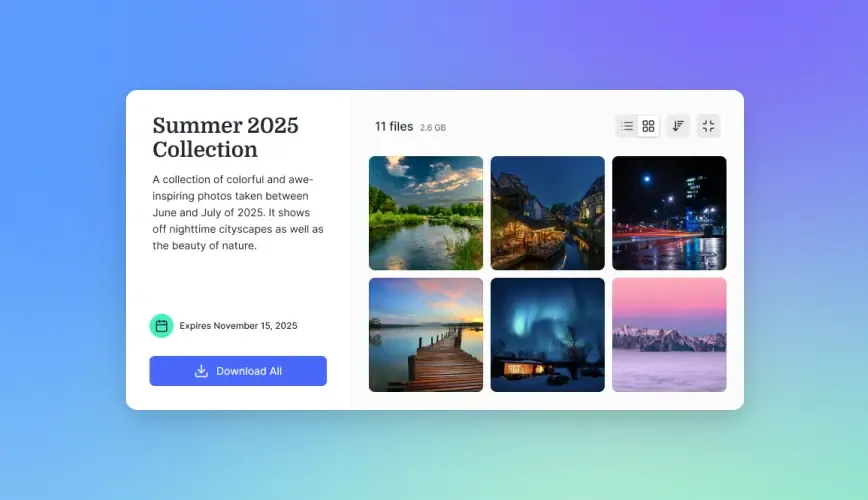
How Do Businesses Share Files Securely?
Secure business file sharing combines three layers: technical controls, access management, and monitoring. Here's how each layer works:
Technical Controls
Encryption protects files at rest (stored on servers) and in transit (during upload and download). This prevents interception and unauthorized access to stored data. Every reputable business file sharing solution includes encryption by default.
SSO/SAML integration connects file sharing to your existing identity provider. Employees log in with their company credentials through Okta, Azure AD, Google, or similar. When someone leaves the company and IT disables their account, file access is revoked automatically.
MFA enforcement adds a second authentication factor. Business solutions let administrators require MFA organization-wide, not leave it as an optional user setting.
Access Management
Link controls determine how shared files can be accessed. Password protection, expiration dates, and view-only modes are standard. Advanced controls include domain restrictions (only people with @clientcompany.com emails can access) and download prevention.
Watermarking embeds viewer-specific information into documents and videos. If a watermarked file gets leaked, you can trace it back to the source. This deters unauthorized distribution and helps with incident response.
Instant revocation lets you cut off access immediately, even to files already shared. Essential when a client relationship ends or an employee leaves unexpectedly.
Monitoring
Audit logs record every action: views, downloads, permission changes, login attempts. Good audit logs are searchable, exportable, and retained long enough to be useful for compliance reviews.
Activity analytics go beyond logs to show patterns. For sensitive deals, you might want to know which documents a potential partner spent the most time reviewing. Data rooms often include engagement metrics alongside basic access tracking. The combination of all three layers provides actual security. Technical controls alone aren't enough if anyone with the link can access files. Access management doesn't help if you can't see what people are doing. Monitoring is pointless if you can't act on what you find.

What Is the top File Sharing for Small Business?
Small businesses have different file sharing needs than enterprises. Budget matters more. IT resources are limited or nonexistent. But external sharing with clients is often the core use case, not a secondary feature.
What Small Businesses Should Prioritize
Simplicity over features: A tool with many features that requires training won't get used. If your non-technical team members can't figure it out in minutes, they'll go back to email attachments.
External sharing that works: If you're a design agency, law firm, or consulting practice, most of your file sharing is with clients. The tool should make external sharing easy and professional, not treat it as an edge case.
Costs you can plan for: Per-seat pricing works until you start adding clients and contractors. Watch out for guest user charges and storage overages. Some platforms charge for external users or limit sharing unless you upgrade. Usage-based pricing (like Fast.io's) can cost less for businesses that share heavily with external parties.
No admin overhead: You probably don't have a dedicated IT person. The solution should work out of the box with minimal configuration. Self-service user management is a bonus.
Common Small Business Solutions
Google Drive via Google Workspace works if you're already in the Google ecosystem. Strengths: familiar interface, tight integration with Docs/Sheets/Slides. Weaknesses: limited external sharing controls, permission chaos as folders multiply.
Dropbox Business is straightforward to set up and widely recognized. Strengths: broad file type support, solid sync. Weaknesses: per-seat pricing adds up, branded sharing requires higher tiers.
Microsoft OneDrive comes bundled with Microsoft 365. Strengths: good value if you're already paying for Office. Weaknesses: SharePoint complexity lurks underneath, external sharing can confuse recipients.
Fast.io focuses on team collaboration and external sharing. Strengths: usage-based pricing (seats included, not charged per user), branded client portals, video and large file streaming. Weaknesses: newer than legacy players, smaller integration ecosystem. The best choice depends on what you're sharing, who you're sharing with, and what tools you already use. A small marketing agency sharing video with clients has different needs than a larger accounting firm sharing spreadsheets internally.
What File Sharing Do Companies Use?
File sharing tool adoption varies by company size, industry, and primary use case. Here's what the market looks like:
By Company Size
**Small businesses ** typically use Google Drive, Dropbox, or OneDrive because they're familiar and often bundled with other services. External sharing happens through links, email attachments, or one-off services like WeTransfer.
Mid-market companies start needing administrative controls and may adopt Box, Egnyte, or enterprise tiers of consumer tools. Shadow IT becomes a problem as teams adopt their own solutions.
**Enterprises ** deploy platforms like Box, Egnyte, or ShareFile with formal IT oversight. They often have multiple file sharing tools for different purposes: general storage, sensitive deal rooms, large file transfer.
By Industry
Legal firms prioritize security, audit trails, and client confidentiality. Specialized tools like NetDocuments or iManage compete with general-purpose solutions that offer data room features.
Creative agencies need large file support, video streaming, and client-facing delivery. Tools like Frame.io (for video review) or Fast.io (for video collaboration) address these needs directly.
Financial services emphasize compliance and data rooms for deals. Intralinks and Datasite serve M&A specifically. General file sharing requires audit capabilities and access controls.
Healthcare and regulated industries often require specific compliance certifications that limit vendor choices. Check certification requirements before evaluating features.
The Multi-Tool Reality
Most organizations use multiple file sharing tools, whether intentionally or not. The internal team uses OneDrive because it comes with Microsoft 365. The sales team shares proposals through Dropbox because clients recognize it. The video team uploads dailies to a specialized platform. IT sees a fraction of what's actually happening. This fragmentation isn't ideal, but it reflects how work actually happens. The question is whether you accept scattered tools with no oversight or find a platform that handles multiple use cases well.

Setting Up Business File Sharing: A Practical Approach
Getting file sharing right means thinking about structure before you pick tools. Here's a framework that works:
Map Your Sharing Patterns
Before choosing software, understand how files actually flow:
- Who shares with whom? Internal teams, specific departments, clients, vendors, partners?
- What types of files? Documents, spreadsheets, videos, design files, datasets?
- What are the security requirements? Some files are public-ready, others are highly confidential.
- How long does access need to last? Permanent team resources vs temporary project deliverables? Do this exercise before you look at any vendor websites. It'll save you from buying features you don't need.
Design Your Workspace Structure
Don't recreate your folder chaos in a new system. Think about:
- Teams or projects as primary units: Workspaces organized by team (Marketing, Sales) or by project (Client X, Campaign Y)?
- Public vs private defaults: Should new workspaces be discoverable to the organization or private by default?
- External sharing patterns: Dedicated client portals or ad-hoc link sharing? Good structure now prevents the "where did I put that file?" chaos later.
Set Policies Before Rollout
Decide on rules before users start creating their own habits:
- External sharing approval: Who can share outside the organization? What approvals are needed?
- Retention and archival: How long do files stay active? What happens to completed projects?
- Classification levels: Do some files need extra protection? How are they marked?
- Guest user management: Who can invite external users? How are inactive guests cleaned up? Write these down and configure them in your tool's settings. Policies that exist only in someone's head don't count.
Plan for Migration
Moving from existing tools requires thought:
- What comes over? Not everything needs to migrate. Old project archives might stay where they are.
- Who moves first? Pilot with a team that's motivated and will give feedback.
- What's the transition period? Running two systems in parallel is messy but sometimes necessary.
- How do external links survive? Old shared links might break. Communicate changes to clients. A rushed migration creates more problems than it solves. Go slow, get feedback, and adjust as you learn what works for your team.
Frequently Asked Questions
What is the top file sharing for small business?
It depends on how you work. Google Drive is solid if you're already using Google Workspace. Dropbox Business is simple and clients recognize it. Fast.io works well for businesses that share heavily with external clients, since you pay for usage rather than seats. Pick something your team will actually use over something with features you'll never touch.
How do businesses share files securely?
You need three things working together: technical controls (encryption, SSO, MFA), access management (link controls, watermarking, the ability to revoke access instantly), and monitoring (audit logs, activity tracking). Skip any one of these and you have gaps. Encryption doesn't help if anyone with the link can get in.
What file sharing do companies use?
Small businesses usually stick with Google Drive, Dropbox, or OneDrive. Mid-market companies often move to Box or Egnyte when they need admin controls. Enterprises typically run multiple tools for different purposes. The honest answer is that most organizations use several tools at once, whether IT planned it that way or not.
What is the difference between business and personal file sharing?
Business tools give your organization ownership of the files, not individuals. You get permissions at multiple levels, audit logs for compliance, guest access without forcing people to create accounts, and central admin controls. Personal tools treat each user as a separate island with limited sharing options and no oversight from IT.
How much does business file sharing cost?
Per-seat pricing from Dropbox, Box, or Google Workspace typically runs per user per month. Usage-based tools like Fast.io charge for storage and transfer instead of headcount, which can be cheaper if you share a lot with external clients. When comparing prices, don't forget to factor in charges for guest users and storage overages.
Related Resources

Start with file sharing for business on Fast.io
See how Fast.io handles both internal collaboration and external client sharing without per-seat pricing.