Decentralized Storage Solutions for AI Agents Comparison
Decentralized storage spreads data across networks for AI agents. This setup offers resilience and resists censorship. Agents store simulation data, artifacts, and RAG sources persistently, and it needs to works alongside MCP tools and workflows. This guide compares IPFS, Filecoin, Arweave, and centralized options like Fast.io. Decentralized storage often lacks key agent features, such as ownership transfer and built-in RAG indexing.

What Is Decentralized Storage for AI Agents?
Decentralized storage for AI agents means using peer-to-peer networks to store files instead of central servers. Networks like IPFS pin data across nodes, making it resistant to single points of failure. For AI agents, this handles large datasets from simulations or training, ensuring availability without relying on one provider.
Agents can generate terabytes of data daily from their runs. Decentralized options can cost less over the long term and provide good durability. However, retrieval speed and integration with agent tools like MCP matter more for production workflows.
Key question: Does decentralized storage meet AI agents' needs for speed, search, and collaboration?
Helpful references: Fast.io Workspaces, Fast.io Collaboration, and Fast.io AI.
Decentralized vs Centralized Storage: Key Comparison
Here's a detailed comparison table of IPFS vs Fast.io for AI agent storage needs.
| Feature | IPFS | Fast.io |
|---|---|---|
| Monthly Cost | Free base, ~$multiple.02/GB pinning | 50GB free, then usage-based |
| Retrieval Speed | 2-10s via gateways | Instant previews & HLS streaming |
| Durability | High (with pins) | High availability, org-owned |
| RAG Indexing | Manual (e.g. Pinecone) | Built-in Intelligence Mode |
| Agent Integration | Custom SDKs | 251 MCP tools (HTTP/SSE) |
| Ownership Transfer | Multi-sig or manual | Native agent-to-human |
| Notifications | Third-party | Built-in webhooks |
| Concurrency | No locks | File locks for multi-agent |
| File Previews | Basic viewers | 100+ formats, adaptive streaming |
| Search | External tools | Semantic + full-text built-in |
| Max File Size | ~100GB practical | 1GB (agent tier) |
| Collaboration | None | Shared workspaces w/ humans |
| Best For | Cold archival, Web3 | Production agent workflows |
Decentralized systems like IPFS prioritize resilience and censorship resistance, ideal for permanent records where speed isn't critical. Centralized platforms like Fast.io prioritize performance, ease of integration, and team features, suiting dynamic agent pipelines.
Takeaway: IPFS suits pure decentralization needs. Fast.io handles agent-human collaboration and quick iterations without added complexity.
IPFS for AI Agent File Storage and Integration
IPFS (InterPlanetary File System) provides decentralized storage using content-addressed hashing, where each file gets a unique CID based on its content. This enables deduplication, integrity checks, and distribution without a central server. AI agents integrate easily with libraries like js-ipfs for Node.js, go-ipfs for Go, or ipfs-core for browsers.
Pros:
- Censorship Resistance: Data persists as long as peers maintain pins across the network.
- Built-in Versioning: Each change generates a new CID, making diffs and rollbacks straightforward.
- Cost-Effective Persistence: Pinning services like Pinata offer plans starting at $20/TB/month.
- Ecosystem Integration: Works with Web3 tools, decentralized ML, and NFT platforms.
Cons:
- Retrieval Latency: Public gateways typically take multiple-multiple seconds for file access due to peer discovery.
- No Native Search or Indexing: Agents must add external services for full-text or semantic search.
- Pin Management Overhead: Unpinned content is eventually garbage collected.
- Performance Variability: No SLAs; speeds depend on global peer availability.
IPFS fits AI agents well for archiving non-time-sensitive artifacts like model checkpoints, simulation datasets, or generated reports. For instance, an agent running A/B tests can upload JSON results to IPFS and reference the CID in a dashboard. To enable querying, works alongside LangChain's IPFSLoader or LlamaIndex for RAG pipelines.
Adoption in AI is growing, with projects using it for dataset sharing in federated learning. However, for high-frequency access or collaborative workflows, the latency and extra tooling create friction.
Practical Integration Tips:
- Use dedicated gateways like Infura or Pinata for reliability.
- Implement retry logic for uploads/downloads.
- Monitor pin status via API to ensure persistence.
Node.js upload example:
const { create } = require('ipfs-http-client');
const client = create({ url: 'https://ipfs.infura.io:5001' });

async function uploadArtifact(buffer, name) {
  const { cid } = await client.add(buffer, { pin: true });
  console.log(`Artifact ${name} pinned at ${cid}`);
  return cid.toString();
}
Extend with metadata directories for organized storage.
AI Agent IPFS Integration Example
Use ipfs-http-client:
const { create } = require('ipfs-http-client');
const client = create();
const result = await client.add('agent-data.json');
const cid = result.path;
Agents pin via Pinata API for persistence.
Other Decentralized Storage Networks for Agents
Beyond IPFS, several networks offer decentralized storage tailored to different needs.
Filecoin: Built on IPFS, adds blockchain incentives where miners provide storage deals paid in FIL tokens. Agents can programatically buy long-term storage (months to years). Strengths: Economic guarantees for persistence, large capacity. Drawbacks: Deal making takes minutes due to on-chain settlement, higher cost for short-term storage (~$multiple.multiple/GB/day), complex for simple use cases. Best for archival agent outputs like training datasets.
Arweave: Pay-once permanent storage with proof-of-access. Ideal for immutable records like agent audit logs or blockchain-proven provenance. Cost: ~$multiple/GB one-time. Cons: No updates or deletions, expensive for iterative workflows where agents overwrite files frequently.
Storj: Encrypted, S3-compatible object storage distributed across global nodes. Offers better consistency than IPFS with erasure coding for durability. Pricing: ~$multiple/TB/month. Good for agents needing S3 API compatibility without AWS lock-in. Cons: Still variable latency, no native P2P discovery.
Sia: Similar to Storj, with smart contracts for storage rentals paid in Siacoin. Low cost (~$multiple/TB/month), high redundancy. Suited for bulk agent data dumps.
These options provide resilience and cost savings for cold storage but share IPFS's challenges: no built-in search, no agent-specific tools like MCP or ownership transfer, and no collaborative features. Agents end up building custom integrations for workflows.
Centralized Storage Advantages for AI Agent Workflows
Centralized options like Fast.io provide agent-first features decentralized networks miss.
Key Advantages:
- Free Agent Tier: 50GB storage, 5,000 credits/month, no credit card, 5 workspaces, 1GB max file (citations).
- multiple MCP Tools: Every UI feature has an agent tool -- CRUD, search, previews, streaming via HTTP/SSE (citations).
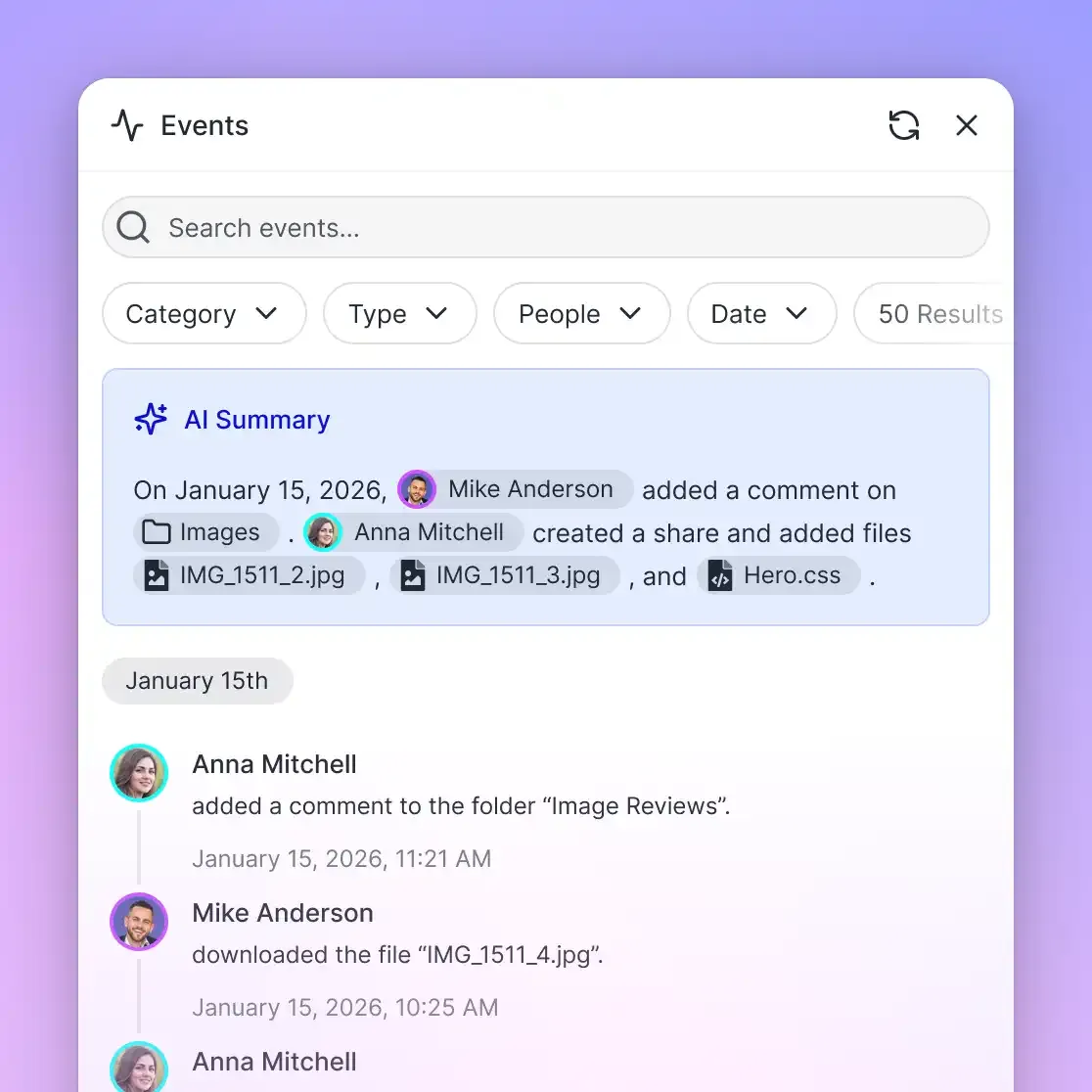
- Intelligence Mode: Toggle on for auto-RAG indexing; files become queryable with citations, no external DB needed.
- Ownership Transfer: Agent builds org/workspaces/shares, generates claim link, human takes over -- agent retains admin.
- File Locks: Acquire/release to coordinate multi-agent edits.
- Webhooks: Native events for uploads/downloads/changes -- no polling.
- OpenClaw Integration:
clawhub install dbalve/fast-iogives multiple tools, zero-config. - URL Import: Pull from Drive/Box/Dropbox via OAuth, no local download.
- Universal Previews: HLS video (multiple-multiple% faster), images, PDFs, code -- all instant.
Agents and humans share identical workspaces: humans use the UI, agents use MCP/API. Files are indexed once, searchable by both.
Example Workflow:
- Agent creates workspace:
org-create-workspace. - Generates report, uploads:
upload-create-session. - Enables intelligence, queries via RAG:
ai-chat-create. - Creates branded Send share:
share-create. - Transfers to human:
org-transfer-token-create. - Webhook notifies team of handoff.
This end-to-end flow takes minutes, with built-in reliability like retries and fallbacks. Decentralized alternatives require custom code for each step.
How to Choose Storage for Your AI Agents
Decision framework for AI agent storage:
Choose IPFS/Pure Decentralized if:
- Primary need: Censorship resistance, permanent archival.
- Data patterns: Infrequent access, large cold blobs.
- Tolerance: Latency ok, manage own indexing/pins.
Choose Fast.io/Centralized if:
- Need: Fast access, RAG, MCP tools, human handoff.
- Patterns: Frequent reads/writes, collaboration.
- Bonus: Free tier, no infra.
Hybrid Approach:
- Active/hot files: Fast.io (workflows, previews).
- Cold/archive: IPFS (import via URL from Fast.io exports).
- Tools: Script exports to IPFS CIDs for provenance.
Key factors:
- Volume/frequency: TB infrequent → decentralized; GB daily → centralized.
- Team: Solo agent → IPFS; agent+human → Fast.io.
- Cost: Compare pinning vs credits over multiple year.
- Compliance: Decentralized for airgapped needs.
Get Started Steps:
- Sign up agent account (no CC).
- Create test workspace.
- Upload sample data, test RAG/MCP.
- Benchmark latency/cost vs IPFS.
- Scale or hybrid based on metrics.
Define tool contracts and fallbacks for reliability. Pilot small, measure (latency, cost, uptime), standardize, document for repeatability.
Frequently Asked Questions
What is the best decentralized storage for AI agents?
IPFS works for basic decentralization. It has a simple setup and good ecosystem, but lacks agent-specific features. For workflows, Fast.io offers hybrid support with faster speeds and more tools.
Is IPFS good for AI agent integration?
Yes, SDKs like js-ipfs make it simple, but plan for pinning (Pinata) and gateways (Infura). Production needs extra RAG. Fast.io offers multiple MCP tools natively.
Does Fast.io support decentralized storage?
Fast.io is centralized for reliability but imports from IPFS gateways via URL and supports hybrid setups for archival + active use.
What is the typical cost of IPFS storage for agents?
Free for unpinned (ephemeral), ~$multiple.multiple/GB/month pinned via Pinata. Scales with volume; Fast.io free 50GB tier covers most agent needs.
How do Filecoin and Arweave compare for agents?
Filecoin adds incentives for long-term deals (good for datasets), Arweave for permanent pay-once logs. Both more complex than IPFS, no agent tools.
Can agents use hybrid decentralized + centralized storage?
Yes, IPFS for backups/archives, Fast.io for active files/RAG/workflows. Fast.io URL import pulls from IPFS smoothly.
What are common IPFS issues for AI agents?
Latency on retrieval, pin failures, no search. Mitigate with dedicated gateways and monitoring, but for speed-critical tasks, supplement with centralized options.
How to integrate Fast.io with OpenClaw?
Run `clawhub install dbalve/fast-io`. Gets multiple tools for file management. Zero-config, works with any LLM.
Related Resources

Free Storage for Your AI Agent
50GB free, 5 workspaces, 251 MCP tools, built-in RAG. No credit card required. Built for AI agent workflows, including decentralized storage. Built for decentralized storage agents workflows.