How to Choose the Best MCP Servers for Sales Teams and Agents
MCP servers link AI agents to sales tools like CRMs, file storage, and messaging. Top picks give secure file access, CRM links, and workflow help to close deals quicker. This guide reviews multiple options for sales teams.
What Are MCP Servers and Why Sales Teams Need Them
Model Context Protocol (MCP) servers connect AI agents to business systems. They work like USB-C ports for AI: standard plugs for CRMs, file storage, chat apps, and databases.
Sales teams hit roadblocks integrating without MCP. Each tool needs custom API code. Agents like Claude or GPT-multiple can't easily reach Salesforce, Dropbox, Slack, or contracts.
MCP changes that. Agents query CRM deals, fetch templates, create proposals, update records. All in plain language, no API details required.
Deals move faster. Less manual entry. Agents fit your sales process instead of standing alone. Teams save hours weekly on docs and research.
Helpful references: Fast.io Workspaces, Fast.io Collaboration, and Fast.io AI.
Practical execution note for best mcp servers for sales: define a baseline process, assign ownership, and document fallback behavior when dependencies fail. Run a pilot with a small team, collect concrete metrics, and compare throughput, error rate, and review time before broad rollout. After rollout, keep a living checklist so future contributors can repeat the workflow without re-learning critical constraints.
How We Evaluated MCP Servers for Sales Use Cases
We checked servers on sales priorities:
Integration depth - Full workflow access or just basics? Top servers let agents chain actions.
Security and compliance - Controls for customer data? Logs and limits matter.
Ease of setup - Quick start without engineers?
Workflow automation - Multi-step processes across tools?
Multi-agent support - Safe sharing for team agents.
Practical execution note for best mcp servers for sales: define a baseline process, assign ownership, and document fallback behavior when dependencies fail. Run a pilot with a small team, collect concrete metrics, and compare throughput, error rate, and review time before broad rollout. After rollout, keep a living checklist so future contributors can repeat the workflow without re-learning critical constraints.
1. Fast.io MCP Server - Best for File Management and Document Workflows
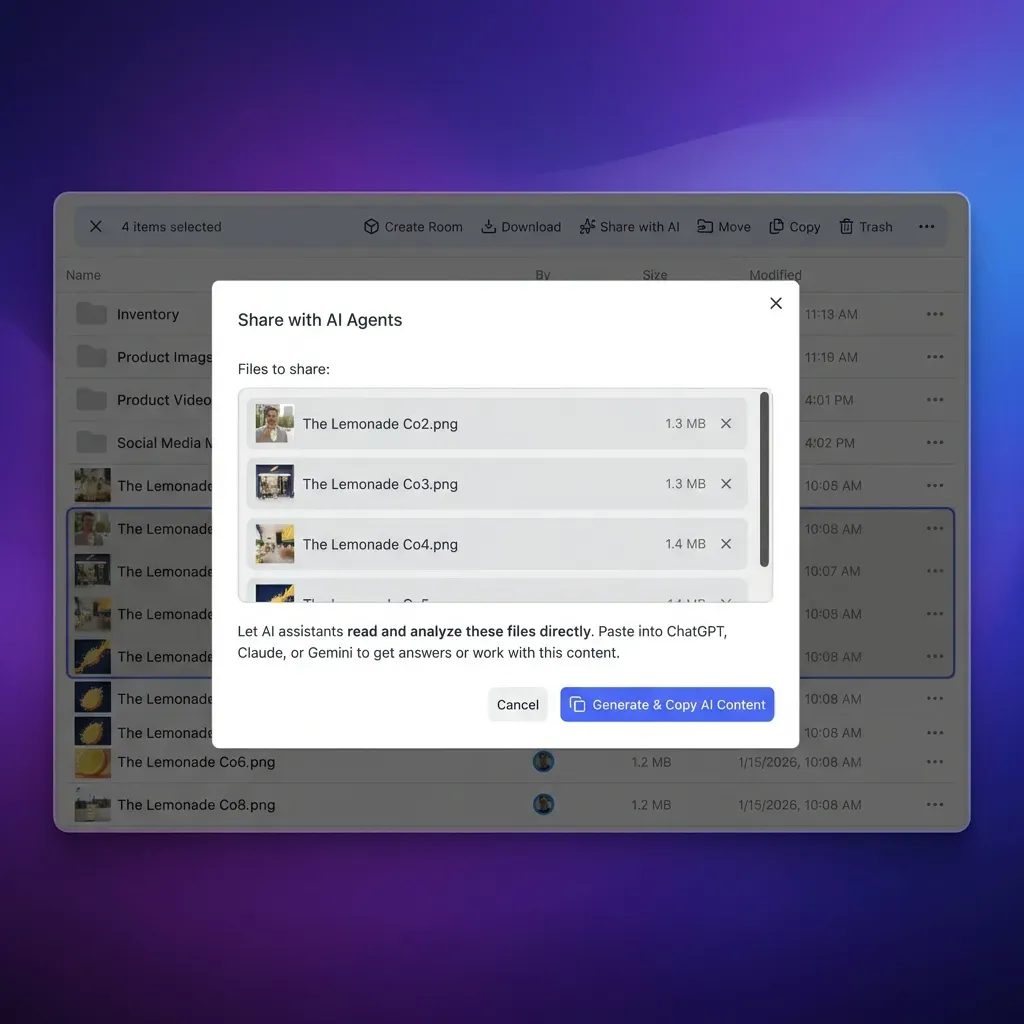
Fast.io MCP offers multiple tools for files and workspaces. Sales teams with stacks of contracts and proposals get organized storage AI agents can use.
Key strengths:
File storage with RAG indexing. Upload a contract, ask about terms or pricing instantly.
Workspaces per deal or account, with access controls.
Ownership transfer: Agents build data rooms, pass to reps.
File locks avoid clashes in team edits.
Import from Drive, OneDrive, Box via URL.
Webhooks notify on downloads for follow-ups.
Free agent tier: multiple, multiple credits. No card needed.
Sales teams store contracts, templates, client rooms here. Intelligence Mode indexes for questions like "Acme deal payment terms?" or "Proposals to enterprises this month?"
Best for: Document handling, contract review, deal collab.
Pricing: Free tier with multiple, multiple credits. Pay for more storage/bandwidth.
2. Slack MCP Server - Best for Communication and Deal Coordination
Slack's MCP lets agents read channels, send messages, manage threads. Keeps AI in sales chats without app switching.
Key strengths:
Monitor channels for deal updates.
Auto follow-ups and status posts.
Organize threads by opportunity.
Check user availability.
Best for: Slack-based deal coordination.
Pricing: Part of Slack. Needs permissions.
Define clear tool contracts and fallback behavior so agents fail safely when dependencies are unavailable. This improves reliability in production workflows.
Teams should validate this approach in a small test path first, then standardize it across environments once metrics and outcomes are stable.
Document decisions, ownership, and rollback steps so implementation remains repeatable as the workflow scales.
3. GitHub MCP Server - Best for Technical Sales and Solution Engineering
GitHub MCP gives repo access, issues, code search. Helps technical sales reference code, docs, changes.
Key strengths:
Search repos for examples.
Track issues for accounts.
Pull request updates.
Quick doc access.
Best for: Tech sales with code details.
Pricing: Free public. Pro/Team for private.
Define clear tool contracts and fallback behavior so agents fail safely when dependencies are unavailable. This improves reliability in production workflows.
Teams should validate this approach in a small test path first, then standardize it across environments once metrics and outcomes are stable.
Document decisions, ownership, and rollback steps so implementation remains repeatable as the workflow scales.
4. PostgreSQL MCP Server - Best for Custom Sales Data and Analytics
Postgres MCP allows DB queries, schema views, sales data pulls. Direct SQL for custom CRMs or analytics.
Key strengths:
See schema first.
Read-only safety.
Complex reports.
Join tables for full views.
Best for: Ops with data warehouses.
Pricing: Open source, use your Postgres.
Define clear tool contracts and fallback behavior so agents fail safely when dependencies are unavailable. This improves reliability in production workflows.
Teams should validate this approach in a small test path first, then standardize it across environments once metrics and outcomes are stable.
Document decisions, ownership, and rollback steps so implementation remains repeatable as the workflow scales.
5. Sequential Thinking MCP Server - Best for Complex Deal Strategy
Sequential Thinking MCP aids step-by-step problem solving. Good for enterprise deals needing strategy work.
Key strengths:
Break down challenges.
Adjust on new info.
Explore paths.
Keep context over cycles.
Best for: Multi-stakeholder enterprise sales.
Pricing: Open source.
Define clear tool contracts and fallback behavior so agents fail safely when dependencies are unavailable. This improves reliability in production workflows.
Teams should validate this approach in a small test path first, then standardize it across environments once metrics and outcomes are stable.
Document decisions, ownership, and rollback steps so implementation remains repeatable as the workflow scales.
Teams should validate this approach in a small test path first, then standardize it across environments once metrics and outcomes are stable.
6. Brave Search MCP Server - Best for Account Research and Competitive Intelligence
Brave MCP does web/local search. Helps prospecting with company news, local biz, trends.
Key strengths:
Web for news/updates.
Local for contacts.
Privacy no tracking.
Fresh info for CRM.
Best for: Pre-call research.
Pricing: API key, free tier limits.
Define clear tool contracts and fallback behavior so agents fail safely when dependencies are unavailable. This improves reliability in production workflows.
Teams should validate this approach in a small test path first, then standardize it across environments once metrics and outcomes are stable.
Document decisions, ownership, and rollback steps so implementation remains repeatable as the workflow scales.
Teams should validate this approach in a small test path first, then standardize it across environments once metrics and outcomes are stable.
7. Time MCP Server - Best for Scheduling and Follow-Up Management
Time MCP handles timezones, scheduling. Coordinates global meetings, respects hours.
Key strengths:
Convert zones.
Business hours check.
Find slots.
Prospect timing.
Best for: Global teams.
Pricing: Open source.
Define clear tool contracts and fallback behavior so agents fail safely when dependencies are unavailable. This improves reliability in production workflows.
Teams should validate this approach in a small test path first, then standardize it across environments once metrics and outcomes are stable.
Document decisions, ownership, and rollback steps so implementation remains repeatable as the workflow scales.
Teams should validate this approach in a small test path first, then standardize it across environments once metrics and outcomes are stable.
Which MCP Server Should Your Sales Team Choose?
Match to your pains.
Fast.io first for docs/contracts. Covers file tasks, free test.
Slack for chat coordination.
Postgres for custom data.
Sequential for strategy.
Brave for research.
Time for scheduling.
Combine them. Start with one big win, add more. Each boosts your agents.
Define clear tool contracts and fallback behavior so agents fail safely when dependencies are unavailable. This improves reliability in production workflows.
Teams should validate this approach in a small test path first, then standardize it across environments once metrics and outcomes are stable.
Document decisions, ownership, and rollback steps so implementation remains repeatable as the workflow scales.
Frequently Asked Questions
What is an MCP server for sales?
MCP servers connect AI agents to sales tools: CRMs, files, chat. Agents handle data, docs, messages via standard links.
How do MCP servers help sales teams close more deals?
They cut busywork, give quick data access, fit agents into flows. Reps focus on customers, not tools.
Are MCP servers secure for customer data?
Depends on the server. Good ones like Fast.io have encryption, logs, permissions. Check before using with sensitive info.
Can multiple sales agents use the same MCP server simultaneously?
Yes. Servers handle multiple agents/users. Fast.io locks files to avoid issues. Each has own auth.
What is the difference between MCP servers and traditional API integrations?
MCP is standard for any agent. APIs need custom code per tool. MCP agents switch systems easily.
Related Resources

Run MCP Servers Sales workflows on Fast.io
Start with Fast.io MCP: 251 file tools for agents. Free: 50GB, 5,000 credits. Built for mcp servers sales workflows.