Best Cloud Storage for AI Agents: Top 7 Platforms Compared
Cloud storage for AI agents provides persistent file access, version control, and API-driven operations that let autonomous software agents store, retrieve, and share files without human intervention. This guide compares seven platforms designed for agentic workflows, from MCP-native solutions to traditional cloud providers adapting to agent needs. This guide covers top cloud storage for AI agents with practical examples.
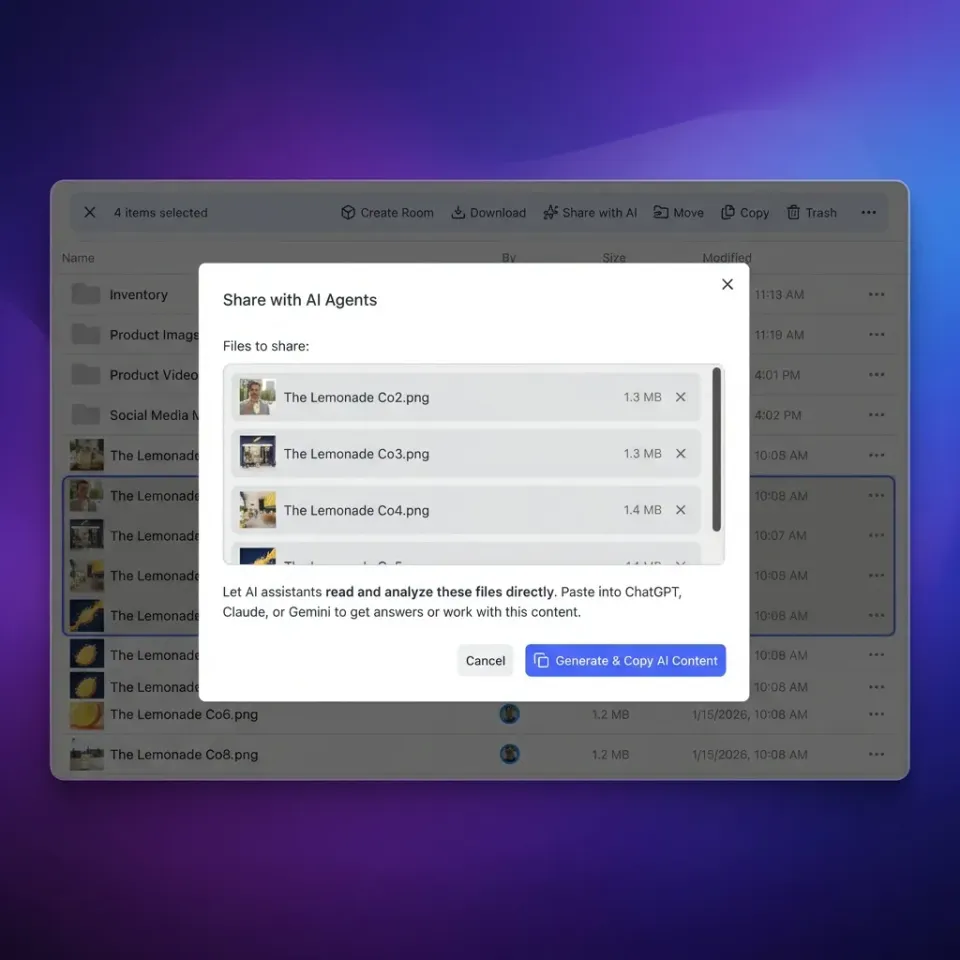
What Makes Cloud Storage Agent-Friendly?: top cloud storage for AI agents
AI agents need different storage capabilities than human users. According to MarketsandMarkets, the AI agent market is expected to reach $65B by 2030, yet 70% of enterprise AI projects fail due to data infrastructure gaps.
Cloud storage for AI agents refers to persistent file systems with programmatic access that autonomous software can use to store outputs, retrieve context, and share deliverables without human intervention. Unlike ephemeral storage tied to specific AI platforms, agent-friendly storage persists across sessions and works with any LLM. The key distinction is persistence plus programmability. Traditional cloud storage (Dropbox, Google Drive) was built for humans clicking through folders. Agent storage needs API-first access, structured permissions, and integration with AI frameworks like MCP (Model Context Protocol). Core requirements for agent-friendly storage:
- API-first design: Full CRUD operations via REST or SDK
- Persistent storage: Files don't expire between sessions
- Multi-LLM support: Works with Claude, GPT-4, Gemini, local models
- Structured sharing: Programmatic permission management
- Version control: Track file changes across agent runs
- MCP compatibility: Native integration with AI tooling standards
Helpful references: Fast.io Workspaces, Fast.io Collaboration, and Fast.io AI.
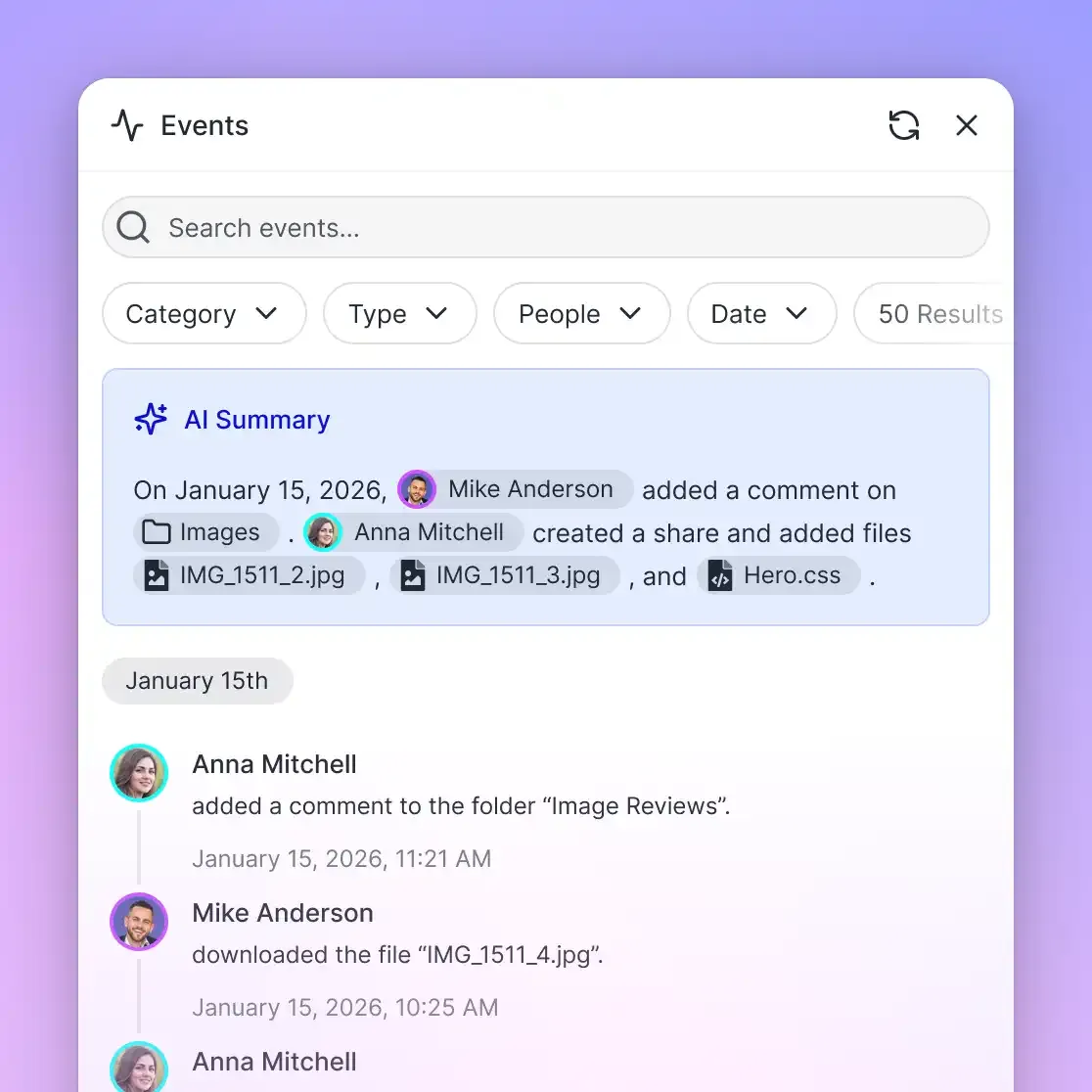
Top 7 Cloud Storage Platforms for AI Agents
We evaluated platforms based on API quality, agent-specific features, pricing models, MCP support, and real-world performance in agentic workflows. Cloud storage architecture matters more than most people realize. Sync-based platforms require local copies of every file, consuming disk space and creating version conflicts. Cloud-native platforms stream files on demand, so your team accesses what they need without downloading entire folder trees.
Cloud storage architecture matters more than most people realize. Sync-based platforms require local copies of every file, consuming disk space and creating version conflicts. Cloud-native platforms stream files on demand, so your team accesses what they need without downloading entire folder trees.
1. Fast.io
Fast.io is cloud storage built from the ground up for AI agents. Agents sign up for their own accounts, create workspaces, and manage files programmatically through 251 MCP tools or a complete REST API.
Key strengths:
- 251 MCP tools via Streamable HTTP and SSE transport
- Built-in RAG with Intelligence Mode (toggle per workspace)
- Ownership transfer (agent builds, human receives)
- Free agent tier: 50GB storage, 5,000 credits/month, no credit card
- Works with Claude, GPT-4, Gemini, LLaMA, local models
- Webhooks for reactive workflows
- URL Import from Google Drive, OneDrive, Box, Dropbox
- File locks for concurrent multi-agent access
- OpenClaw integration (zero-config via ClawHub)
Key limitations:
- Newer platform compared to AWS/Azure
- 1GB max file size on free tier
Best for: Development teams building multi-agent systems that need persistent storage, RAG capabilities, and human-agent collaboration without managing infrastructure.
Pricing: Free tier with 50GB and 5,000 credits/month. Pro plans start at published pricing for teams with usage-based pricing (no per-seat fees).
2. AWS S3
Amazon S3 is the industry standard for object storage. While not built specifically for agents, it offers reliable APIs and massive scalability that make it a common choice for AI infrastructure.
Key strengths:
- Mature API with extensive documentation
- Massive scale (nearly generous storage)
- Integration with AWS AI services (Bedrock, SageMaker)
- Fine-grained IAM permissions
- Versioning and lifecycle policies
Key limitations:
- No built-in RAG or semantic search
- Requires managing buckets, IAM, and infrastructure
- No MCP-native integration (requires custom development)
- Pricing complexity (storage + requests + transfer)
- No collaboration features for human-agent workflows
Best for: Organizations already on AWS infrastructure needing massive scale and close integration with AWS AI services.
Pricing: Pay-as-you-go starting at $0.023/GB/month for standard storage, plus request and transfer fees. No free tier for production use.
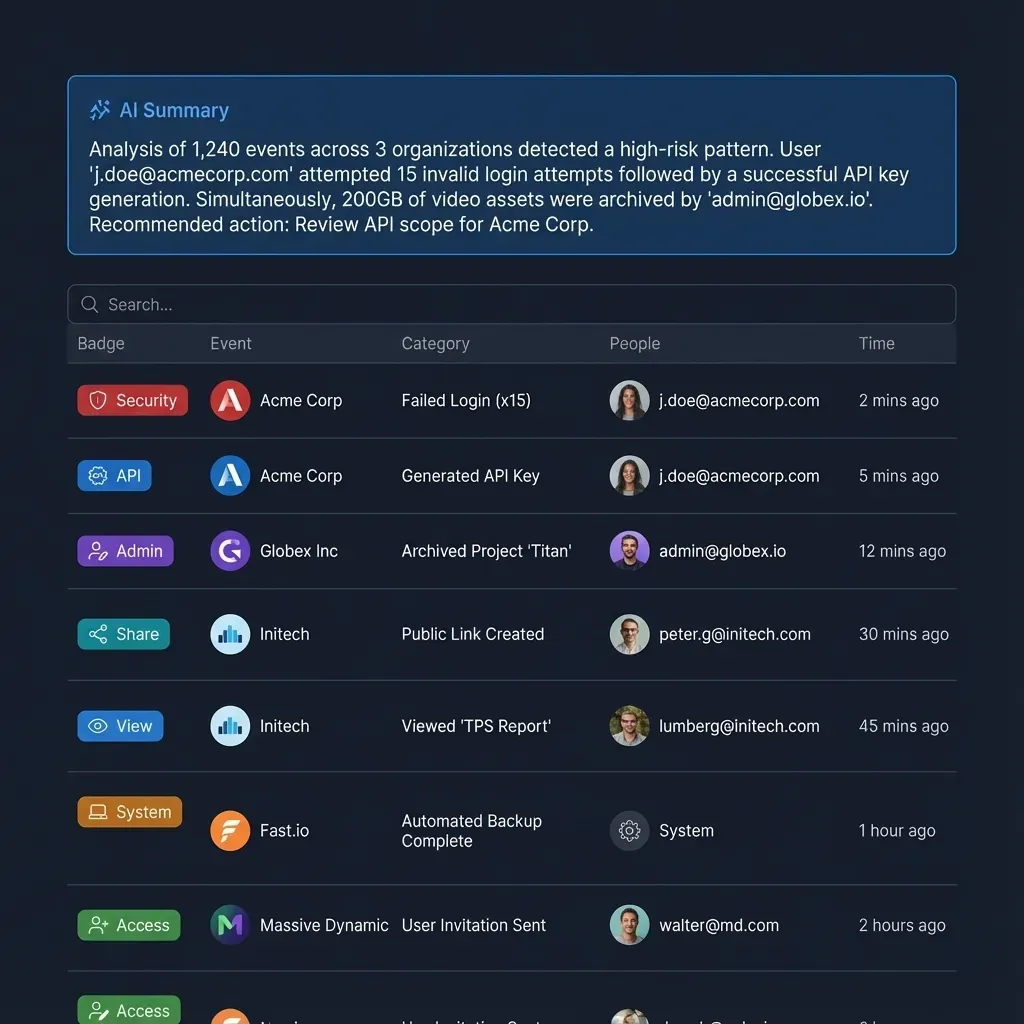
3. Google Cloud Storage
Google Cloud Storage offers object storage with close integration into Google's AI ecosystem, including Vertex AI and Gemini API.
Key strengths:
- Multi-regional replication across data centers
- ML/AI integration with Vertex AI
- Uniform bucket-level access controls
- Competitive pricing for long-term storage
- JSON and XML APIs
Key limitations:
- No agent-specific features (MCP, ownership transfer)
- Infrastructure management required
- No built-in RAG or intelligence features
- Complex pricing model
- Limited collaboration tools
Best for: Teams using Google Cloud Platform and Vertex AI who need object storage that scales with their AI training pipelines.
Pricing: Starts at $0.020/GB/month for standard storage. Free tier includes large storage and limited operations.
4. Azure Blob Storage
Microsoft's object storage solution integrates closely with Azure AI services and offers enterprise-grade security features.
Key strengths:
- Deep integration with Azure AI (OpenAI Service, Cognitive Services)
- Enterprise security (SSO, MFA, encryption)
- Tiered storage options (hot, cool, archive)
- Immutable storage for compliance
- Python and .NET SDKs
Key limitations:
- No MCP support
- Complex permission model
- No agent-specific workflows
- Infrastructure overhead
- Steeper learning curve than consumer storage
Best for: Enterprise teams on Azure infrastructure who need compliance features and integration with Azure OpenAI Service.
Pricing: Starts at $0.0184/GB/month for hot storage. Free tier includes 5GB for 12 months.
5. Pinecone
Pinecone is a vector database designed for embeddings and semantic search. While not traditional file storage, it's commonly paired with agents for RAG workflows.
Key strengths:
- Purpose-built for vector embeddings
- Fast semantic search at scale
- Managed infrastructure (no servers to maintain)
- Metadata filtering
- Real-time updates
Key limitations:
- Stores embeddings only, not actual files
- Requires separate file storage for originals
- No file preview or streaming
- No collaboration features
- Must manage embedding pipeline yourself
Best for: Teams building RAG applications who need fast vector search and are willing to manage file storage separately.
Pricing: Free tier with 1 index and 5M vectors. Paid plans start at published pricing.
6. Supabase Storage
Supabase offers object storage as part of its open-source Firebase alternative, with built-in APIs and real-time subscriptions.
Key strengths:
- Open-source (can self-host)
- Built-in authentication
- Real-time file event subscriptions
- PostgreSQL-based metadata
- Generous free tier
Key limitations:
- Not agent-specific
- No MCP integration
- No built-in RAG or semantic search
- Limited file processing features
- Smaller ecosystem than major cloud providers
Best for: Developers building full-stack applications with agent features who want open-source infrastructure.
Pricing: Free tier with 1GB storage. Pro plans start at published pricing. Cloud storage architecture matters more than most people realize. Sync-based platforms require local copies of every file, consuming disk space and creating version conflicts. Cloud-native platforms stream files on demand, so your team accesses what they need without downloading entire folder trees.
7. Cloudflare R2
Cloudflare R2 is S3-compatible object storage with zero egress fees. This makes it cost-effective for agent workflows that involve heavy file transfers.
Key strengths:
- No egress fees (major cost savings)
- S3-compatible API (easy migration)
- Global CDN integration
- DDoS protection
- Generous free tier
Key limitations:
- No agent-specific features
- No MCP support
- No built-in RAG or AI features
- Smaller feature set than AWS S3
- Newer platform with less tooling
Best for: Teams with high bandwidth needs who want S3 compatibility without egress fees.
Pricing: Free tier with large storage. Paid storage is $0.015/GB/month with no egress fees.
How We Evaluated These Platforms
We tested each platform against five criteria critical for agent workflows:
API Quality (25%): Completeness of programmatic access, SDK quality, authentication methods, and documentation clarity. Platforms with full CRUD operations, chunked uploads, and webhook support scored highest.
Agent-Specific Features (30%): MCP integration, RAG capabilities, ownership transfer, file locks, and multi-agent coordination features. This weighted category separates agent-first platforms from general cloud storage.
Pricing Model (20%): Predictability, free tier generosity, egress fees, and alignment with agent usage patterns. Usage-based pricing scored better than per-seat models for agent workloads.
Multi-LLM Support (15%): Ability to work with different AI models and frameworks. Platforms locked to a single provider (OpenAI only, Google only) scored lower.
Ease of Integration (10%): Time to first successful agent operation, configuration complexity, and availability of examples. Zero-config solutions like OpenClaw scored highest.
Comparison Table
| Platform | MCP Support | Built-in RAG | Free Tier | Best For |
|---|---|---|---|---|
| Fast.io | 251 tools (native) | Yes (Intelligence Mode) | 50GB | Multi-agent systems |
| AWS S3 | Custom dev required | No | Limited | AWS-native teams |
| Google Cloud | Custom dev required | No | 5GB | GCP-native teams |
| Azure Blob | Custom dev required | No | 5GB | Azure-native teams |
| Pinecone | No (vector DB) | RAG-adjacent | 1 index | Pure RAG workflows |
| Supabase | No | No | 1GB | Open-source projects |
| Cloudflare R2 | No | No | 10GB | High-bandwidth needs |
Which Platform Should You Choose?
Choose Fast.io if: You're building multi-agent systems that need persistent storage, MCP integration, RAG capabilities, and human-agent collaboration. The free agent tier makes it ideal for development and proof-of-concept work.
Choose AWS S3 if: You're already invested in AWS infrastructure and need massive scale for training data or model artifacts. Best for teams comfortable managing buckets and IAM.
Choose Google Cloud Storage if: You're using Vertex AI or Gemini and want close integration with Google's AI ecosystem.
Choose Azure Blob if: You're on Azure infrastructure, especially if using Azure OpenAI Service, and need enterprise compliance features.
Choose Pinecone if: Your agent workflow is purely RAG-focused and you need fast vector search at scale. Pair with separate file storage.
Choose Supabase if: You want open-source infrastructure you can self-host and need real-time file events for reactive agents.
Choose Cloudflare R2 if: Egress fees are a concern and you need S3 compatibility without bandwidth costs.
Getting Started with Fast.io for AI Agents
Fast.io offers the most complete agent-first storage solution. Here's how to get started:
1. Install the MCP Server
Fast.io provides 251 MCP tools via Streamable HTTP and SSE transport. Configure your MCP client (Claude Desktop, Cursor, VS Code) to connect to /storage-for-agents/.
2. Sign Up an Agent Account
Agents register just like human users at fast.io/signup. No credit card required for the free tier (50GB, 5,000 credits/month).
3. Create Workspaces Programmatically
Use the REST API or MCP tools to create workspaces for different projects. Enable Intelligence Mode on workspaces that need RAG.
4. Set Up Webhooks
Configure webhooks to trigger downstream actions when files change. Build reactive workflows without polling.
5. Transfer Ownership
When your agent finishes building a workspace or data room, transfer ownership to the human client while keeping admin access.
OpenClaw Integration: For natural language file management, install the ClawHub skill with clawhub install dbalve/fast-io. Works with any LLM in your OpenClaw environment. Full documentation at mcp.fast.io/skill.md and fast.io/llms.txt.
Frequently Asked Questions
What's the difference between cloud storage for AI agents and general cloud storage?
Cloud storage for AI agents provides programmatic access (APIs, MCP tools) and persistent storage across sessions, while general cloud storage is designed for human users with web interfaces and sync clients. Agent storage needs features like file locks, webhooks, ownership transfer, and integration with AI frameworks. Fast.io treats agents as first-class users with their own accounts and workspaces.
Can I use AWS S3 for AI agent storage?
Yes, AWS S3 works for agent storage if you're comfortable managing buckets, IAM policies, and API integration yourself. It's excellent for massive scale and AWS ecosystem integration but lacks agent-specific features like MCP tools, built-in RAG, or ownership transfer. You'll need to build these capabilities yourself or use S3 purely as object storage.
Does Fast.io work with all AI models or just Claude?
Fast.io works with any AI model including Claude, GPT-4, Gemini, LLaMA, and local models. The MCP server and OpenClaw integration are LLM-agnostic. You're not locked into a single AI provider, which matters for teams experimenting with different models or building multi-model systems.
What is MCP and why does it matter for AI agents?
MCP (Model Context Protocol) is an open standard for connecting AI assistants to external tools and data sources. MCP-native storage like Fast.io provides 251 pre-built tools that agents can use immediately without custom API integration. This cuts development time and ensures compatibility with MCP-compatible AI frameworks.
How much does cloud storage for AI agents typically cost?
Pricing varies widely. Fast.io offers 50GB free for agents (no credit card), AWS S3 charges $0.023/GB/month plus request fees, Google Cloud starts at $0.020/GB, and Pinecone (vector DB) starts at published pricing. Usage-based pricing is more cost-effective for agents than per-seat models. For most agent development, Fast.io's free tier or Cloudflare R2 (10GB free) provides the best value.
Can AI agents collaborate with humans on the same files?
Yes, with agent-first platforms like Fast.io. Agents can invite humans into workspaces, transfer ownership of completed projects, and work alongside people with role-based permissions. Traditional cloud storage (S3, Google Cloud) requires custom integration to support human-agent collaboration workflows.
Do I need separate storage for RAG and file storage?
Not with Fast.io's Intelligence Mode, which provides built-in RAG with auto-indexing and semantic search. Traditional approaches require separate storage (S3 for files) and a vector database (Pinecone, Weaviate) for embeddings. This dual-system approach adds complexity and cost but may be necessary for specialized RAG requirements or massive scale.
What file size limits should I expect for AI agent storage?
Limits vary by platform. Fast.io supports up to 1GB per file on the free agent tier (larger on paid plans), AWS S3 supports up to 5TB per object, Azure Blob supports 190TB per blob. For most agent workflows (reports, code, CSVs, images), the 1GB limit is sufficient. Video and large datasets may require enterprise storage.
How do webhooks help AI agent workflows?
Webhooks enable reactive workflows where agents respond to file changes automatically. For example, an agent receives a webhook when a client uploads a document, processes it, and saves the result to a different workspace. Without webhooks, agents must poll for changes, which wastes API calls and adds latency. Fast.io and Supabase offer native webhook support.
Can I self-host cloud storage for AI agents?
Yes, Supabase Storage is open-source and self-hostable if you need full control over infrastructure. MinIO (mentioned in SERP research) is another self-hosted S3-compatible option. Self-hosting adds operational complexity but may be necessary for data residency requirements or complete control. Most teams benefit from managed solutions like Fast.io or AWS S3.
Related Resources

Run Cloud Storage For AI Agents Top 7 Platforms Compared workflows on Fast.io
Fast.io gives teams shared workspaces, MCP tools, and searchable file context to run best cloud storage ai agents workflows with reliable agent and human handoffs.