Best AI Agent Memory Solutions: Top 7 Tools for 2026
AI agents without persistent memory start from scratch every session, losing context and repeating much of their work. This guide compares leading memory solutions, from vector databases and agent frameworks to file-based storage, so you can pick the right architecture for context-aware agents. This guide covers best ai agent memory solutions with practical examples.

Why AI Agents Need Persistent Memory: best ai agent memory solutions
Memory is what separates a chatbot from an autonomous agent. Without it, an LLM is stateless. It forgets everything the moment a session ends. Persistent memory lets agents recall past interactions, store working artifacts, and build on previous work instead of starting over. Agents with long-term memory architectures reduce token consumption on recurring tasks by skipping re-prompting with the same context. Whether you are building a coding assistant that needs to remember project architecture or a support bot that recalls user history, the memory layer is foundational. Most memory architectures fall into three categories: Vector Memory (semantic search), File-based Memory (persistent documents), and Structured/SQL Memory (relationship tracking).
Helpful references: Fast.io Workspaces, Fast.io Collaboration, and Fast.io AI.

Top 7 AI Agent Memory Solutions
We compared these memory tools on persistence, integration difficulty, retrieval speed, and developer experience.
1. Fast.io (Best for File-Based Persistence & MCP)
Fast.io treats the file system as the primary memory store. Instead of encoding everything into vectors, agents get a persistent cloud drive where they can read, write, and organize files the same way a human user would.
Key Strengths:
- MCP Native: Works with the Model Context Protocol out of the box, with 251 pre-built tools for file operations. * Built-in RAG: "Intelligence Mode" auto-indexes stored files (PDFs, code, docs), so agents can query their memory without a separate vector database. * Free Developer Tier: 50GB of persistent storage and 5,000 monthly credits at no cost. * Human-Readable: Memory is stored as standard files that humans can open, audit, and edit directly.
Best For: Agents that need to generate actual work artifacts (code, reports, designs) and collaborate with humans.
2. LangChain (Best Framework Integration)
LangChain is the most widely used orchestration framework. Its memory module offers classes like ConversationBufferMemory and EntityMemory that plug directly into LLM chains.
Key Strengths:
- Modular Design: Easy to swap between memory types (short-term, summary, knowledge graph). * Ecosystem: Large community and integrations with most LLM providers.
Best For: Developers already building within the LangChain ecosystem who need flexible conversational history.
3. MemGPT (Best for Infinite Context)
MemGPT (Memory-GPT) uses an operating system-like architecture for agents. It manages a "virtual context" by paging information in and out of the LLM's context window, giving agents access to far more memory than the context limit allows.
Key Strengths:
- Self-Management: The agent autonomously decides what to keep in active memory and what to archive. * Event-Driven: Handles interrupts and user interactions asynchronously.
Best For: Long-running conversational agents or "digital companions" that need to remember details over months or years.
4. Pinecone (Best Managed Vector Database)
Pinecone is a popular managed vector database built for high-scale semantic search. Many agent architectures use it as their long-term semantic memory layer.
Key Strengths:
- Performance: Low-latency retrieval even with billions of vectors. * Serverless: No infrastructure to manage; scales automatically.
Best For: Enterprise-scale agents that need to retrieve knowledge from massive datasets.
5. Redis (Best for Speed & State)
Redis is widely used for "short-term" or "working" memory due to its extreme speed. With Redis Vector Library, it can also handle semantic similarity search.
Key Strengths:
- Latency: Sub-millisecond response times make it ideal for real-time agents. * Versatility: Handles caching, session state, and vector search in one platform.
Best For: High-throughput agents requiring real-time state management.
6. ChromaDB (Best Open Source Vector Store)
Chroma is an open-source, AI-native vector database designed to be easy to run locally or in the cloud. It is a favorite among developers for prototyping.
Key Strengths:
- Simplicity: easy to set up with Python; great for local development. * Feature-Rich: Includes built-in embedding functions and filtering.
Best For: Prototyping and developers who want full control over their vector infrastructure.
7. CrewAI (Best for Multi-Agent Teams)
CrewAI is a framework specifically for orchestrating role-playing autonomous agents. It includes a built-in memory system that allows agents to share context and learn from each other.
Key Strengths:
- Shared Memory: Agents in a "crew" can access a shared short-term memory to collaborate effectively. * Role-Based: Memory is structured around the specific role and goal of the agent.
Best For: Complex workflows requiring multiple specialized agents working together.
Comparison: Vector vs. File-Based Memory
Choosing the right memory type depends on your agent's goals. Vector databases are excellent for fuzzy retrieval ("find things like this"), while file-based memory is superior for precision and content generation.
| Feature | Vector Memory (e.g., Pinecone) | File-Based Memory (e.g., Fast.io) | Framework Memory (e.g., LangChain) |
|---|---|---|---|
| Primary Data | Embeddings (numbers) | Documents, Code, Media | Conversation History |
| Retrieval | Semantic Similarity | Direct Access & RAG | Chronological / Summary |
| Human Access | Difficult (requires decoding) | Native (files & folders) | Moderate (logs) |
| Best Use Case | Knowledge Retrieval | Content Creation & Collaboration | Chat Context |
| Persistence | High | High | Varies (often session-based) |
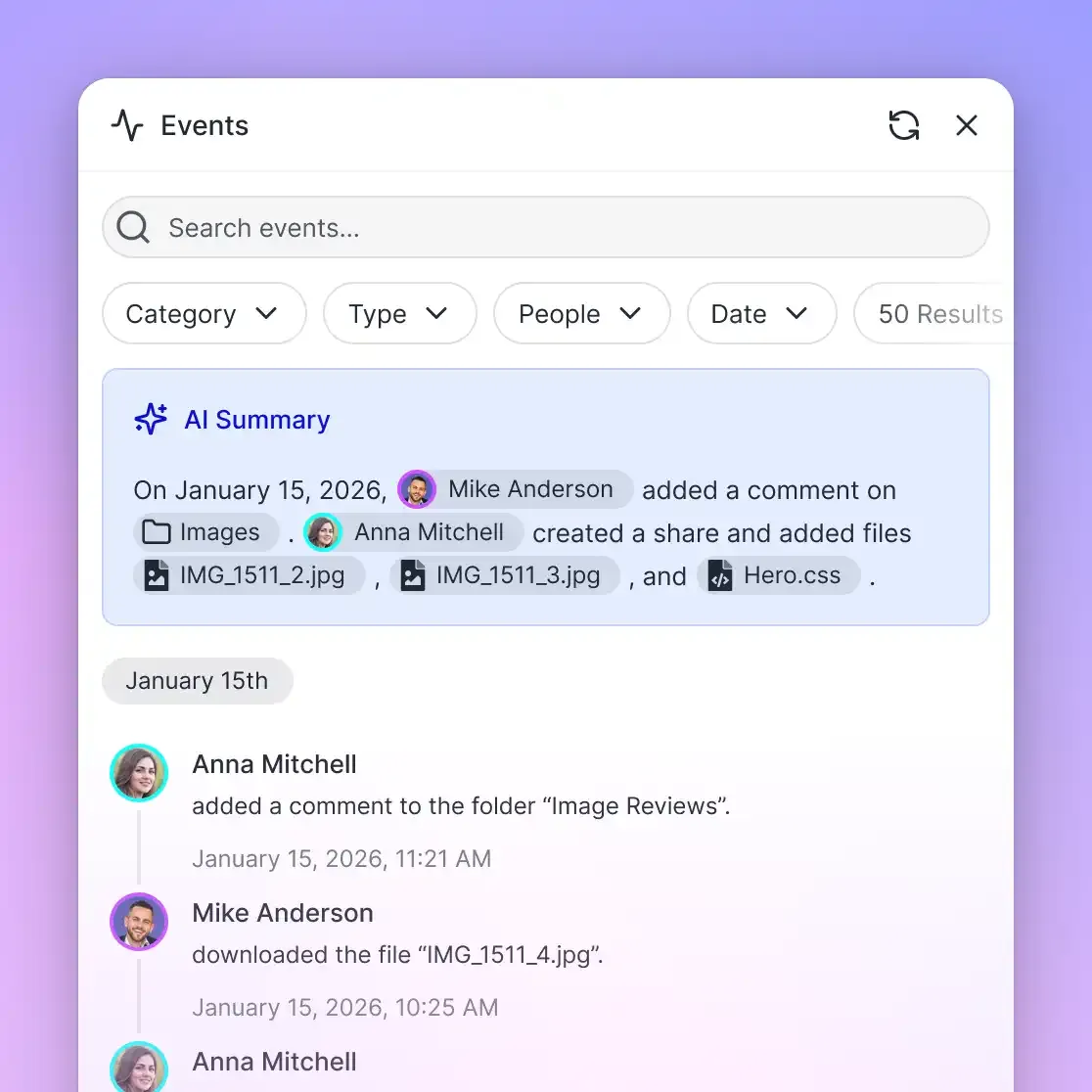
Hybrid Approaches are Winning Modern advanced agent systems use a hybrid approach. They might use Redis for immediate session state, Pinecone for semantic knowledge retrieval, and Fast.io for storing the actual artifacts the agent creates (like code files or reports). This gives the agent a complete "brain" with both knowledge and a workspace.
How to Implement Persistent Memory
Implementing memory doesn't have to be complex. Here is a simplified workflow for giving an agent persistent file memory using Fast.io and MCP:
Step 1: Set up the Storage Layer Create a Fast.io workspace. This acts as the agent's hard drive. Enable "Intelligence Mode" to turn on auto-indexing (RAG).
Step 2: Connect via MCP Install the Fast.io MCP server. If you are using Claude Desktop or an MCP-compliant agent builder, setup is quick and straightforward.
Step 3: Define Memory Behaviors
Instruct your agent to check specific folders for context at the start of a task. For example: "Before writing code, read the architecture-docs/ folder to understand the project structure."
Step 4: Save State
Configure the agent to write its progress to a memory.md or todo.txt file at the end of every session. This simple file-based "save point" allows the agent to resume work perfectly days later.
Frequently Asked Questions
What is the difference between short-term and long-term agent memory?
Short-term memory (or context window) is what the agent knows during the current active conversation. It is wiped when the session ends. Long-term memory is stored in an external database or file system (like Fast.io or Pinecone) and persists indefinitely, allowing the agent to recall information from days or months ago.
Can I use local files for AI agent memory?
Yes, you can use local file systems, but this limits the agent to running only on your specific machine. Cloud-based file memory solutions like Fast.io allow agents to run anywhere (cloud, local, or serverless) while maintaining access to the same persistent 'brain' of files and data.
Do I need a vector database for my AI agent?
Not necessarily. While vector databases are powerful for searching massive datasets, many agents function better with file-based memory. If your agent's job is to edit code, write articles, or process documents, a file storage system with built-in search (RAG) is often simpler and more effective than a standalone vector DB.
Related Resources

Run AI Agent Memory Solutions Top 7 Tools For 2026 workflows on Fast.io
Stop rebuilding context every session. Fast.io gives your agents 50GB of free, persistent file storage with built-in RAG and MCP integration.