AI Agent Persistent Storage: How to Store Agent Data Between Sessions
AI agent persistent storage lets autonomous agents maintain state, remember context, and access files across sessions. Without it, agents start from scratch every time, losing work products and accumulated knowledge.

What Is AI Agent Persistent Storage?
AI agent persistent storage is any mechanism that lets an autonomous agent retain information between sessions or task runs. Large language models are stateless by design. Each API call is independent. The model has no memory of what came before unless you explicitly provide context. Persistent storage solves this fundamental limitation by giving agents a place to save and retrieve:
- Conversational memory - Past interactions, user preferences, learned patterns
- Work artifacts - Generated reports, analysis results, processed datasets
- State information - Task progress, workflow checkpoints, execution history
- Knowledge bases - Indexed documents, embeddings, reference materials
According to Redis, stateless agents fail 60% of multi-step tasks because they cannot maintain context across steps. Persistent storage improves task completion rates by roughly 3x by maintaining continuity. The difference: stateless agents forget everything after each interaction. Stateful agents with persistent storage accumulate knowledge, pick up where they left off, and deliver consistent experiences.
Why AI Agents Need Persistent Storage
Context window limitations make external storage essential for production agents. Even with 200K token windows, you cannot fit:
- Months of conversation history
- Complete project documentation
- Large datasets and analysis results
- All reference materials an agent might need
Persistent storage extends agent capabilities beyond the context window. Instead of cramming everything into the prompt, agents query external storage for relevant information only when needed.
Real-world impact:
- Customer support agents remember past issues, preferences, and resolutions across weeks or months
- Research agents accumulate findings over time, building knowledge graphs that inform future analysis
- Workflow automation agents checkpoint progress so they can resume after failures or interruptions
- Multi-agent systems share state through persistent storage, coordinating work without duplicating context
The operational benefits show up fast. Agents with persistent storage cost less to run (smaller prompts), deliver better results (access to full history), and handle complex multi-step tasks that would overwhelm stateless systems.
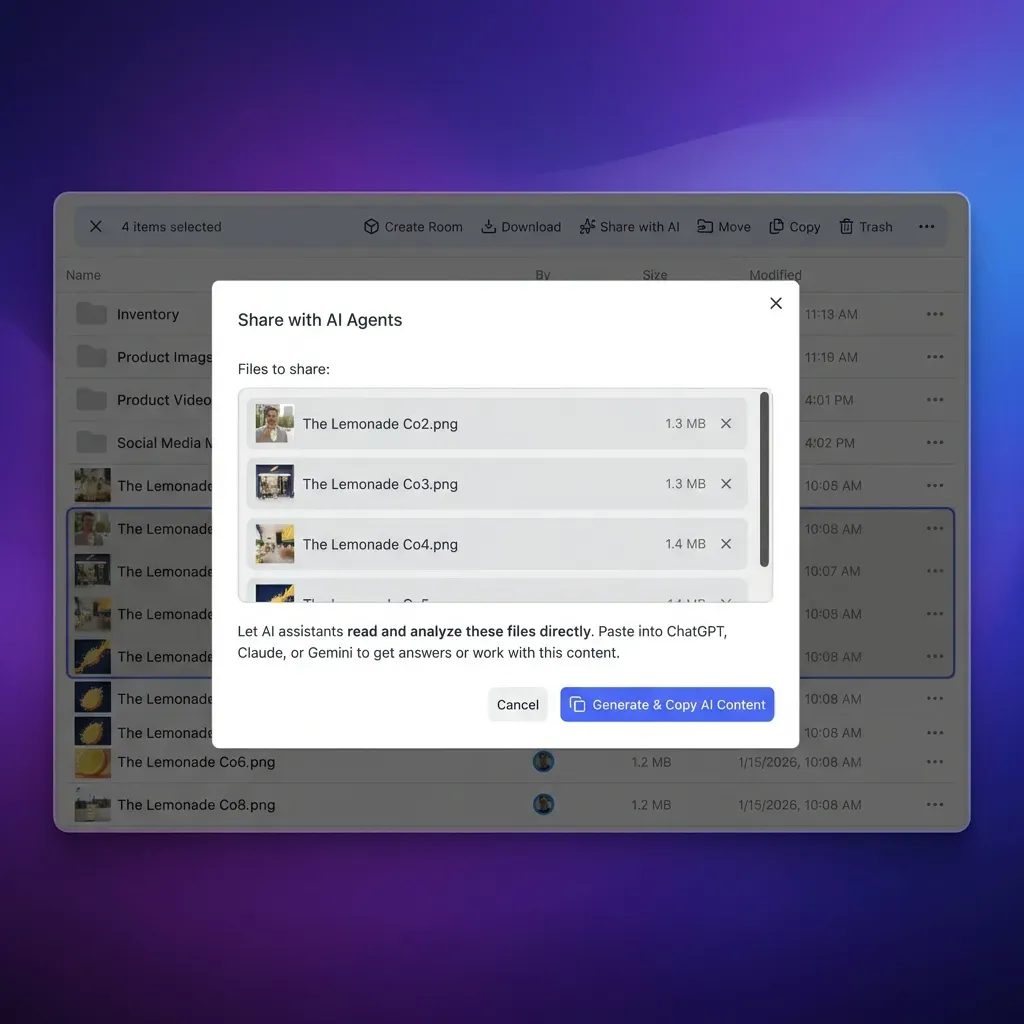
Types of Agent Persistence
Agent persistence breaks down into three categories, each solving different problems.
Memory Storage (Conversational Context)
Memory storage holds conversation history, learned preferences, and interaction patterns. This is what most developers think of when they hear "agent memory."
Short-term memory works like RAM, holding relevant details for an ongoing task or conversation. When you tell an agent "Remember I prefer Python over JavaScript," that preference lives in short-term memory for the current session.
Long-term memory works more like a hard drive, storing vast amounts of information to be accessed later. This is information that persists across multiple task runs or conversations, allowing agents to learn from feedback and adapt to user patterns over time. Tools like Mem0, Redis, and vector databases specialize in memory storage. They index conversations semantically so agents can retrieve relevant context without replaying entire histories.
File Storage (Work Artifacts)
File storage holds the outputs agents create: reports, datasets, processed media, analysis results. This is where the content gap exists. Most agent storage discussions focus on memory while ignoring file persistence. Agents generate files constantly. A document processing agent might output hundreds of parsed PDFs. A video analysis agent produces transcripts, frame captures, and annotated clips. A research agent builds datasets, spreadsheets, and summary documents. These artifacts need persistent, organized storage separate from conversational memory. They are too large for vector databases, not well-suited for key-value stores, and essential for human-agent collaboration.
State Checkpointing (Execution Progress)
State checkpointing saves workflow progress so agents can resume after interruptions. This includes:
- Task queue status (completed, pending, failed)
- Intermediate results from multi-step processes
- Error states and retry metadata
- Execution logs and audit trails
Frameworks like LangGraph and Microsoft Agent Framework provide checkpointing as a built-in feature. They serialize agent state to SQLite or other databases, allowing pause/resume functionality.
Storage Solutions Compared
Different storage types solve different problems. Here's how they compare:
Vector Databases (Pinecone, Weaviate, Chroma)
Vector databases excel at semantic search over embeddings. They let agents find relevant information by meaning rather than exact keyword matches.
- Best for: Conversational memory, RAG knowledge bases, semantic search
- Limitations: Not designed for raw file storage, no built-in file preview or streaming
- Cost: Scales with vector count and query volume
Object Storage (S3, Azure Blob, Google Cloud Storage)
Object storage provides scalable, durable file storage with simple HTTP APIs. Agents can upload artifacts and retrieve them later via signed URLs.
- Best for: Large files, long-term archival, cost-effective bulk storage
- Limitations: Requires custom integration code, no built-in RAG or semantic search, no collaboration features
- Cost: Pay per GB stored and transferred
Agent-First Storage (Fast.io)
Agent-first storage platforms like Fast.io combine file storage, RAG indexing, and collaboration features in one system optimized for AI workflows.
- Best for: File artifacts, human-agent collaboration, ownership transfer, MCP integration
- Limitations: Not a replacement for pure vector databases or data warehouses
- Cost: Usage-based credits, 50GB free tier for agents
Key-Value Stores (Redis, DynamoDB)
Key-value stores offer fast reads/writes for structured state data like user preferences, session tokens, and workflow status.
- Best for: Real-time state, session management, feature flags
- Limitations: Poor fit for large files or complex queries
- Cost: Pay for throughput and storage
Most production systems use multiple storage types. Vector databases handle semantic memory. Object storage holds large files. Key-value stores manage real-time state. The architecture depends on your agent's specific needs.
Implementing Persistent Storage for Agents
Implementation patterns vary by framework, but the core principles remain consistent.
File Storage with Fast.io
Fast.io provides agent-first file storage via REST API and MCP integration. Agents sign up for accounts, create workspaces, and manage files programmatically.
Step 1: Register an agent account
Agents register like human users. No credit card required, 50GB free storage, 5,000 monthly credits.
Step 2: Create a workspace
Workspaces organize files by project or client. Toggle Intelligence Mode ON to auto-index files for RAG.
Step 3: Upload and retrieve files
Upload via chunked multipart requests (up to 1GB per file). Retrieve via direct download or streaming URLs.
Step 4: Query with RAG
When Intelligence Mode is enabled, ask questions across workspace files. The agent receives answers with source citations, no separate vector database needed.
Step 5: Transfer ownership
When the agent finishes building a data room or client portal, transfer ownership to a human user. The agent keeps admin access for ongoing maintenance.
Memory Storage with Redis
Redis provides low-latency memory storage for conversation history and learned preferences. The Redis AI agent memory guide demonstrates this pattern. Store conversation turns as JSON documents with semantic embeddings. Query via vector similarity to retrieve relevant context without replaying full histories.
State Checkpointing with LangGraph
LangGraph checkpoints agent state automatically during multi-step workflows. If a task fails midway, the agent resumes from the last checkpoint instead of restarting from scratch. Configure persistence with a single parameter, pointing to SQLite for local development or Postgres for production.
Multi-LLM Considerations
Fast.io works with Claude, GPT-4, Gemini, LLaMA, and local models through its LLM-agnostic MCP server and REST API, so you are not locked into a single provider. For memory storage, ensure your vector database supports the embedding dimensions your model produces. OpenAI embeddings are 1536 dimensions, while some open models use 768 or 384.
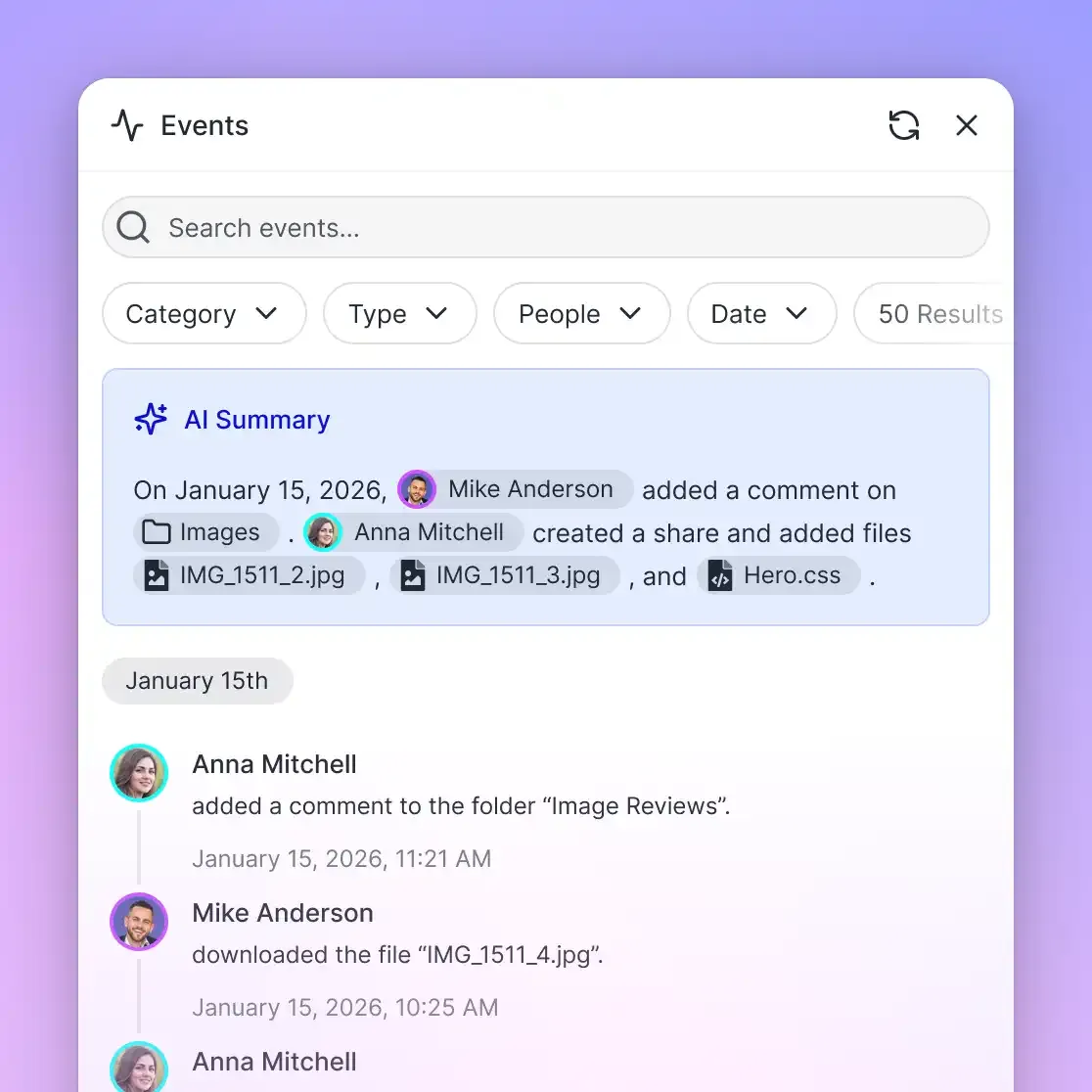
MCP Integration for File Operations
The Model Context Protocol (MCP) standardizes how AI assistants access external data sources. Fast.io provides an official MCP server with 251 tools for file operations.
Why MCP matters for persistence:
MCP servers expose storage operations as callable tools. Instead of writing custom API integration code, agents use standardized MCP tools for uploading, downloading, organizing, and querying files.
Fast.io MCP capabilities:
- Create and manage workspaces
- Upload files via chunked transfer (up to 1GB)
- Download files or generate streaming URLs
- Query files semantically with RAG (when Intelligence Mode enabled)
- Set permissions and share files externally
- Transfer ownership to humans
Transport options:
The Fast.io MCP server supports Streamable HTTP and Server-Sent Events (SSE). Session state lives in Cloudflare Durable Objects, providing sub-100ms latency globally.
Setup:
MCP servers connect to Claude Desktop, Cursor, VS Code, and other MCP-compatible clients. Configuration takes just a few minutes. Full documentation at mcp.fast.io.
Alternative: OpenClaw integration
For non-MCP environments, use the OpenClaw ClawHub skill: clawhub install dbalve/fast-io. This provides 14 natural language file management tools that work with any LLM, no config files or API keys required.
Human-Agent Collaboration Patterns
Persistent storage enables smooth handoffs between agents and humans. The agent does the heavy lifting, then transfers deliverables to the human user.
Pattern 1: Agent builds, human receives
An agent creates a complete client data room with organized files, branded portal, and access controls. When finished, the agent transfers ownership to the account manager. The agent keeps admin access for updates.
Pattern 2: Shared workspace
A human and agent collaborate in the same workspace. The human provides source materials and reviews outputs. The agent processes files, generates summaries, and handles repetitive tasks. Both see real-time updates via multiplayer presence.
Pattern 3: Agent as service layer
The agent monitors a workspace via webhooks. When files are uploaded, the agent automatically processes them (transcribe video, extract data, generate summaries) and saves results back to the workspace. No polling required.
File locks for concurrent access:
When multiple agents or users work on the same files, use file locks to prevent conflicts. Acquire a lock before editing, release when done. Locks prevent conflicts in multi-agent systems.
Cost Optimization Strategies
Persistent storage adds infrastructure costs. Optimize spending with these strategies:
1. Separate hot and cold storage
Keep recent, frequently-accessed files in agent storage. Archive older files to cheaper object storage. Restore only when needed.
2. Use RAG selectively
Not every workspace needs Intelligence Mode enabled. Toggle it ON only for workspaces where semantic search adds value. This reduces indexing costs.
3. Prune conversation memory
Store full conversation histories, but only load relevant excerpts into context. Use semantic search to retrieve the most relevant turns rather than replaying hundreds of messages.
4. Compress embeddings
Newer embedding models support dimension reduction with minimal accuracy loss. Storing 384-dim vectors instead of 1536-dim cuts storage costs by 75%.
5. use free tiers
Fast.io provides 50GB free storage per agent account with 5,000 monthly credits. For development and small-scale production, this covers most use cases with zero cost.
Common Pitfalls and How to Avoid Them
Mixing memory types inappropriately
Storing large binary files in vector databases or Redis wastes resources and slows queries. Use the right storage for each data type: vectors in vector DBs, files in object/file storage, state in key-value stores.
Ignoring data retention policies
Agent storage accumulates fast. Set retention policies to automatically delete old files, prune conversation history, and archive inactive workspaces. This prevents unbounded growth.
Skipping ownership planning
Decide upfront whether agents own their storage or build on behalf of humans. Agents building for clients should use ownership transfer. Agents working independently should maintain their own accounts.
Over-indexing everything
RAG indexing costs tokens and compute. Only index files you will actually query. Raw datasets, temporary scratch files, and media assets rarely need semantic search.
Not testing failure recovery
Persistence lets agents resume after failures, but only if you implement checkpointing correctly. Test interruption scenarios during development. Can your agent pick up where it left off, or does it restart from scratch?
Frequently Asked Questions
How do AI agents maintain memory?
AI agents maintain memory through external storage systems since LLMs are stateless by default. They use vector databases for semantic memory, file storage for work artifacts, and state databases for execution checkpoints. When a user asks a question, the agent queries these storage layers to retrieve relevant context before generating a response.
What is the difference between ephemeral and persistent storage for agents?
Ephemeral storage exists only during a single session and disappears when the agent stops. Persistent storage survives across sessions, letting agents access previous work, learned preferences, and historical context. OpenAI's Files API uses ephemeral storage (files expire after assistants are deleted), while systems like Fast.io provide persistent storage that remains available indefinitely.
Do AI agents need databases for persistent storage?
Not necessarily. While databases work well for structured state and memory, agents often need file storage for outputs like reports, datasets, and media. A complete persistence strategy typically combines multiple storage types: vector databases for semantic memory, file storage for artifacts, and key-value stores for real-time state.
How to store AI agent data between sessions?
Store agent data by implementing three persistence layers: conversational memory in a vector database (Redis, Pinecone), file artifacts in cloud storage (Fast.io, S3), and execution state in a database (SQLite, Postgres). Use frameworks like LangGraph for automatic checkpointing, or build custom persistence with REST APIs and MCP servers.
What is the Fast.io free tier for AI agents?
Fast.io provides 50GB storage, 1GB max file size, and 5,000 monthly credits per agent account. No credit card required, no trial period, no expiration. Credits cover storage, bandwidth, and AI features like RAG. Agents can create 5 workspaces and 50 shares. This tier supports most development and small production deployments.
Can AI agents transfer file ownership to humans?
Yes, with Fast.io. An agent creates an organization, builds workspaces and shares, then transfers ownership to a human user. The agent retains admin access for ongoing maintenance. This pattern lets agents build complete deliverables (client portals, data rooms) and hand them off when finished.
How does MCP improve agent file persistence?
MCP standardizes file operations as callable tools, removing the need for custom API integration code. The Fast.io MCP server provides 251 tools for uploading, downloading, organizing, and querying files. Agents use these tools directly from frameworks like Claude Code or Cursor without writing storage logic from scratch.
What storage solution is best for multi-agent systems?
Multi-agent systems need shared storage with concurrency controls. Use file locks to prevent conflicts when multiple agents access the same files. Fast.io provides lock acquisition and release via API. For memory sharing, use Redis with pub/sub so agents can broadcast state changes to teammates.
How much does agent persistent storage cost?
Costs vary widely. Fast.io charges usage-based credits (free tier: 50GB, $0 cost). Vector databases like Pinecone charge per vector count and queries ($70-100/month for 10M vectors). S3 costs $0.023/GB stored plus transfer fees. Total storage costs for production agent systems depend on data volume and query patterns.
Can agents use Intelligence Mode for RAG without a separate vector database?
Yes, Fast.io Intelligence Mode auto-indexes workspace files when enabled. Agents query files in natural language and receive answers with source citations. No need to manage a separate vector database, embedding pipeline, or chunking logic. Toggle Intelligence Mode per workspace as needed.
Related Resources

Run AI Agent Persistent Storage How To Store Agent Data Between Sessions workflows on Fast.io
Fast.io gives teams shared workspaces, MCP tools, and searchable file context to run ai agent persistent storage workflows with reliable agent and human handoffs.