How to Use AI Agent HR Recruiting to Automate Hiring
AI agent HR recruiting automates the most time-consuming parts of the hiring process, from sourcing candidates to scheduling interviews. HR teams can hand off repeat tasks to these agents and cut time-to-hire by up to 50%, with better candidate fits. This guide explains how to build an automated recruiting workflow that handles both communication and document logistics.

What is AI Agent HR Recruiting?
AI agent HR recruiting is the practice of deploying autonomous software agents to execute specific hiring tasks without constant human supervision. Unlike traditional Applicant Tracking Systems (ATS) that act as a database for resumes, AI agents actively perform work: they search for candidates, analyze resumes, schedule meetings, answer candidate questions, and manage file transfers. Modern recruiting agents operate within an intelligent workspace, allowing them to handle complex workflows that involve both text and files. For example, an agent can review a candidate's portfolio, summarize the key projects for a hiring manager, and securely share the file, all in seconds. According to Forbes, the average cost-per-hire in 2025 has risen to $5,475 for non-executive roles. Implementing AI agents helps organizations reclaim this budget by automating the administrative overhead that drives these costs up.
Traditional Automation vs. AI Agents
Simple automation differs from AI agents. Traditional automation follows rigid "if/then" rules. AI agents use Large Language Models (LLMs) to understand context, make decisions, and handle unstructured data like resumes and cover letters.
| Feature | Traditional Automation (ATS) | AI Recruiting Agents |
|---|---|---|
| Data Handling | Structured data only (forms) | Unstructured data (resumes, emails, portfolios) |
| Decision Making | Rules-based (Keyword matching) | Context-aware (Skills inference, semantic search) |
| Communication | Template auto-responders | Personalized, conversational engagement |
| Flexibility | Rigid workflows | Adaptive to new information and changing priorities |
| File Management | Static storage | Active organization, sharing, and analysis |
Helpful references: Fast.io Workspaces, Fast.io Collaboration, and Fast.io AI.
Top Use Cases for HR Agents
HR agents are most effective when assigned to high-volume, repetitive tasks that require speed and consistency. Here are some top ways teams use AI for recruiting.
1. Automated Sourcing and Screening
Sourcing is often the most time-consuming part of recruitment. Agents can scan job boards, professional networks (like LinkedIn), and internal databases multiple/multiple to identify potential candidates who match specific criteria. Once a candidate is found, the agent screens their resume against the job description. Unlike simple keyword matching, AI agents can infer skills. For example, if a job requires "React," an agent understands that a candidate with "Next.js" experience is a strong match, even if the word "React" is missing. This ensures human recruiters only spend time reviewing qualified applicants, improving shortlist quality.
2. Intelligent Interview Scheduling
Coordinating calendars between hiring managers, interview panels, and candidates is a common pain point. AI agents can access team calendars, propose available slots to candidates via email or chat, and automatically book the interview once a time is selected. Smarter agents can handle rescheduling too and send calendar invites with the correct video conferencing links (Zoom, Google Meet, Teams) without human intervention. This reduces the "email ping-pong" that often causes candidates to drop out of the process.
3. Candidate Document Management
Hiring involves more than just resumes. Candidates submit portfolios, code samples, certifications, and video introductions. In a traditional workflow, these files get lost in email threads or buried in local folders. AI agents in a workspace like Fast.io can automatically organize these files into candidate-specific folders. They can rename files to a standard convention (e.g., YYYY-MM-DD_CandidateName_Portfolio), generate secure, time-limited share links for the hiring team, and notify the hiring manager when new documents are available.
4. Bias Reduction and Fair Evaluation
Unconscious bias can seep into resume screening. AI agents can be configured to evaluate candidates based strictly on data points defined in the job description, skills, years of experience, and certifications, ignoring demographic information like name, gender, or university prestige. By masking this information during the initial screening, agents help promote a more diverse and meritocratic talent pool.
5. Onboarding Automation
The role of the agent doesn't end when the offer is accepted. Agents can simplify the onboarding process by generating offer letters, sending welcome packets, and provisioning accounts. They can guide new hires through the necessary paperwork, ensuring that tax forms and NDAs are signed and filed correctly before the employee's first day.
How to Build an Automated Recruiting Workflow
Creating an AI-driven hiring process doesn't require replacing your entire HR stack. You can start by deploying agents for specific stages of the funnel. Here is a step-by-step guide to building your first agent workflow.
Step 1: Define the Agent's Role and Scope
Before writing code or configuring tools, specify what the agent should do. Be specific. Instead of "Hire people," define the task as "Screen all incoming resumes for the Senior DevOps role, filtering for Python and AWS experience, and add qualified candidates to the shortlist."
Step 2: Select Your Tooling Stack
You need a platform that allows agents to interact with the real world. This typically involves:
- LLM Interface: The "brain" of the agent (e.g., Claude, GPT-4).
- Orchestration Layer: The framework that manages the agent's actions (e.g., LangChain, AutoGen).
- Tooling Protocol: The standard for connecting to apps. The Model Context Protocol (MCP) is the emerging standard here.
- Storage and Workspace: A place for agents to store files and state. Fast.io is ideal here because it offers multiple MCP tools out of the box.
Step 3: Connect to Data Sources
Your agent needs access to your data. Use MCP servers to connect your agent to:
- Email: To receive applications and send updates.
- Calendar: To check availability.
- File Storage: To read resumes and save portfolios.
In Fast.io, you can use the filesystem MCP tool to give your agent read/write access to specific project folders.
Step 4: Configure the Screening Logic
The prompt matters a lot here. You need to give the agent specific instructions on how to evaluate candidates.
- Good Prompt: "Rate this candidate on a scale of multiple-multiple for Python experience based on their GitHub projects listed in the resume."
- Bad Prompt: "Is this candidate good?"
Step 5: Set Up the Workspace
Create a shared workspace where agents can deposit screened resumes and interview notes. In Fast.io, files uploaded to this workspace are automatically indexed. This means you can ask the agent questions like, "Which candidate has the most experience with Kubernetes?" and the agent will search the actual content of the uploaded resumes to find the answer.
Why File Sharing is the Missing Link
Most discussions about AI in HR focus on chatbots and text generation. However, recruiting is fundamentally a document-heavy process. Contracts, NDAs, design portfolios, assessment tasks, and background check authorization forms need to be moved securely between parties.
Standard AI tools often struggle with file logistics. They can write an email, but they can't easily attach a specific version of a contract or verify that a candidate has uploaded their portfolio to the correct folder.
The Old Way vs. The Agent Way
- The Old Way: A candidate emails a multiple portfolio. It bounces. They use a third-party transfer service. The link expires. The recruiter downloads it, then uploads it to the internal drive. The hiring manager asks where it is.
- The Agent Way: The agent sends the candidate a secure upload link to a Fast.io folder. The candidate uploads the file. Fast.io triggers a webhook. The agent sees the new file, moves it to
Candidates/JohnDoe/Portfolio, and Slack-messages the hiring manager with a direct view link.
The Fast.io Advantage Fast.io provides a file system that AI agents can control. An agent can:
- Create a unique upload folder for each candidate.
- Detect when a file is uploaded and immediately scan it.
- Move signed contracts to a "Completed" secure folder.
- Generate a time-limited share link for a hiring manager to view a large video portfolio without downloading it.
This capability transforms the agent from a simple chatbot into a full-service recruiting assistant that handles the actual deliverables of the hiring process.
Best Practices for Human-Agent Collaboration
Successful AI adoption in HR works best when humans and AI team up, human insight with AI speed. Agents should handle the speed and scale, while humans handle the nuance and relationships.
Keep Humans in the Loop Always have a human review the final shortlist of candidates before interview invitations go out. AI is a tool for recommendation, not final decision-making. The agent should flag borderline candidates for human review rather than rejecting them outright.
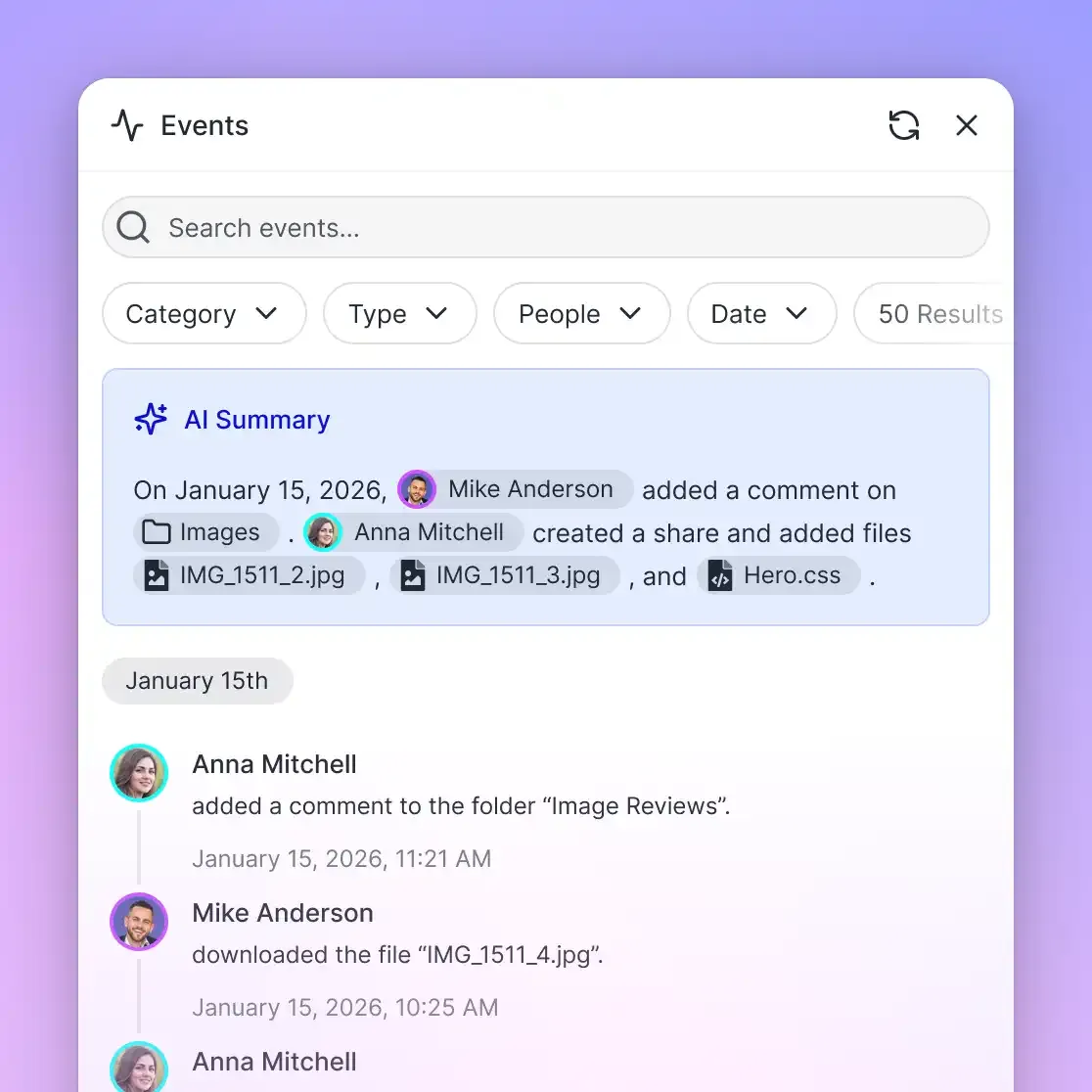
Audit Agent Activity Trust but verify. Use workspaces with detailed audit logs. Fast.io tracks every file action, so you can see exactly when an agent accessed a resume, moved a file, or shared a contract. This audit trail is essential for compliance and for troubleshooting any issues in the workflow.
Transparent Communication Be transparent with candidates. Inform them that AI is being used to assist in the screening process. Transparency builds trust and manages expectations. It also gives candidates the opportunity to format their applications in a way that is easily readable by both agents and humans.
Regular Performance Reviews for Agents Just like human employees, AI agents need performance reviews. Regularly audit the quality of the candidates the agent is selecting. Is the agent consistently missing good candidates? Is it biased against certain formats? Refine the prompts and logic based on your findings.
Frequently Asked Questions
Can AI agents conduct interviews?
Yes, AI agents can conduct preliminary screening interviews via text or voice to verify basic qualifications, availability, and salary expectations. However, in-depth cultural fit and technical interviews are still best conducted by human hiring managers to ensure a complete assessment of soft skills.
How do AI agents reduce hiring costs?
AI agents reduce hiring costs by automating manual tasks that take up recruiter time, such as screening resumes and scheduling. This allows recruiting teams to operate more efficiently and lowers the cost-per-hire by reducing the hours spent on administrative work. Faster hiring also cuts vacancy costs.
Is AI recruiting software expensive?
It varies, but cost-effective options exist. Fast.io offers a free agent tier with multiple of storage and multiple monthly credits, allowing teams to build and test recruiting agents without upfront software costs or credit card requirements. This makes it accessible for small teams and startups.
How does AI handle candidate data privacy?
Secure AI platforms like Fast.io use encryption and granular permissions to protect candidate data. Agents operate within defined workspaces, ensuring they only access files relevant to the specific search or candidate they are processing. Audit logs track every access event for compliance.
What happens if an AI agent rejects a good candidate?
This is why 'human in the loop' is critical. Agents should be configured to rank candidates rather than auto-rejecting them, or to flag 'maybe' candidates for human review. Regular auditing of the agent's decisions helps refine its criteria to prevent false negatives.
Do I need to be a developer to use HR agents?
Not necessarily. While some custom agents require coding, platforms like OpenClaw and Fast.io are making it easier to deploy agents using natural language instructions and pre-built tools. You can often configure an agent's behavior by writing a clear job description and a set of rules.
Related Resources

Automate Your Recruiting Workflow
Give your AI agents a workspace where they can manage resumes, contracts, and candidate files securely. Built for agent recruiting workflows.