How to Choose an AI Agent Framework: LangChain vs AutoGPT vs CrewAI
This AI agent framework comparison covers the biggest architectural decision developers face in 2026: choosing between LangChain, AutoGPT, and CrewAI. We break down their capabilities in autonomy, memory management, and file persistence to help you build scalable intelligent systems.

What Are the Leading AI Agent Frameworks in 2026? An AI Agent Framework Comparison
AI agent frameworks are development platforms that provide the scaffolding for building autonomous AI systems with tool use, memory, and planning capabilities. In the last year alone, the ecosystem has shifted from experimental scripts to reliable production environments.
Developers today primarily choose between three distinct philosophies: the granular control of LangChain, the autonomous loops of AutoGPT, and the role-based orchestration of CrewAI. While LangChain remains the Swiss Army knife for custom pipelines with over 75,000 GitHub stars, newer entrants have carved out massive niches by solving specific orchestration headaches.
According to GitHub data, AutoGPT has spawned over 400 forks, indicating a massive community drive to customize its autonomous loop architecture. Meanwhile, CrewAI has seen explosive growth by simplifying the complexity of multi-agent systems into manageable "crews" of specialized roles.
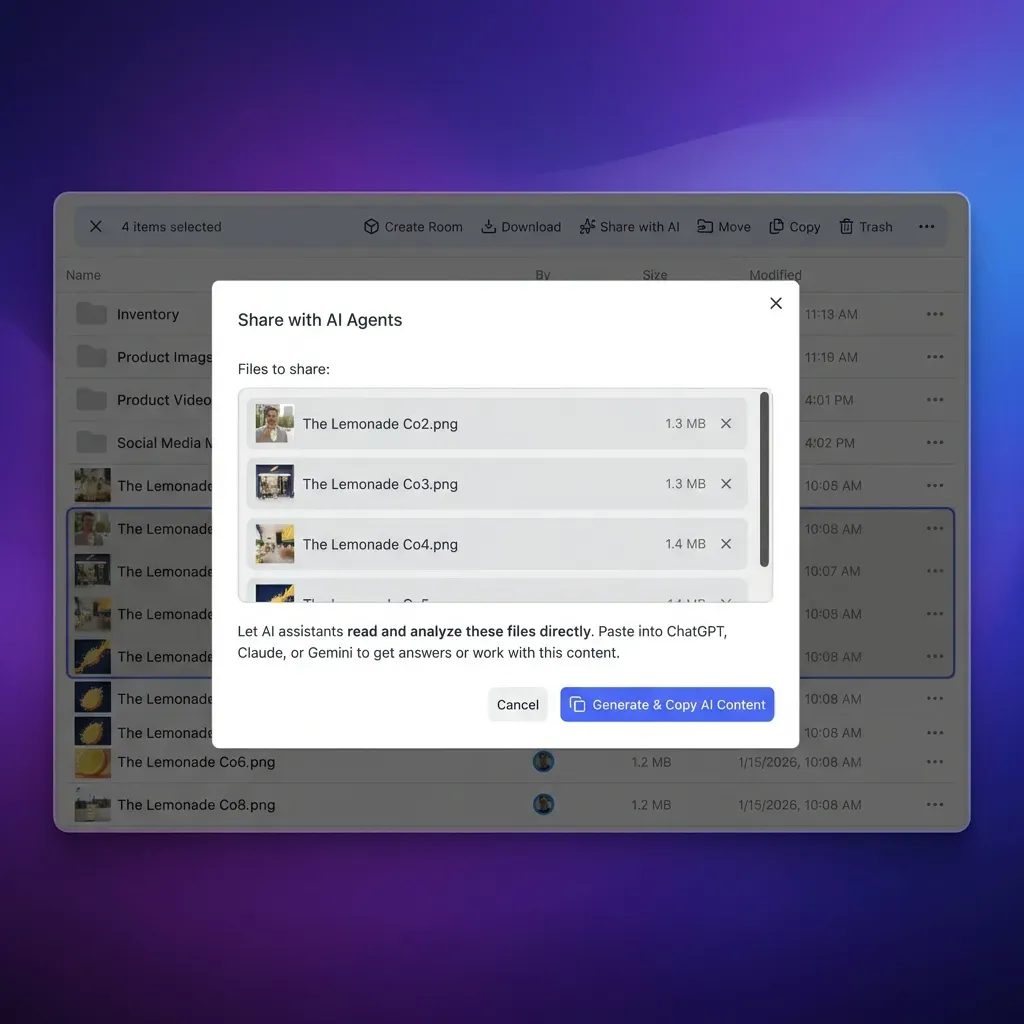
How Do LangChain, AutoGPT, and CrewAI Compare?
To make an informed decision, it is essential to understand how these frameworks differ in their core architectural approach.
Verdict: LangChain wins on flexibility, CrewAI on ease of coordination, and AutoGPT on raw autonomy.
LangChain: The Architect's Choice
LangChain is less of a rigid framework and more of a comprehensive library of primitives. It allows developers to "chain" together prompts, models, and tools with extreme precision. Its newest evolution, LangGraph, enables the creation of cyclical graphs that define complex agent behaviors.
Pros:
- Unmatched Flexibility: You control every prompt, retry strategy, and context window.
- Ecosystem: Works with most major vector databases (Pinecone, Milvus, Chroma) and LLM providers.
- Production Ready: Features like LangSmith provide essential observability and debugging.
Cons:
- Complexity: The "glue code" required to build a simple agent can be substantial.
- Boilerplate: Requires significant setup for memory persistence and state management.
AutoGPT: The Autonomous Goal-Seeker
AutoGPT aims for full autonomy. You give it a high-level goal, such as "Research the best coffee machines and write a blog post," and it spins up a recursive loop of thoughts, plans, and actions to achieve it. It excels at breaking down abstract objectives into executable sub-tasks.
Pros:
- Goal-Oriented: Requires minimal human input once the objective is set.
- Browser Native: Strong built-in capabilities for web browsing and file collection.
- Memory: Sophisticated management of context using vector stores to prevent loops.
Cons:
- Stability: Can get stuck in recursive loops or "hallucination spirals."
- Docker Complexity: accessing files generated inside its Docker container remains a friction point for retrieval.
CrewAI: The Team Orchestrator
CrewAI abstracts complexity by modeling agents as employees. You define a "Researcher," a "Writer," and a "Manager," give them tools, and CrewAI handles the delegation and task handoffs. This approach has resonated deeply with developers, driving a 280% increase in adoption in 2025.
Pros:
- Intuitive Abstraction: Thinking in terms of "roles" matches how humans solve problems.
- Structured Delegation: Built-in patterns for hierarchical and sequential task execution.
- Rapid Prototyping: You can spin up a working multi-agent system in under 50 lines of code.
Cons:
- Rigidity: Less fine-grained control over the exact prompt chain compared to LangChain.
- Overhead: Spinning up multiple agents for simple tasks can be overkill.
How Do You Handle Storage and File Persistence?
While these frameworks solve the compute part of AI agents, they often neglect the storage layer. When an AutoGPT agent writes a report or a CrewAI analyst generates a spreadsheet, where does that file go?
Typically, it lands in a local Docker container (ephemeral and hard to access) or requires complex AWS S3 integration logic. This creates a "silo" problem where human team members cannot easily view, edit, or approve the work their agents produce.
The Fast.io Solution Fast.io acts as the shared file system for human-agent teams. By mounting a Fast.io workspace, your agents can read and write files that instantly appear on your desktop and in the web UI.
- Universal Access: Agents write to a local folder; humans see it instantly on the web.
- Intelligence Mode: Any file an agent saves is automatically indexed for RAG.
- 251 MCP Tools: Connect your agents via the Model Context Protocol without writing custom API wrappers.
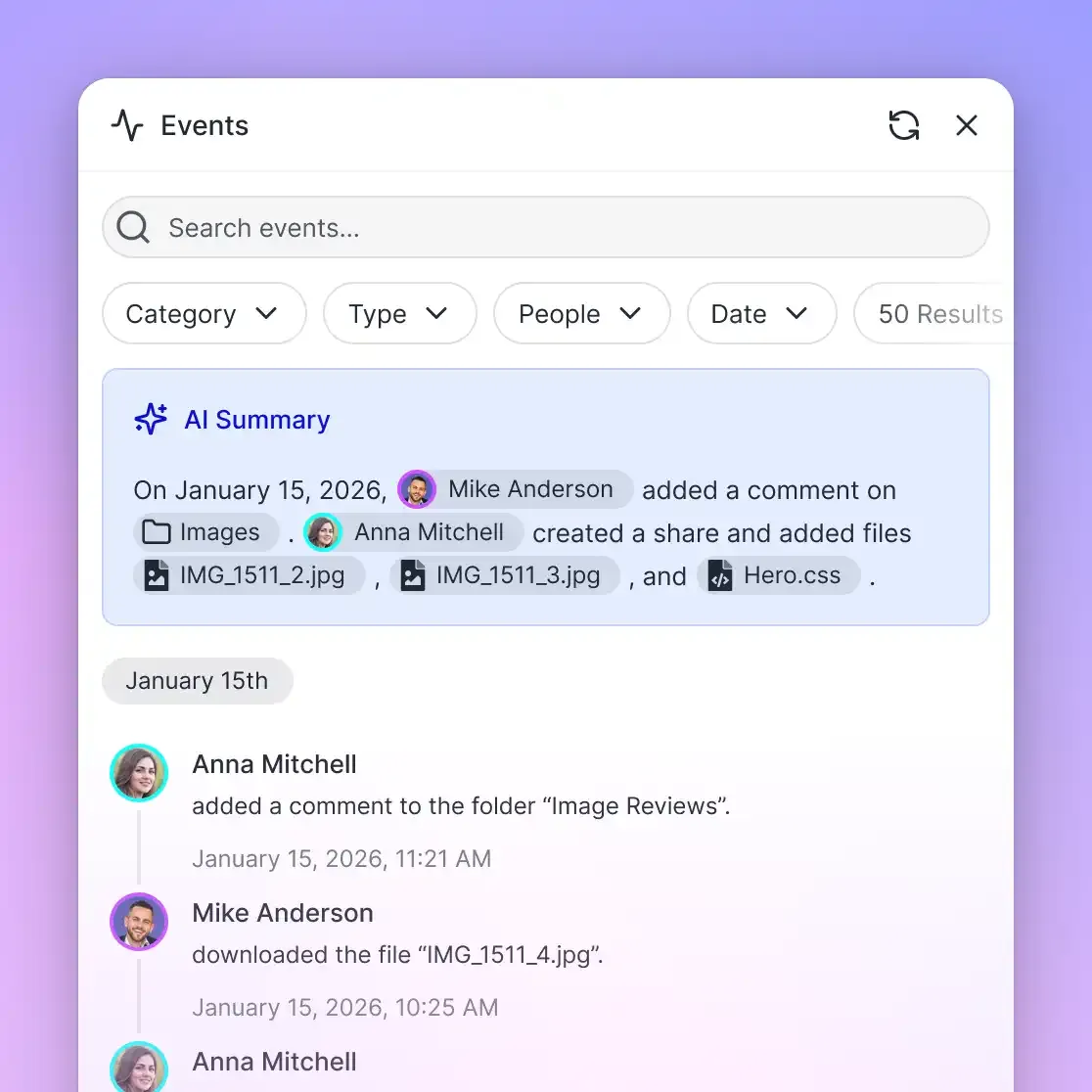


Give Your AI Agents Persistent Storage
Stop trapping agent outputs in Docker containers. Fast.io provides a free, persistent filesystem where agents and humans collaborate seamlessly.
Which AI Agent Framework Should You Choose?
Your choice of framework depends on the nature of the work you need to automate.
Choose LangChain if: You are building a vertical SaaS application or a highly specialized internal tool where you need to control every token and transition.
Choose AutoGPT if: You need an agent to perform open-ended research or exploration where the path to the solution is unknown.
Choose CrewAI if: You have a complex process that is already defined by human roles (e.g., "Research → Draft → Edit") and you want to automate that specific workflow.
Regardless of the framework, ensure your data layer is reliable. Agents that cannot persist their work or share it with humans are merely expensive toys.
Frequently Asked Questions
Which AI agent framework is best for beginners?
CrewAI is widely considered the best entry point for beginners. Its high-level abstractions allow you to define agents as 'roles' (like Researcher or Writer), which is more intuitive than managing the complex prompt chains required by LangChain.
Can I use multiple frameworks together?
Yes, it is common to use LangChain tools within a CrewAI agent. Since CrewAI is built on top of LangChain primitives, you can often use LangChain's vast ecosystem of tools and document loaders while using CrewAI's superior orchestration layer.
How do I handle file storage for AI agents?
Most frameworks default to local disk storage, which is problematic for cloud deployments. Fast.io provides a unified storage layer where agents can write files using standard I/O or MCP tools, and those files effectively become cloud-native assets instantly accessible to human teams.
Is AutoGPT free to use?
AutoGPT is open-source software and free to download. However, running it requires an API key from an LLM provider (like OpenAI or Anthropic), so you will pay for the token usage, which can be significant for long-running autonomous loops.
What is the difference between LangChain and LangGraph?
LangChain is the library of building blocks (prompts, models, tools). LangGraph is an extension specifically designed for building stateful, multi-actor applications by modeling agent behaviors as a cyclical graph, enabling better loops and persistence.
Related Resources

Give Your AI Agents Persistent Storage
Stop trapping agent outputs in Docker containers. Fast.io provides a free, persistent filesystem where agents and humans collaborate seamlessly.