How to Manage AI Agent Background Processing Files
Background processing enables AI agents to handle long-running tasks asynchronously, storing intermediate results and final outputs for later retrieval. By decoupling execution from ingestion, agents can process massive datasets without blocking. This guide explores architecture patterns for reliable async agent workflows.
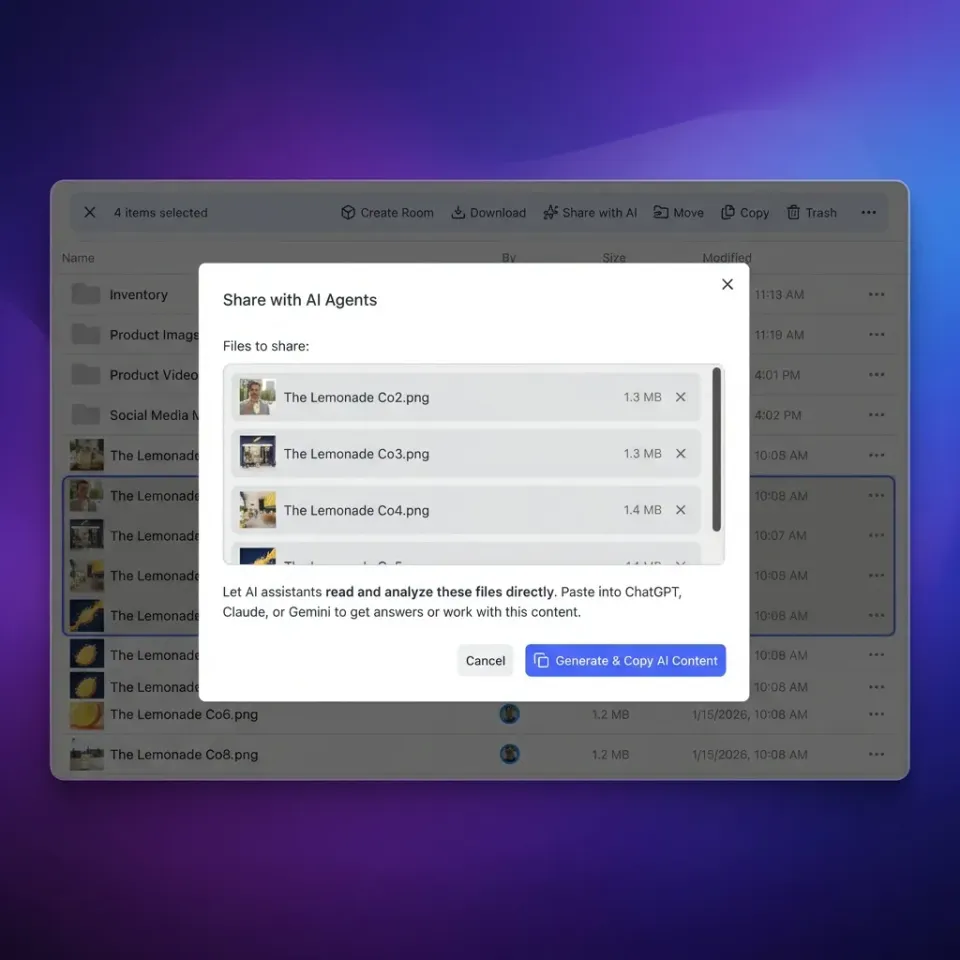
Why Do AI Agents Need Background Processing?
Real-time processing works for chat, but fails for heavy workloads. When an AI agent needs to analyze large video files, generate embeddings for document collections, or perform multi-step reasoning, blocking the main thread is a disaster. Background processing moves these heavy lifts to asynchronous workers.
Production AI agents rely on background processing to handle complex workflows. This architecture prevents timeouts, improves user experience, and allows for efficient resource utilization. Instead of keeping a connection open for minutes, the agent accepts the job, returns a job ID, and processes it in the background. Common use cases include batch document processing, video transcription pipelines, model fine-tuning jobs, and large-scale data transformations. These operations often run for minutes or hours, making them unsuitable for synchronous APIs. Background processing lets your agent remain responsive while handling demanding workloads behind the scenes. For a deeper look at how agents manage state between runs, see the agent state checkpointing guide.
How to Architect Async Processing for AI Agents
Effective background processing relies on three components: a job queue, a worker pool, and durable storage. The queue (like Redis or Amazon SQS) holds pending tasks. The workers pull tasks and execute them. Durable storage (like Fast.io) holds the input files, intermediate states, and final results.
The Token-Bucket Pattern For agents consuming paid APIs, background processing allows rate limiting. Workers pull jobs only when tokens are available, preventing "429 Too Many Requests" errors. This is especially important for LLM API calls where rate limits are strict and overshoot leads to cascading failures.
The Fan-Out/Fan-In Pattern For large files, an agent can "fan out" by splitting a file into chunks, processing them in parallel workers, and then "fanning in" to aggregate the results. This parallelization is where async processing shines. For example, a large dataset split across multiple workers can complete faster than a single worker processing it sequentially.

How to Use Fast.io for Durable State and Storage
In a background processing architecture, the filesystem acts as the shared brain. Workers need a place to grab inputs and dump outputs that is accessible to all other workers and the user. Fast.io provides this layer with a global namespace and immediate consistency. You can set up a free agent workspace in under a minute with the MCP integration.
Input Handling Agents accept a URL or file upload. Fast.io instantly indexes this file. The job queue receives a reference with the job ID and file path.
Intermediate State
Long-running jobs should save progress. If an agent crashes partway through a task, it shouldn't restart from zero. Agents can write checkpoint.json to Fast.io, allowing a retry worker to resume exactly where the previous one left off. This pattern is sometimes called "durable execution" and is critical for jobs that take longer than a few minutes.
Final Output & Webhooks Once processing is complete, the agent writes the result to an output folder. Fast.io's webhooks can then trigger a notification to the user or kick off the next stage in the pipeline.


Run Manage AI Agent Background Processing Files workflows on Fast.io
Give your background workers a shared, durable filesystem. 50GB free storage, instant indexing, and 251+ MCP tools.
How to Handle Failures and Retries in Agent Jobs
Background jobs fail. API limits are hit, containers crash, and logic errors occur. A reliable system must handle these gracefully. The goal is to build a pipeline that recovers automatically from transient errors and escalates permanent failures to a human operator.
Dead Letter Queues (DLQ) After multiple failed attempts, move jobs to a DLQ for human inspection. Do not let a "poison pill" job clog your worker forever. Monitor your DLQ length as a key health metric for your agent system.
Idempotency Ensure that running the same job twice doesn't break things. If an agent writes an output file, it should overwrite or version it, not append to it blindly. Fast.io's file versioning supports this naturally, keeping a history of every write.
Exponential Backoff When retrying failed jobs, use exponential backoff to avoid overwhelming downstream services. Start with a 1-second delay, then 2 seconds, then 4, doubling each time up to a maximum. This prevents a thundering herd when a service comes back online.
Circuit Breakers If a downstream API is consistently failing, stop sending it requests temporarily. Open the circuit and fail fast instead of wasting resources on doomed retries. Close the circuit after a cooldown period to test if the service has recovered. Libraries like Polly (C#) or resilience4j (Java) make this straightforward to implement.

Security and Isolation in Background Jobs
Background workers often run with elevated privileges or access to sensitive data. Getting security right is non-negotiable, especially when agents handle customer files or regulated content.
Ephemeral Containers Spin up a fresh container for each job. This prevents data leakage between tenants and ensures a clean environment for every run. Container technologies make ephemeral execution practical at scale.
Least Privilege Storage Give workers access only to the specific folder required for the job. Fast.io's granular permissions system lets you generate a temporary token scoped to a single path for a single worker. When the job completes, the token expires automatically.
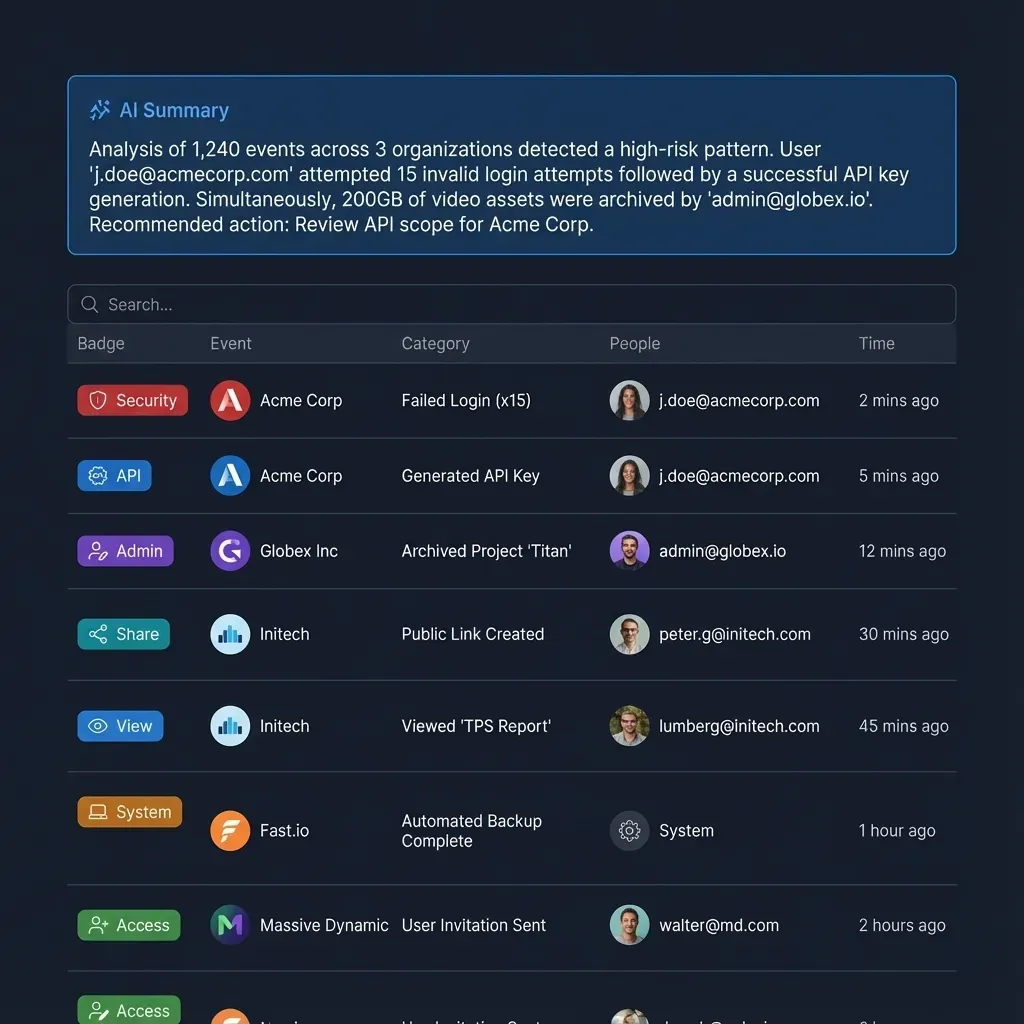
Audit Trails Log every file access. Who read the input? Who wrote the output? Fast.io's audit logs provide a complete chain of custody for every background operation, essential for compliance in enterprise deployments. See the agent audit trail guide for implementation details.
Frequently Asked Questions
What is the difference between synchronous and asynchronous processing?
Synchronous processing blocks the client until the task is finished, suitable for quick actions. Asynchronous processing returns immediately with a job ID, handling the work in the background, which is essential for long-running AI tasks.
How do I handle large file uploads for background agents?
Don't stream large files through your API server. Use signed URLs to let clients upload directly to storage (like Fast.io). Your API should only receive the file path to queue the job.
What happens if a background worker crashes?
Reliable systems use a claim-check pattern. If a worker stops sending heartbeats or fails to acknowledge the job within a timeout, the queue makes the job visible to other workers for a retry.
Can I use Fast.io for temporary scratch space?
Yes. Fast.io is ideal for scratch space because it supports standard filesystem protocols. Agents can mount it or use the API to read/write temporary files, which are immediately visible to other agents for debugging or pipelining.
How do I notify users when a background job is done?
Use webhooks or polling. When the agent writes the final output file, a Fast.io webhook can fire an event to your application server, which then pushes a notification to the user.
Related Resources

Run Manage AI Agent Background Processing Files workflows on Fast.io
Give your background workers a shared, durable filesystem. 50GB free storage, instant indexing, and 251+ MCP tools.