How to Set Up a Staging Environment for AI Agents
Agent staging environments create isolated pre-production spaces where you can test AI agents with production-like data before deploying them to real users. This guide covers the full setup process, from environment isolation and RAG data refresh to tool mocking and prompt versioning, with a checklist you can follow for each deployment.
What Is an Agent Staging Environment?
An agent staging environment is an isolated pre-production copy of your agent's runtime where you validate behavior against production-like data before releasing to real users. It sits between development (where you build and debug) and production (where users interact with your agent).
Traditional software staging focuses on API contracts, database migrations, and load testing. Agent staging adds three requirements that standard DevOps guides rarely cover:
- RAG data refresh: Your agent's retrieval-augmented generation pipeline needs current, representative documents to test against
- Tool mocking: External tool calls (file uploads, API requests, database writes) need sandboxed equivalents that behave like production without causing side effects
- Prompt versioning: Changes to system prompts, few-shot examples, and chain-of-thought instructions need controlled rollout and A/B comparison
According to Google Cloud's Agent Starter Pack documentation, staging CD pipelines are triggered on merge to the main branch, build the application container, deploy to a staging environment, and run automated load testing before promotion to production.
Without a proper staging environment, prompt changes that look fine in development can produce wildly different results when they hit real-world data at scale.

Why Standard DevOps Staging Falls Short for Agents
If you already run staging environments for web apps or APIs, you might assume the same setup works for agents. It does not. Here is what breaks.
Non-Deterministic Outputs
Traditional software produces the same output for the same input. Agents do not. The same prompt can generate different responses across runs due to temperature settings, model updates, and context window variations. Your staging environment needs evaluation tools that measure output quality across multiple runs, not just pass/fail assertions.
Tool Side Effects
A web app staging environment typically uses a test database and mock payment processor. Agents interact with dozens of tools: file systems, search APIs, code execution environments, email services, and workspace platforms. Each tool needs its own staging equivalent. An agent that uploads files to Fast.io workspaces in production should upload to a separate staging workspace during testing, not the same one your clients use.
Context Window Dependencies
Agents behave differently depending on what is in their context window. A staging environment that does not replicate production's RAG corpus, conversation history patterns, and tool response formats will miss entire categories of bugs. The agent might work perfectly with your 10-document test set and fail when it hits a 10,000-document production workspace.
Model Version Drift
LLM providers update models regularly. A staging environment pinned to one model version will not catch regressions when production switches to the next release. Your staging pipeline needs model version tracking and comparison testing across versions.
According to the n8n engineering blog's analysis of AI agent deployment practices, integration testing against live sandbox environments catches failures that API mocks miss, particularly when field renames or format changes corrupt agent reasoning across workflows.
Complete Staging Environment Checklist
Use this checklist to verify your staging environment covers all agent-specific requirements. Each item maps to a concrete infrastructure component.
Compute and Isolation
- Separate compute cluster for staging agents (not shared dev machines)
- Matching resource limits for CPU, memory, and GPU allocations to mirror production
- Network segmentation so staging agents cannot reach production databases or APIs
- Container parity with the same base images, runtime versions, and system libraries as production
Data and RAG Pipeline
- Production data snapshot on a weekly or daily schedule into staging RAG indexes
- PII scrubbing to strip personally identifiable information from staging data copies
- Index rebuild automation when new data snapshots arrive
- Embedding model parity between staging and production
Tool Configuration
- Sandboxed tool endpoints for every external tool (separate Fast.io workspaces, test Slack channels, staging databases)
- Response recording to capture tool responses during staging runs for regression comparison
- Rate limit simulation that mirrors production throttling behavior
- Error injection to randomly fail 5-10% of tool calls for testing retry and fallback logic
Prompt and Model Management
- Git-tracked prompts where system prompts, few-shot examples, and tool descriptions live in version control
- A/B prompt comparison to run the same test suite against two prompt versions and compare output quality
- Model version pinning to lock staging to a specific model version before promoting
- Temperature and parameter tracking alongside outputs
Evaluation and Gating
- Automated eval suite that runs on every staging deployment (accuracy, latency, cost)
- Human review queue to flag edge cases for manual inspection before production promotion
- Regression detection comparing staging outputs against a golden dataset
- Cost estimation tracking token usage in staging to project production costs


Need staging workspaces for your AI agents?
Fast.io gives teams shared workspaces, MCP tools, and searchable file context to run agent staging environment setup workflows with reliable agent and human handoffs.
Dev vs Staging vs Production for AI Agents
The most reliable agent deployment strategy uses three distinct environments, each with its own purpose and promotion criteria.
Development Environment
Purpose: Fast iteration on prompts, tools, and agent logic.
- Local or cloud-based, optimized for developer speed
- Uses synthetic test data (not production copies)
- All tool calls hit mocks or local simulators
- No access controls or audit logging required
- Developers can change prompts, test, and iterate in minutes
A typical dev setup runs the agent locally with a test runner that simulates file operations. For file storage testing, you can create a free Fast.io workspace with 50GB of storage and 251 MCP tools, giving your agent a real storage backend without affecting production data.
Staging Environment
Purpose: Validate agent behavior against production-like conditions.
- Mirrors production infrastructure (same containers, same network topology)
- Uses scrubbed production data snapshots for RAG
- External tools point to staging instances with real behavior (not mocks)
- Full audit logging and monitoring enabled
- Automated evaluation gates must pass before promotion
According to AIMultiple's 2026 deployment analysis, agents are typically deployed first in a test environment where latency, response quality, and runtime stability are verified alongside connections to data sources, models, and APIs.
Production Environment
Purpose: Serve real users with full monitoring and rollback capability.
- Canary deployments start at 1-5% traffic with automatic rollback on error spikes
- Shadow mode runs new agent versions alongside existing ones to compare outputs before full cutover
- Complete observability with traces, metrics, cost tracking, and user feedback
- Incident response playbooks for common agent failure modes
The key gate between staging and production is your evaluation suite. Define minimum thresholds for accuracy, latency, and cost. If staging does not meet all three, the deployment does not promote.

Setting Up RAG Data Refresh for Staging
RAG data is where most staging environments fail. Developers set up compute, networking, and tool mocking correctly, then test against a stale 50-document corpus that looks nothing like production. Here is how to fix that.
Automated Data Snapshots
Build a pipeline that copies production documents into your staging RAG index on a schedule. Daily snapshots work well for most teams. The pipeline should:
- Export documents from your production workspace (Fast.io's URL Import can pull files from Google Drive, OneDrive, Box, and Dropbox without local I/O)
- Run PII detection and scrubbing on all text content
- Re-embed documents using the same model and chunk size as production
- Swap the staging RAG index atomically (no partial updates)
Intelligence Mode for Staging
If your production agent uses Fast.io's Intelligence Mode for RAG, your staging workspace should have Intelligence Mode enabled too. When you upload files to an Intelligence Mode workspace, they are automatically indexed for semantic search and AI chat. No separate vector database or embedding pipeline to manage.
Create a dedicated staging workspace, toggle Intelligence Mode on, and upload your scrubbed data snapshot. The workspace handles indexing, chunking, and retrieval automatically. Your staging agent queries the same RAG interface it will use in production.
Data Drift Detection
Track the statistical profile of your staging data against production. If production's document count grows by 40% but staging's snapshot is a month old, your tests are meaningless. Set up alerts when staging data diverges significantly from production's distribution.
Tool Mocking and Sandbox Configuration
Every external tool your agent calls needs a staging equivalent. The goal is behavioral fidelity: staging tools should respond like production tools, including realistic latency, error rates, and data formats.
Workspace and File Operations
For agents that manage files, set up a parallel set of workspaces in your storage platform. On Fast.io, you can create staging workspaces under a separate organization. The free agent tier gives you 50GB of storage, 5 workspaces, and 5,000 monthly credits at no cost. Your staging agent uses the same 251 MCP tools against different workspace IDs.
FASTIO_WORKSPACE_ID = "prod-workspace-id"   # production
FASTIO_WORKSPACE_ID = "staging-workspace-id" # staging
The agent code stays identical. Only the workspace ID changes between environments.
API and Service Mocking
For third-party APIs (Slack, email, CRM systems), use a mock server that records and replays responses:
- Record production API responses during a sampling window
- Sanitize responses to remove PII
- Replay recorded responses in staging, with configurable error injection
- Track response schema changes that could break agent logic
File Lock Testing
Multi-agent systems need to test concurrent file access. Fast.io's file lock API lets agents acquire and release locks to prevent conflicts. In staging, run multiple agent instances simultaneously against the same workspace to verify lock acquisition, timeout handling, and conflict resolution work correctly under load.
Cost Tracking
Staging should track costs per agent run so you can estimate production expenses. Log token usage, API calls, storage operations, and compute time. Compare staging costs against your production budget before promoting.
Prompt Versioning and Evaluation Gates
Prompt changes are the most common cause of agent regressions. A single word change in a system prompt can shift agent behavior across thousands of interactions. Treat prompts with the same rigor you apply to code deployments.
Git-Based Prompt Management
Store all prompts in version control alongside your agent code. Each prompt file gets its own commit history, review process, and rollback capability.
prompts/
  system/
    v1.2.0.md    # Current production prompt
    v1.3.0.md    # Candidate prompt in staging
  few-shot/
    examples.json
  tools/
    tool-descriptions.yaml
Tag prompt versions. When staging tests pass, promote the prompt version to production. When they fail, you know exactly which prompt change caused the regression.
Evidence and Benchmarks
Build an evaluation suite that runs automatically on every staging deployment. Include:
- Golden dataset tests: 50-100 input/output pairs with known-correct answers. Measure exact match and semantic similarity
- Edge case tests: Inputs that historically caused failures, adversarial prompts, and boundary conditions
- Latency benchmarks: P50, P95, and P99 response times. Reject deployments that exceed production baselines by more than 20%
- Cost checks: Token usage per request. Flag deployments where average cost per interaction increases by more than 15%
- Safety checks: Run content policy evaluations on a sample of staging outputs
Promotion Criteria
Define explicit gates. For example:
- Golden dataset accuracy above 92%
- P95 latency under 4 seconds
- No safety policy violations in 1,000 test runs
- Average cost per interaction within 15% of current production
- At least one human reviewer has approved the staging outputs
Only promote to production when all gates pass. No exceptions, no manual overrides for "this one looks fine."
Monitoring and Rollback After Deployment
A staging environment is only as good as your ability to act on what it tells you. Even with thorough staging tests, production will surface issues that staging missed. Your monitoring and rollback strategy is the final safety net.
Production Monitoring
Track these metrics from the moment a new agent version hits production:
- Error rate: Percentage of interactions that produce errors, timeouts, or empty responses
- User satisfaction signals: Thumbs up/down ratings, conversation length, task completion rate
- Cost per interaction: Token usage, API calls, and storage operations per user session
- Latency distribution: Watch for tail latency spikes that indicate resource contention
- Tool failure rate: How often external tool calls fail compared to staging baselines
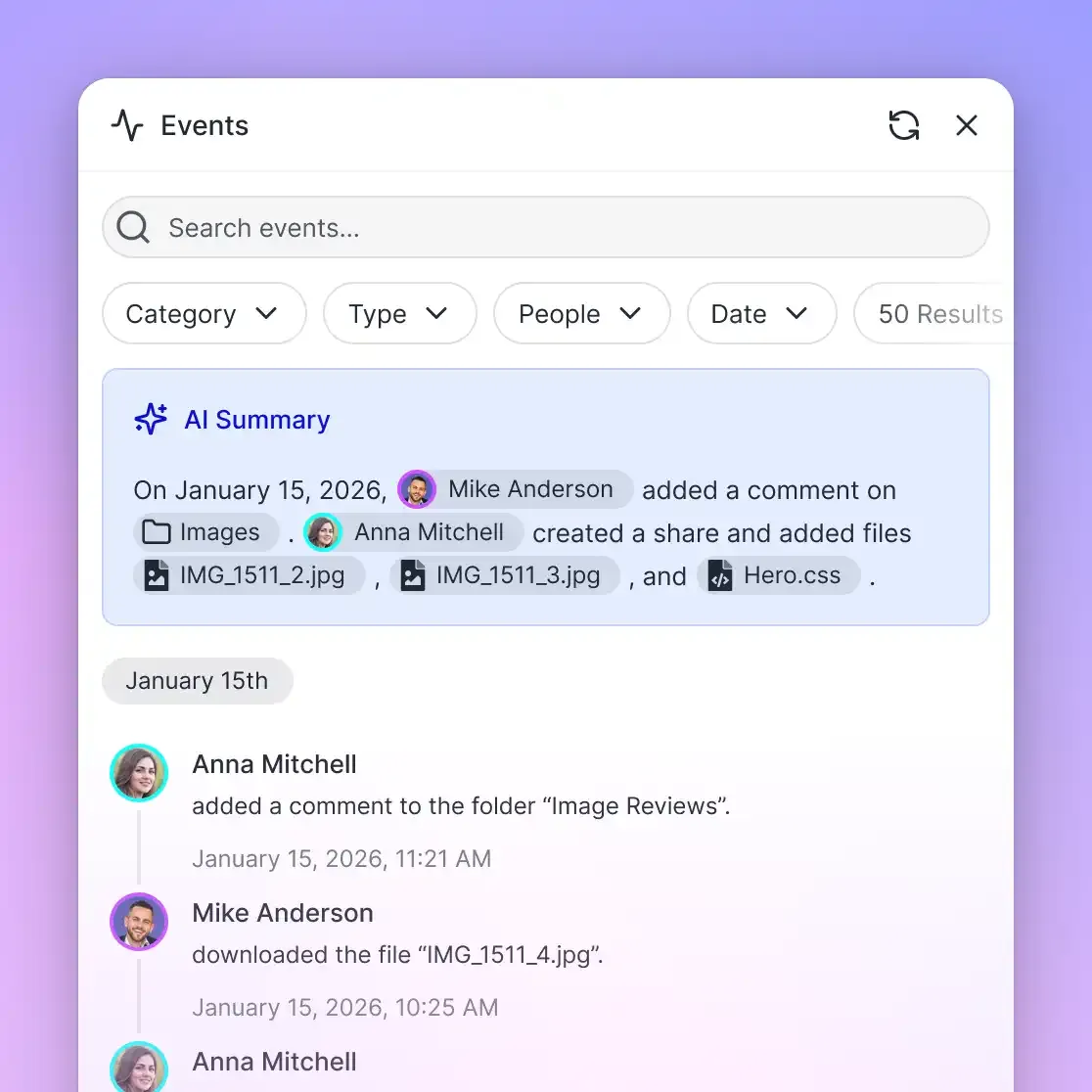
Fast.io's audit logging and activity tracking give you file-level visibility into what your agent accessed, modified, and shared. Use webhooks to trigger alerts when agent activity deviates from expected patterns.
Rollback Strategy
If production metrics degrade after a deployment, roll back immediately. Do not debug in production.
- Keep the previous agent version's containers tagged and ready to redeploy
- Roll back prompts by reverting to the previous tagged version in git
- If RAG data caused the issue, restore the previous staging data snapshot
- Document what went wrong and add the failure case to your staging evaluation suite
Each production incident should feed back into your staging tests, making the next deployment safer. Teams that maintain this feedback loop consistently report fewer production incidents within the first few months of adoption.
Frequently Asked Questions
How do I set up a staging environment for AI agents?
Start by cloning your production infrastructure into an isolated environment with separate compute, networking, and storage. Add agent-specific components: a scrubbed copy of your RAG data, sandboxed tool endpoints for every external service your agent calls, and git-tracked prompt versions. Run automated evaluation suites that test accuracy, latency, cost, and safety before promoting any changes to production.
What is the difference between dev, staging, and production for AI agents?
Development uses synthetic data and mock tools for fast iteration. Staging mirrors production infrastructure with scrubbed real data, real tool endpoints (pointed at staging instances), and full monitoring. Production serves real users with canary deployments, shadow testing, and automatic rollback triggers. The key agent-specific difference is RAG data: dev uses fake documents, staging uses scrubbed production snapshots, and production uses live data.
How often should I refresh RAG data in my staging environment?
Daily snapshots work well for most teams. If your production document corpus changes rapidly (dozens of new files per day), consider more frequent refreshes. Track document count, topic coverage, and average document length between environments, and set up alerts when they diverge by more than 20%.
What tools do I need for agent staging infrastructure?
You need container orchestration (Docker, Kubernetes), a CI/CD pipeline that triggers staging deployments on merge, a RAG index that can rebuild from data snapshots, mock servers for third-party APIs, an evaluation framework for output quality testing, and a workspace platform like Fast.io for sandboxed file operations. The free agent tier provides 50GB of storage and 251 MCP tools for staging workspaces.
How do I test prompt changes before deploying to production?
Store prompts in git with semantic versioning. When you change a prompt, deploy it to staging and run your evaluation suite against a golden dataset of 50-100 known-correct input/output pairs. Compare accuracy, latency, and cost metrics against the current production prompt version. Only promote when all automated gates pass and at least one human reviewer has approved the outputs.
What causes most AI agent production failures?
Prompt regressions and RAG data drift are the two most common causes. A minor prompt change can shift behavior across thousands of interactions. Stale staging data means your tests pass against documents that no longer represent production. Tool API changes like field renames and format updates are the third most common cause, which is why staging tools should use real endpoints, not static mocks.
Related Resources

Need staging workspaces for your AI agents?
Fast.io gives teams shared workspaces, MCP tools, and searchable file context to run agent staging environment setup workflows with reliable agent and human handoffs.