How to Migrate AI Agent File Storage: The Complete Guide
Agent file storage migration moves AI agent data, outputs, and workspaces between storage systems without disrupting production workflows. This guide provides a complete five-phase migration plan with rollback strategies for AI agent systems requiring persistent state. Most teams migrate storage within their first year, with migrations typically taking several weeks for production systems.
What Is Agent File Storage Migration?
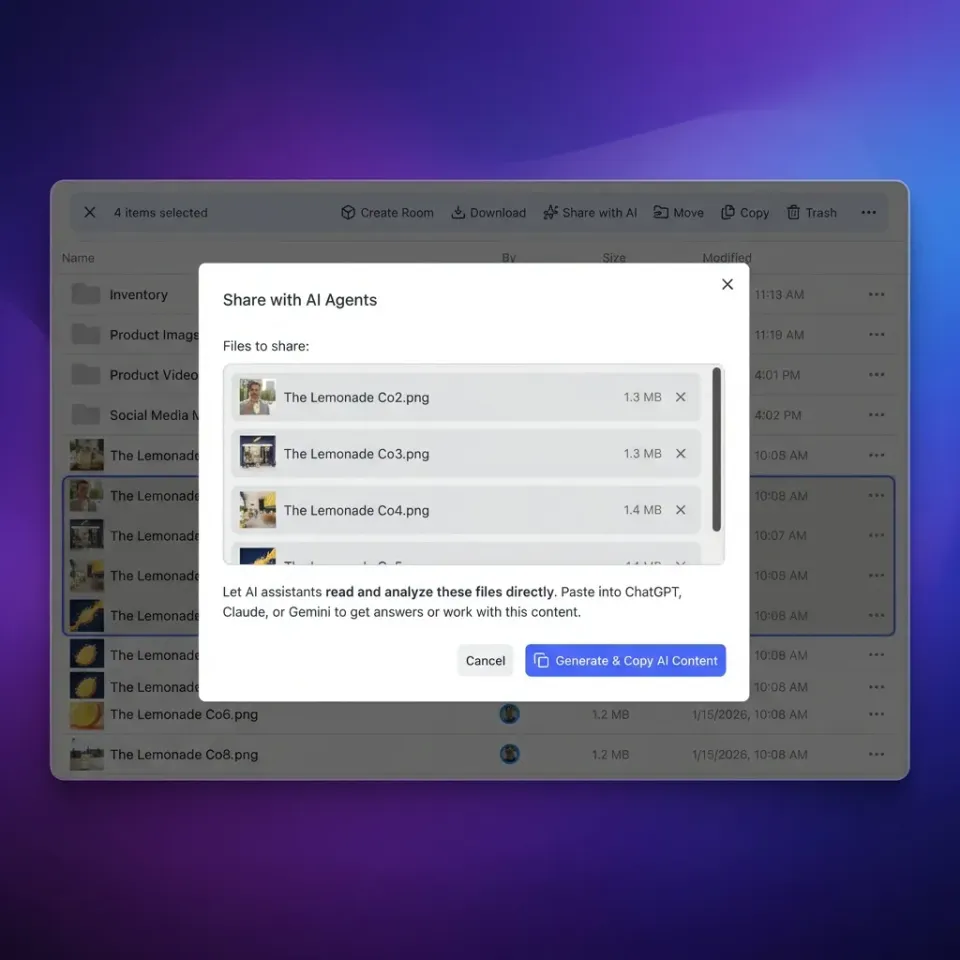
Agent file storage migration is the process of moving AI agent data, outputs, and workspaces from one storage system to another without disrupting production workflows. Unlike traditional file migration, agent storage transitions must preserve ongoing state, maintain access patterns for active agents, and ensure zero-downtime cutover.
AI agents generate and consume files continuously. They write logs, cache results, store conversation history, and maintain persistent memory. When you migrate an agent's storage backend, you're not just moving files. You're transferring an active workspace that may contain:
- Active workspace files currently being processed
- Agent memory and state including conversation history and cached embeddings
- Configuration files that define agent behavior and permissions
- Output artifacts generated by the agent over time
- Index data for RAG and semantic search systems
The challenge compounds when multiple agents share workspaces or when agents run on schedules. A poorly planned migration can corrupt state, break agent chains, or cause agents to restart from scratch, losing accumulated knowledge.
Why Teams Migrate Agent Storage
Understanding why migrations happen helps you plan for them proactively rather than reactively.
Capacity limitations drive many early migrations. Initial storage choices often underestimate growth. An agent processing thousands of documents daily can accumulate gigabytes of embeddings and outputs quickly. When you hit provider limits or cost thresholds, migration becomes necessary.
Cost optimization prompts storage switches as usage patterns clarify. What seemed economical at small scale becomes expensive at production volume. Teams discover that usage-based pricing models can reduce costs compared to per-seat alternatives. Learn more about cost-effective storage for AI agents.
Feature requirements emerge as agent workflows mature. Early storage solutions may lack critical capabilities like built-in RAG, semantic search, or MCP tool integration. Teams outgrow basic file APIs and need intelligent workspaces where files are automatically indexed and queryable. See how Intelligence Mode enables automatic indexing.
Performance bottlenecks appear under load. Storage systems that handled prototype traffic struggle with production concurrency. Latency spikes during peak usage, rate limiting, or throughput caps force migrations to more scalable backends.
Vendor consolidation simplifies architecture. Teams often start with separate storage for different agents, then realize the operational overhead of multiple systems. Consolidating onto a single platform with unified permissions and monitoring reduces complexity.
Pre-Migration Assessment and Planning
Before moving a single file, you need complete visibility into what you're migrating. This assessment phase prevents surprises during cutover and informs your rollback strategy.
Inventory all agent storage. Document every file, folder, and workspace your agents use. Include metadata like file sizes, access patterns, and which agents read or write each location. Tools like rclone or cloud provider APIs can automate this inventory.
Map dependencies between agents. Identify which agents share workspaces, read each other's outputs, or depend on specific directory structures. A migration that breaks these links can cascade into system-wide failures.
Classify data by criticality. Not all agent files need the same migration treatment. See our guide on intelligent workspace organization for strategies on categorizing agent files:
- Hot data: Active workspaces where agents write continuously
- Warm data: Recent outputs agents may reference
- Cold data: Historical archives accessed rarely
Measure current performance. Baseline your existing storage's latency, throughput, and reliability. These metrics validate the new system's performance and help detect issues post-migration.
Define success criteria. Establish specific, measurable goals for the migration: maximum acceptable downtime, performance improvements, cost reductions, or feature enablement. These criteria guide go/no-go decisions at each phase.


Start with agent file storage migration guide on Fast.io
Fast.io provides intelligent workspaces with built-in RAG, 251 MCP tools, and seamless migration paths. Get 50GB free storage for your agents with no credit card required.
Infrastructure Setup
The first phase establishes your destination environment without touching production agents. This parallel setup ensures everything works before you commit to the migration.
Provision the new storage system. Create workspaces, set permissions, and configure any required features like Intelligence Mode for RAG or webhook endpoints for reactive workflows. Match your source organization's structure to minimize reconfiguration later.
Configure agent access credentials. Set up API keys, MCP server connections, or OAuth for your agents to authenticate with the new storage. Test authentication independently before attempting data transfer.
Establish network connectivity. Verify that your agents can reach the new storage endpoints. Check firewall rules, VPC peering, or proxy configurations that might block access.
Set up monitoring and logging. Instrument the new environment to capture the same metrics you baseline from your current system. You'll need these to validate performance post-migration.
Document the rollback path. Before proceeding, know exactly how to revert to the current system. This includes keeping old credentials active, maintaining the ability to redirect agent configurations, and understanding how long the old storage remains accessible.
Data Migration
With infrastructure ready, you begin moving files. The approach varies based on data volume, agent activity patterns, and your tolerance for synchronization lag.
Initial bulk transfer. Move cold and warm data first using efficient transfer tools. Cloud-native solutions like AWS DataSync, Azure AzCopy, or GCP Storage Transfer Service handle large volumes with integrity checks. For agent-specific data, custom scripts using the new storage's API may offer better control.
Incremental synchronization. Set up continuous sync for hot data that changes during migration. Tools like rclone with --track-renames or cloud provider replication features keep the destination current without stopping agents.
Handle large files carefully. Agent outputs can include multi-gigabyte model checkpoints, video files, or dataset archives. Use chunked uploads (Fast.io supports files up to 1GB via chunked transfer) and verify checksums to ensure integrity.
Preserve metadata. File timestamps, permissions, and custom metadata must transfer accurately. Agents may rely on modification times for cache invalidation or use metadata tags for routing logic.
Validate transferred data. Run checksum comparisons between source and destination. Spot-check files by attempting reads through the new storage's API to confirm accessibility.
Agent Configuration Update
This phase transitions agents from reading old storage to reading new storage. Done correctly, agents experience only a brief restart or reconnection, not a full state reset.
Update environment variables. Modify agent configuration to point to the new storage endpoints. This might involve changing API base URLs, updating MCP server connections, or swapping credential sets.
Migrate agent state files. Transfer any persisted state like conversation history, cached embeddings, or checkpoint files. These files often live outside the main data directories and require explicit handling.
Test agent connectivity. Before cutting over production traffic, run agents in a staging or read-only mode against the new storage. Verify they can read existing files, write new outputs, and access required features.
Coordinate the cutover. For agents that can tolerate brief restarts, restart them with new configuration. For always-on agents, use blue-green deployment or rolling restarts to maintain availability.
Monitor for errors. Watch agent logs immediately after cutover. Common issues include authentication failures, path mismatches, or missing permissions on the new storage.
Validation and Testing
Post-migration validation confirms that agents function correctly and that no data was lost or corrupted during transfer.
Verify agent functionality. Run agents through their complete workflows. Check that they can read historical data, write new outputs, and interact with other agents or systems as expected.
Validate RAG and search indexes. If your agents use semantic search or RAG, verify that indexes transferred correctly. Run test queries and compare results against the old system. Index regeneration may be necessary if vector embeddings use provider-specific models.
Check workspace permissions. Confirm that agents have appropriate access levels. Shared workspaces should maintain the same collaboration patterns, and external shares should remain accessible to authorized users.
Measure performance against baselines. Compare latency, throughput, and error rates to your pre-migration measurements. Performance should meet or exceed the old system.
Test rollback procedures. Actually attempt a partial rollback on non-critical agents. This confirms your rollback plan works before you need it in an emergency.
Cleanup and Optimization
After successful validation, you complete the migration by removing temporary infrastructure and optimizing the new environment.
Decommission old storage. Once you're confident the migration succeeded, disable or delete the old storage resources. This prevents agents from accidentally reverting and reduces costs from maintaining duplicate systems.
Update documentation. Reflect the new storage architecture in your runbooks, agent configuration docs, and onboarding materials. Future team members should never know there was an old system.
Optimize for the new platform. Take advantage of features your new storage offers. Enable Intelligence Mode for RAG, configure webhooks for reactive workflows, or set up branded client portals for external shares.
Archive migration artifacts. Keep logs, scripts, and documentation from the migration for future reference. These become valuable templates if you migrate again or help other teams with similar transitions.
Conduct a retrospective. Document lessons learned, unexpected challenges, and what you would do differently. This institutional knowledge improves future migrations.
Rollback Strategies for Every Phase
Every migration phase needs a corresponding rollback plan. Knowing when and how to revert prevents minor issues from becoming major outages.
Infrastructure rollback: If infrastructure setup fails, deprovision the new resources and continue using the existing system. No agents are affected.
Data transfer rollback: Stop the data migration and delete partial transfers. Agents remain on the old storage throughout this phase, so rollback is trivial.
Configuration rollback: This is the highest-risk phase. If agents fail to connect to new storage, immediately revert their configuration to point back to the old system. Keep old credentials active until you're confident the migration succeeded.
Validation rollback: If validation reveals critical issues, revert agent configurations to the old storage. You may need to re-sync any data written to the new storage back to the old system if agents need access to recent outputs.
Post-cleanup rollback: Once old storage is decommissioned, rollback requires restoring from backups or re-migrating from archived data. This is the point of no return, which is why thorough validation is critical.
Rollback triggers: Define specific conditions that trigger automatic rollback: error rates exceeding thresholds, agent crashes, data integrity failures, or performance degradation beyond acceptable limits.
Zero-Downtime Migration Techniques
Production agent systems often cannot tolerate any downtime. These techniques minimize or eliminate disruption during migration.
Dual-write pattern: Configure agents to write to both old and new storage simultaneously. After a stabilization period, switch reads to the new storage, then disable writes to the old system. This ensures no data loss and allows instant rollback by switching reads back. See our AI agent file storage overview for more on dual-write architectures.
Blue-green deployment: Run duplicate agent instances, one connected to old storage (blue) and one to new (green). Use a load balancer or DNS to route traffic between them. Start by routing a small fraction of traffic to green, gradually increasing as you verify stability.
Read-replica migration: Set up the new storage as a read replica of the old system. Agents read from the new storage while still writing to the old. Once you're confident, switch writes to the new system and remove the replica relationship.
Feature flag control: Implement feature flags that control which storage backend each agent uses. This allows granular migration (one agent at a time) and instant rollback by toggling flags. For more on managing agent state across backends, see our guide on agent state management.
Scheduled maintenance windows: For agents that can tolerate brief pauses, use scheduled downtime during low-activity periods. Document the maintenance window, pause agent schedules, perform the migration, and resume operations.
Circuit breaker pattern: Implement circuit breakers that automatically fall back to old storage if the new system shows errors. This provides automatic rollback for transient issues while allowing manual investigation.
Common Migration Challenges and Solutions
Even well-planned migrations encounter issues. Here are the most common problems and how to solve them.
Path structure differences between storage systems break agent file references. Solution: Use symlink compatibility layers or update agent code to handle new path conventions. Test all file access patterns before cutover.
Rate limiting during bulk transfers slows migration. Solution: Implement exponential backoff in your transfer scripts, use multipart uploads for large files, and consider off-peak migration windows.
Authentication complexity when moving between credential systems. Solution: Maintain parallel authentication during transition. Fast.io's agent tier allows agents to authenticate like human users with no credit card required, simplifying credential management.
RAG index incompatibility when vector embeddings use different models or dimensions. Solution: Plan for index regeneration time. Enable Intelligence Mode on the destination workspace before cutover so files are indexed as they arrive.
Agent state inconsistency when some agents migrate before others. Solution: Migrate agents in dependency order, starting with data producers and ending with consumers. Use feature flags to control which storage each agent uses.
Missing MCP tools if the new storage has different capabilities. Solution: Audit your agents' tool usage before migration. Fast.io provides 251 MCP tools covering all major file operations, but verify your specific use cases are supported.
Cost surprises from unexpected data transfer fees. Solution: Calculate egress costs from your current provider and ingress costs at the destination. Many providers offer free ingress or migration credits.
Security and Permissions During Transfer
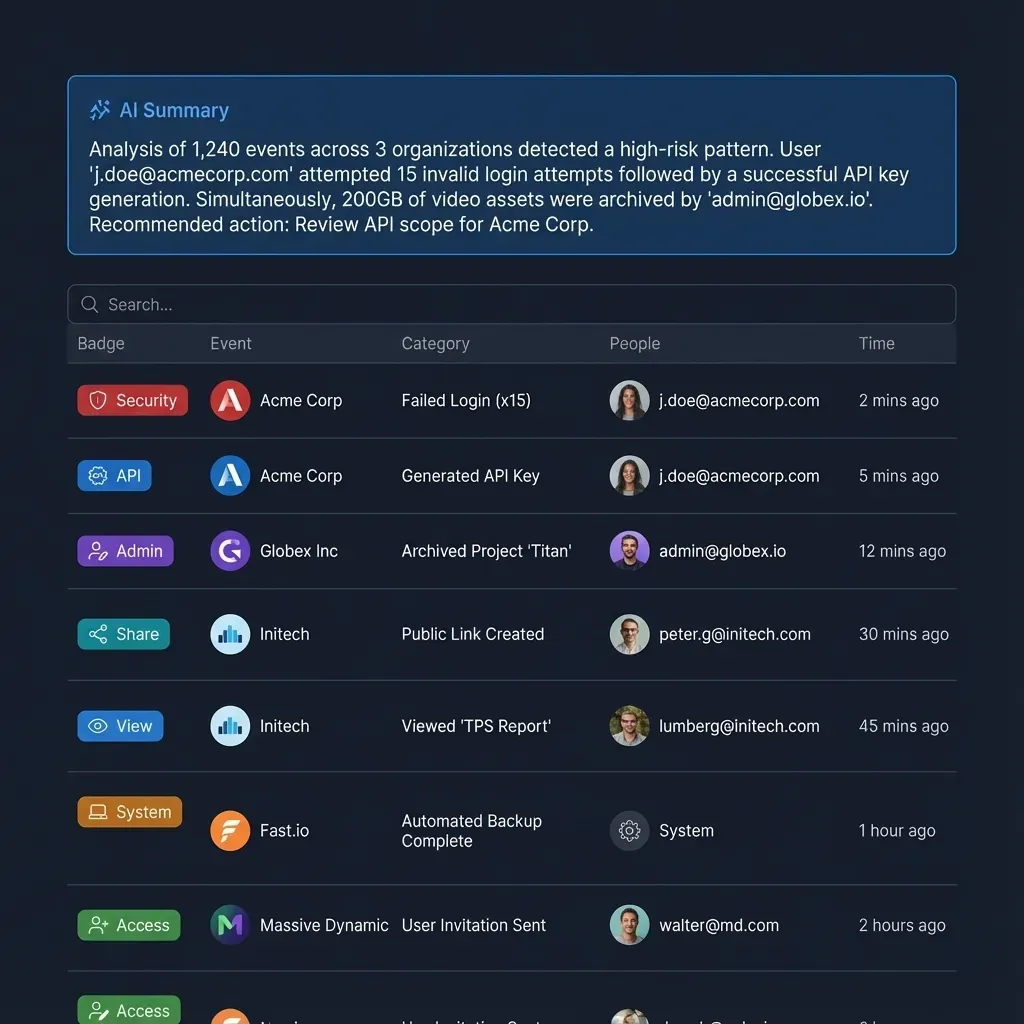
Security is paramount when moving sensitive agent memory. Unlike standard file servers, agent storage often contains API keys or proprietary knowledge bases.
Ensure your destination supports granular Role-Based Access Control (RBAC). In Fast.io, agents are treated as first-class users. You can issue specific API keys for your agents, limiting them to specific workspaces or folders. This enforces the Principle of Least Privilege, ensuring a rogue agent cannot wipe your entire archive.
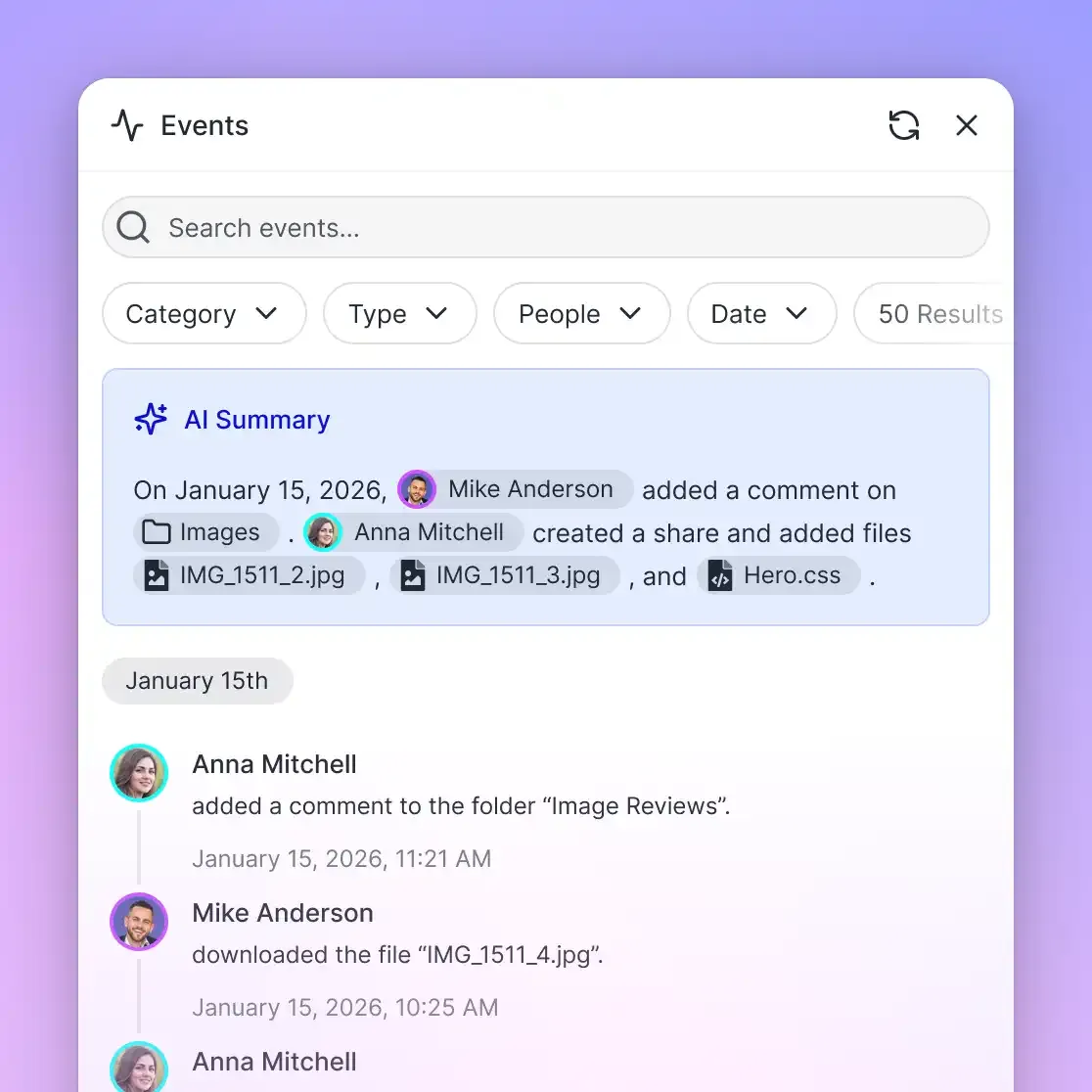
During migration, maintain encryption in transit and at rest. Use secure channels for data transfer and verify that the destination storage encrypts data both during transmission and when stored. Audit access logs continuously throughout the migration to detect any unauthorized access attempts.
Transfer credentials separately from data. Never hardcode API keys in migration scripts. Use environment variables or secure vaults like HashiCorp Vault, AWS Secrets Manager, or Azure Key Vault to inject credentials at runtime. For more on agent credential management, see our secrets management guide.
Post-Migration: Enabling Intelligence
Once your files are in Fast.io, they become "active." You can toggle Intelligence Mode on any workspace.
Auto-Indexing: Every PDF, code file, and document is vector-indexed automatically. Files uploaded to an Intelligence Mode workspace are processed immediately, extracting text, generating embeddings, and making content searchable by meaning, not just filename.
Built-in RAG: Your agents (and you) can chat with the data immediately without setting up a separate vector database. Ask questions in natural language and receive cited answers based on your workspace content. No Pinecone, no Weaviate, no additional infrastructure.
MCP Integration: Connect your agents via the Fast.io MCP server to give them natural language file management capabilities. With 251 tools available via Streamable HTTP or SSE, agents can search, organize, share, and analyze files programmatically.
Webhooks for Reactive Workflows: Configure webhooks to notify your agents when files change. Build reactive workflows where agents respond to new uploads, modifications, or access events without polling.
Human-Agent Collaboration: Invite human team members to the same workspaces where agents operate. Both use the same search, same chat, same sharing capabilities. Humans use the UI; agents use the MCP tools.
This transforms your storage from a passive hard drive into a dynamic knowledge base that grows with your project.
Frequently Asked Questions
How do I migrate AI agent storage with zero downtime?
Use the dual-write pattern: configure agents to write to both old and new storage simultaneously, then gradually shift read traffic to the new system. Alternatively, implement blue-green deployment with duplicate agent instances connected to each storage backend. These approaches allow instant rollback and eliminate downtime during cutover.
How long does an agent storage migration take?
Migration timelines vary based on system complexity and data volume. Most production agent storage migrations take several weeks to complete, including planning, data transfer, validation, and cutover phases. Simple migrations with small data volumes may complete sooner, while complex multi-agent systems with terabytes of data require longer timelines.
What are the best practices for agent data migration?
Best practices include: complete pre-migration inventory of files and dependencies; classifying data by criticality (hot, warm, cold); using incremental sync for active data; preserving metadata and timestamps; validating with checksums; testing rollback procedures before cutover; and monitoring agent logs continuously post-migration.
How do I preserve agent state during storage migration?
Transfer state files separately from main data stores. This includes conversation history, cached embeddings, checkpoint files, and configuration. Use atomic copy operations or snapshot-based migration to ensure consistency. After cutover, verify that agents resume from their previous state rather than starting fresh.
What causes agent storage migrations to fail?
Common failure causes include: path structure differences breaking file references; authentication credential mismatches; RAG index incompatibility requiring regeneration; rate limiting during bulk transfers; and insufficient validation before decommissioning old storage. Most failures are preventable with thorough pre-migration testing and gradual cutover strategies.
When should I migrate my agent storage?
Consider migration when you hit capacity limits, encounter performance bottlenecks, need features your current storage lacks (like built-in RAG or MCP support), or discover cost savings opportunities. Many teams find themselves migrating within their first year of deployment as usage patterns and requirements become clearer.
Related Resources

Start with agent file storage migration guide on Fast.io
Fast.io provides intelligent workspaces with built-in RAG, 251 MCP tools, and seamless migration paths. Get 50GB free storage for your agents with no credit card required.