Top OpenClaw Tools for Coding Agents
OpenClaw tools give coding agents the libraries and access they need to write software. With AI now handling about 45% of routine maintenance tasks, picking the right toolkit matters. This guide ranks the top tools to help your OpenClaw agent write better code.
What Are OpenClaw Tools?
OpenClaw is an open-source framework that lets AI agents perform complex tasks on your local machine. "Tools" in this ecosystem (often called "skills") are modular add-ons that give your agent specific capabilities, from reading files to executing terminal commands.
Without tools, an agent is just a text processor. With tools, it becomes a developer. The right combination of skills allows an agent to work with your files, understand your project structure, run tests, and even deploy code.
OpenClaw's architecture allows for quick skill building, so new skills appear often. However, a core set of reliable tools forms the foundation of any effective coding agent setup.

1. Fast.io — Persistent Storage and Memory
Permanent Workspace for Agents
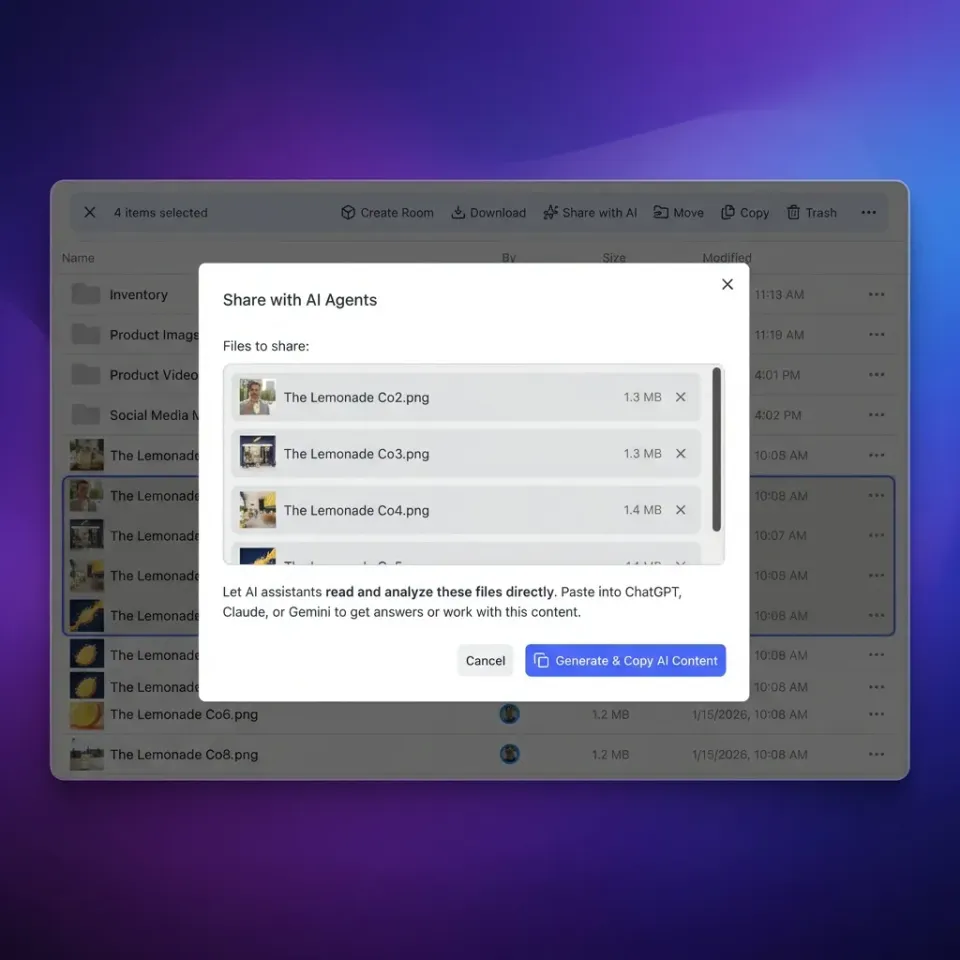
Fast.io provides a cloud workspace where agents and humans work together. Unlike local storage which is isolated, or standard cloud drives which are basic storage, Fast.io is made for AI. It offers 19 consolidated MCP tools via action-based routing. This allows agents to manipulate files, manage permissions, and search content using meaning-based search.
Pros:
- 19 MCP Tools: Covers authentication, file management, AI chat, and workflow.
- Built-in RAG: Intelligence Mode auto-indexes files for semantic search.
- Free Tier: 50GB storage and 5,000 monthly credits with no credit card.
- No Setup: Installs via
clawhub install dbalve/fast-io.
Cons:
- Requires internet connectivity (cloud-native).
- Strictly for file and data storage, not compute.
Best For: Long-term agent memory and team collaboration.
Pricing: Free tier (50GB), Pro from $1/seat.
ClawHub Page: clawhub.ai/dbalve/fast-io
2. GitHub — Version Control Automation
Automated Version Control
The GitHub skill lets your agent use the gh CLI for repository management. It can check PR status, run CI/CD monitoring, query issues, and filter API output with --jq. This turns your agent from a local code editor into a team contributor.
Pros:
- Pull request management and CI status monitoring.
gh apifor advanced queries beyond standard subcommands.- JSON output with
--jqfiltering for scripted automation.
Cons:
- Instruction-only skill — requires
ghCLI already installed and authenticated. - No direct code editing capabilities.
Best For: Automating PR creation, CI monitoring, and code reviews.
Pricing: Free (requires GitHub account).
ClawHub Page: clawhub.ai/steipete/github


Give Your Agent a Brain
Give your OpenClaw agent 50GB of free, intelligent cloud storage. Install the Fast.io skill today.
3. Code — Structured Coding Workflow
Planning Before Building
The Code skill provides a structured coding workflow covering planning, implementation, verification, and testing. Instead of diving straight into writing, the agent follows a Request → Plan → Execute → Verify → Deliver loop. It stores coding preferences locally for consistent style.
Pros:
- Breaks complex feature requests into testable steps.
- Built-in verification and testing phase after each implementation.
- Local-only operation — no network requests.
Cons:
- Instruction-only skill — does not execute code autonomously.
- Better for guided workflows than fully autonomous coding.
Best For: Teams wanting structured, verifiable agent-assisted coding.
Pricing: Free.
ClawHub Page: clawhub.ai/ivangdavila/code
4. Playwright — Browser Automation and Documentation Research
Finding Documentation
Coding agents often need to look up documentation or scrape a web page to understand a third-party API. The Playwright skill provides a headless browser to navigate pages, interact with elements, capture screenshots, generate PDFs, and extract structured data from JavaScript-rendered pages.
Pros:
- Full MCP action set: navigate, click, type, screenshot, extract data.
- Handles dynamic, JS-heavy documentation sites.
- Includes CI/CD optimization patterns and respectful scraping guidance.
Cons:
- Requires Node.js and npm.
- Heavier resource usage than simple HTTP requests.
Best For: Reading documentation and researching libraries.
Pricing: Free.
ClawHub Page: clawhub.ai/ivangdavila/playwright
5. SQL Toolkit — Database Queries and Analysis
Querying Databases
The SQL Toolkit provides command-line patterns for SQLite, PostgreSQL, and MySQL. Agents use it to design schemas, build complex queries with joins and window functions, run migrations, optimize with EXPLAIN analysis, and handle backup and restore. It covers all three databases under one skill.
Pros:
- SQLite quick-start requires zero setup.
- Migration script templates and conventions included.
- Security tips for parameterized queries and credential handling.
Cons:
- Instruction-only skill — requires an existing database connection.
- Documentation-only; no automated query runner included.
Best For: Agents building data-driven features or analyzing application databases.
Pricing: Free.
ClawHub Page: clawhub.ai/gitgoodordietrying/sql-toolkit
6. Docker Essentials — Container and Build Environments
Managing Build Environments
Docker Essentials gives agents a reference for container management, image operations, and debugging. Agents use it to manage container lifecycles, orchestrate multi-container setups with Docker Compose, build and push images, and clean up stale resources.
Pros:
- Container lifecycle commands (run, stop, restart, remove).
- Docker Compose for multi-service orchestration.
- Debugging with log viewing and container stats.
Cons:
- Instruction-only skill — requires Docker CLI installed on the system.
- No built-in storage.
Best For: Environment setup, build processes, and dependency containers.
Pricing: Free.
ClawHub Page: clawhub.ai/skills/docker-essentials
7. API Gateway — Connecting to 100+ External APIs
Building Integrations
The API Gateway skill connects agents to 100+ APIs — Google Workspace, Microsoft 365, GitHub, Notion, Slack, Airtable, HubSpot — through managed OAuth. The gateway injects tokens automatically, so agents call native endpoints directly without managing credentials.
Pros:
- Supports 100+ services with managed OAuth connections via maton.ai.
- Multiple connection support with header-based selection.
- No SDK requirements — direct native API endpoint access.
Cons:
- Requires a
MATON_API_KEYenvironment variable. - Dependent on maton.ai service availability.
Best For: Coding agents that need to integrate with external SaaS APIs.
Pricing: Free (skill is MIT-0; maton.ai usage may apply).
ClawHub Page: clawhub.ai/byungkyu/api-gateway
8. Filesystem Management — Local File Operations
System File Access
The Filesystem Management skill gives agents advanced local file operations — smart listing with filters, pattern-based search, full-text content search, batch copy with dry-run safety checks, and directory tree analysis. It covers what standard file tools miss.
Pros:
- Filter files by type, pattern, size, and date.
- Batch copy with dry-run preview before execution.
- Built-in path validation and permission checks.
Cons:
- Local filesystem only — pair with Fast.io for cloud sharing.
- Requires Node.js.
Best For: Organizing project files and batch-processing local assets.
Pricing: Free.
ClawHub Page: clawhub.ai/gtrusler/clawdbot-filesystem
9. Security Check — Auditing Agent Configuration
Hardening Your Setup
The Security Check skill performs a comprehensive read-only audit of an agent's own configuration. It evaluates 13 security domains including credential storage, DM policies, group access controls, file permissions, plugin trust, logging practices, and prompt injection protections.
Pros:
- Systematic audit across 13 security domains.
- Severity-based findings (Critical, High, Medium).
- Actionable remediation guidance for each finding.
Cons:
- Instruction-only skill — flagged as suspicious by ClawHub for some documentation contradictions.
- Inspect source code before installation.
Best For: Teams that need to verify agent security posture before production.
Pricing: Free.
ClawHub Page: clawhub.ai/TheSethRose/clawdbot-security-check
10. Clawdbot Docs — Platform Documentation Reference
Understanding the Platform
The Clawdbot Docs skill (256 stars, 412 installations) is a documentation navigation and reference tool for the platform. It uses a decision-tree to route questions to relevant docs sections covering setup, troubleshooting, configuration, concepts, automation, and deployment. It also retrieves ready-to-use configuration snippets.
Pros:
- Decision-tree navigation for setup, config, troubleshooting, and automation.
- Multiple search capabilities including keyword search and full-text indexing.
- Ready-to-use config snippets across Discord, Telegram, WhatsApp, and other providers.
Cons:
- Focused on Clawdbot platform docs, not general development references.
- Fetches from docs.clawd.bot — requires internet access.
Best For: Developers new to the OpenClaw/Clawdbot ecosystem needing quick platform guidance.
Pricing: Free.
ClawHub Page: clawhub.ai/NicholasSpisak/clawddocs
Skill Comparison Summary
Most developers start with Fast.io, GitHub, and Code for a solid foundation, then add specialized skills like SQL Toolkit or API Gateway as their workflows grow.
Frequently Asked Questions
How do I install OpenClaw skills?
You can install skills using the ClawHub CLI tool. The standard command is `clawhub install <author>/<skill-name>`. For example, to install the Fast.io storage skill, you would run `clawhub install dbalve/fast-io` in your terminal.
Are OpenClaw tools free to use?
Most OpenClaw tools are open-source and free. However, some integrations that connect to external services (like specific LLM APIs or cloud storage providers) may have their own usage-based pricing models.
Can OpenClaw agents run on my local machine?
Yes, OpenClaw runs locally. This gives the agent direct access to your file system and development environment, making it faster for coding tasks than cloud-only agents.
What is the best OpenClaw tool for database work?
The SQL Toolkit skill is the standard for database workflows. It supports SQLite, PostgreSQL, and MySQL, providing query patterns, migration templates, and optimization guidance via EXPLAIN analysis.
How does Fast.io integrate with OpenClaw?
Fast.io uses an MCP skill. Once installed, it gives your agent 19 consolidated tools to manage files, search content with AI, and share workspaces with humans, all via natural language commands.
Related Resources

Give Your Agent a Brain
Give your OpenClaw agent 50GB of free, intelligent cloud storage. Install the Fast.io skill today.