Dropbox vs Google Drive vs OneDrive: Which Cloud Storage Wins in 2026?
Dropbox, Google Drive, and OneDrive are the three most popular cloud storage services, each with different strengths: Dropbox for file sync, Google Drive for collaboration, OneDrive for Microsoft integration. This comparison breaks down pricing, storage limits, sync performance, and security so you can choose the right platform for your team.
What to check before scaling dropbox vs google drive vs onedrive
Here's how the three services stack up on the metrics that matter most:
Dropbox pioneered consumer cloud storage and remains popular among creative professionals. Google Drive works alongside Gmail and Google Docs as part of the Google ecosystem. OneDrive comes bundled with Microsoft 365 subscriptions.
Pricing Breakdown
Cloud storage costs vary depending on whether you're an individual or a team.
Individual Plans
- Dropbox Plus: $11.99/month for 2 TB
- Google One: $9.99/month for 2 TB (or $2.99/month for 100 GB)
- OneDrive Standalone: $1.99/month for 100 GB
Business Plans
- Dropbox Business: published pricing/month (Standard), published pricing/month (Advanced)
- Google Workspace: published pricing/month (Business Standard), published pricing/month (Business Plus)
- Microsoft 365 Business: $12.50/user/month (Basic), published pricing/month (Premium)
The Per-Seat Problem
The real cost difference shows up at scale. A 25-person team on Dropbox Business Standard pays published pricing. The same team on Google Workspace Business Standard pays published pricing. These costs compound as teams grow. Adding contractors, clients, or occasional collaborators means adding seats, even if they only need occasional access. For teams that don't fit the per-seat model, usage-based alternatives can cut costs by 70% or more. Fast.io includes 25 seats in the Pro plan with extra seats at published pricing each.
Storage and File Size Limits
Google Drive offers the most generous free tier at 15 GB, though this storage is shared across Gmail, Drive, and Google Photos. Dropbox's 2 GB free tier is restrictive by comparison, but Dropbox allows much larger individual file uploads.
File upload limits matter for large projects
- Dropbox: 2 TB per file (paid plans)
- Google Drive: 5 TB per file
- OneDrive: 250 GB per file
If you work with large video files, CAD drawings, or datasets, these limits become relevant. A single large video project can exceed OneDrive's file size limits. For teams working with large files, specialized platforms like Fast.io support terabyte-scale uploads without mainstream cloud storage restrictions.
Sync Speed and Performance
Dropbox's block-level sync is its main technical edge. When you edit a large file and save a small change, Dropbox uploads only the changed blocks, not the entire file. Google Drive and OneDrive re-upload the whole file.
What this means in practice
- Editing a large spreadsheet: Dropbox syncs in seconds, others take minutes
- Collaborative design files: Dropbox handles versioning faster
- Video proxies: Dropbox updates link almost instantly
Google Drive and OneDrive have improved initial upload speeds in recent years, and Google has the advantage for simultaneous collaborative editing within Google Docs. But for traditional file sync workflows, Dropbox remains faster. One trade-off: Dropbox's desktop app uses more system resources to enable this speed. On older machines, Google Drive's simpler sync approach may feel lighter.
Collaboration Features
Collaboration is where these platforms diverge the most.
Google Drive excels at real-time document editing. Multiple people can edit a Google Doc simultaneously with cursor tracking, comments, and instant sync. If your team already uses Google Workspace, this works well.
OneDrive offers similar real-time editing within Microsoft 365. Co-authoring in Word, Excel, and PowerPoint works if everyone uses the desktop apps or web versions.
Dropbox approaches collaboration differently. Dropbox Paper provides basic document collaboration, but the real strength is file-level sharing with granular controls. Password protection, expiration dates, and view-only links are available on paid plans.
What's missing from all three
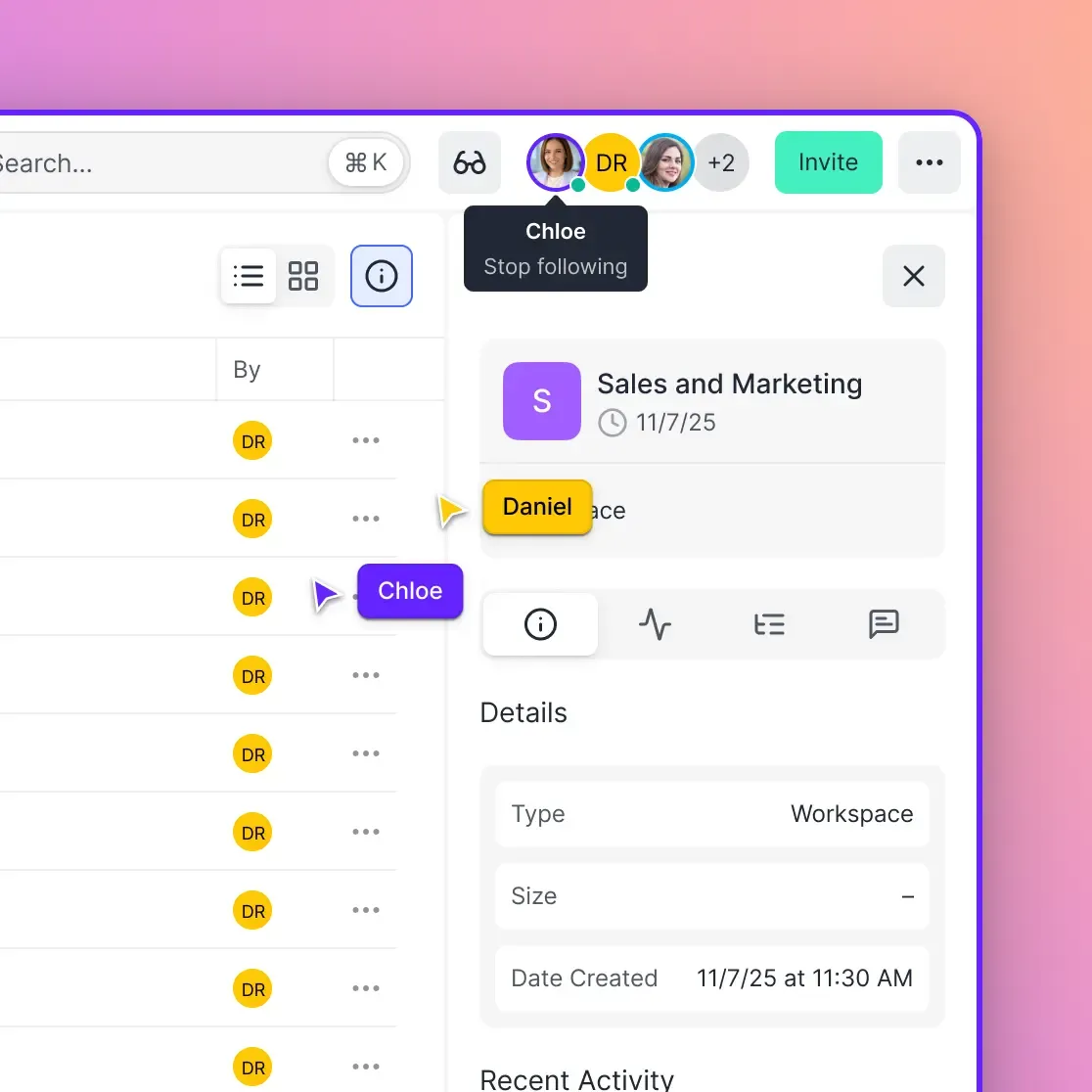
None of these platforms offer real-time presence awareness outside of document editing. You can't see who's currently viewing a folder or browsing files in a shared workspace. For teams doing review workflows on video edits or design comps, this visibility gap creates friction. You end up asking "are you looking at the file?" over Slack. Fast.io's workspace model solves this with multiplayer presence: you can see exactly who's in a workspace and what they're viewing, similar to how Figma shows collaborators in real-time.


Share Files Without Limits on Fast.io
Fast.io handles large media files, video streaming, and unlimited guests without per-seat pricing.
Security and Sharing Controls
All three services offer baseline security: encryption in transit and at rest, two-factor authentication, and admin controls for business plans.
Where they differ
OneDrive's Personal Vault adds biometric or PIN verification for sensitive files. This is a nice touch for personal use, though enterprise users typically rely on SSO and company-wide policies instead. For business use, all three require paid plans to unlock meaningful sharing controls. Dropbox and OneDrive offer password protection and link expiration on their standard business tiers. Google Drive restricts these features to higher-tier Workspace plans.
Domain restrictions
Controlling who can access shared links matters for sensitive documents. All three offer domain restrictions on enterprise plans, limiting access to specific email domains. This prevents accidental oversharing to personal Gmail accounts.
Integration and Ecosystem
Your existing software stack should drive this decision more than any feature comparison.
Choose
Google Drive if:
- Your team uses Gmail and Google Workspace
- You need Google Docs, Sheets, Slides collaboration
- You prefer browser-based work
Choose OneDrive if:
- Your organization runs on Microsoft 365
- You rely on Word, Excel, PowerPoint daily
- You use Microsoft Teams for communication
Choose Dropbox if:
- You work across multiple platforms (Mac, Windows, Linux)
- You need integrations with creative tools (Adobe, Figma, Slack)
- File sync reliability matters more than built-in productivity apps
Third-party integration counts
- Dropbox: 500,000+ connected apps
- Google Drive: Deep Google services integration, broad third-party support
- OneDrive: Tight Microsoft ecosystem, growing third-party support
When None of These Three Work
Dropbox, Google Drive, and OneDrive cover most general cloud storage needs. But certain workflows expose their limitations.
Large media files: OneDrive's file size limit blocks video workflows. Even Dropbox's large limit may not cover raw footage from multi-camera shoots.
Video review and streaming: All three use progressive download for video playback. You wait for buffering before watching. Teams reviewing video edits need instant scrubbing and frame-accurate commenting, which requires adaptive streaming.
Client delivery portals: While all three support sharing links, none offer branded client portals with your logo and domain. For agencies and creative shops, this professional presentation matters. Usage-based pricing: If you have occasional users, contractors, or clients who need access, per-seat pricing gets expensive. A small internal team plus external reviewers can quickly add up to dozens of paid seats. For these workflows, specialized platforms make more sense. Fast.io offers HLS video streaming, branded portals, and usage-based pricing that includes unlimited guest access without per-seat costs.
The Verdict: Which Cloud Storage Should You Choose?
Choose Dropbox if you prioritize reliable file sync, work across different operating systems, and need advanced sharing controls. Dropbox's block-level sync is faster for iterative file work.
Choose Google Drive if your team already uses Google Workspace. The real-time collaboration in Google Docs works well, and 15 GB of free storage makes it easy to start.
Choose OneDrive if you're a Microsoft 365 organization. The integration with Teams, Outlook, and Office apps is solid, and you're probably already paying for it.
Consider alternatives if you work with large media files, need video streaming and review features, or find per-seat pricing too expensive at scale. The top cloud storage is the one that fits your workflow. For most personal use, Google Drive's free tier is the obvious choice. For Microsoft shops, OneDrive is included. For teams with specific needs around media workflows or cost efficiency, look beyond the big three.
Frequently Asked Questions
Which is better: Dropbox, Google Drive, or OneDrive?
It depends on your ecosystem. Google Drive is best for Google Workspace users with its 15 GB free storage and real-time document collaboration. OneDrive makes sense if you use Microsoft 365, as it works alongside Word, Excel, and Teams. Dropbox offers faster file sync with block-level technology and works well across platforms. For most personal use, Google Drive's free tier is the obvious choice. For business, choose based on your existing software stack.
What is the top cloud storage for business?
For businesses using Microsoft 365, OneDrive is the practical choice since it's included with your subscription. Google Workspace organizations should use Google Drive for its integrated collaboration features. If your team needs reliable sync across different platforms and advanced sharing controls, Dropbox Business is worth the premium. For teams with large files, video workflows, or many external collaborators, specialized platforms like Fast.io offer features these three lack.
Is OneDrive safer than Google Drive?
Both offer strong baseline security with encryption in transit and at rest, plus two-factor authentication. OneDrive has a Personal Vault feature that adds biometric or PIN verification for sensitive files, which Google Drive lacks. Google's security infrastructure runs at massive scale. For business plans, both offer admin controls and audit logs. The security difference is minimal. Choose based on your ecosystem rather than security alone.
Why would you use Dropbox over Google Drive?
Dropbox's main advantage is block-level sync, which uploads only changed portions of files rather than re-uploading entire files. This makes Dropbox noticeably faster when working with large files that change frequently. Dropbox also offers better cross-platform consistency and more third-party app integrations. If you work outside the Google ecosystem or need advanced file sharing controls, Dropbox is the stronger choice.
Can I use Dropbox, Google Drive, and OneDrive together?
Yes, many people use multiple cloud storage services. You can install all three desktop apps simultaneously, though this uses more system resources. Some workflows benefit from using Google Drive for collaboration, Dropbox for file sync, and OneDrive for Microsoft documents. The downside is managing files across three platforms and paying for multiple subscriptions. Tools like MultCloud can help sync between services if needed.
Which cloud storage has the most free space?
Google Drive offers 15 GB free, though this is shared with Gmail and Google Photos. OneDrive provides 5 GB free. Dropbox gives only 2 GB free but offers ways to earn additional space through referrals. For free storage alone, Google Drive is the clear winner.
Related Resources

Share Files Without Limits on Fast.io
Fast.io handles large media files, video streaming, and unlimited guests without per-seat pricing.